How to Choose a Eucalyptus Oil Brand: 5 Questions
Two bottles on a shelf can both say "eucalyptus oil" and be almost different products. One might smell sharp and camphor-fresh, another soft and faintly minty, a third bright and lemony. When you compare brands, the most useful thing to compare is not the price per ounce or the adjectives on the front, but how much each label tells you about what is in the bottle.
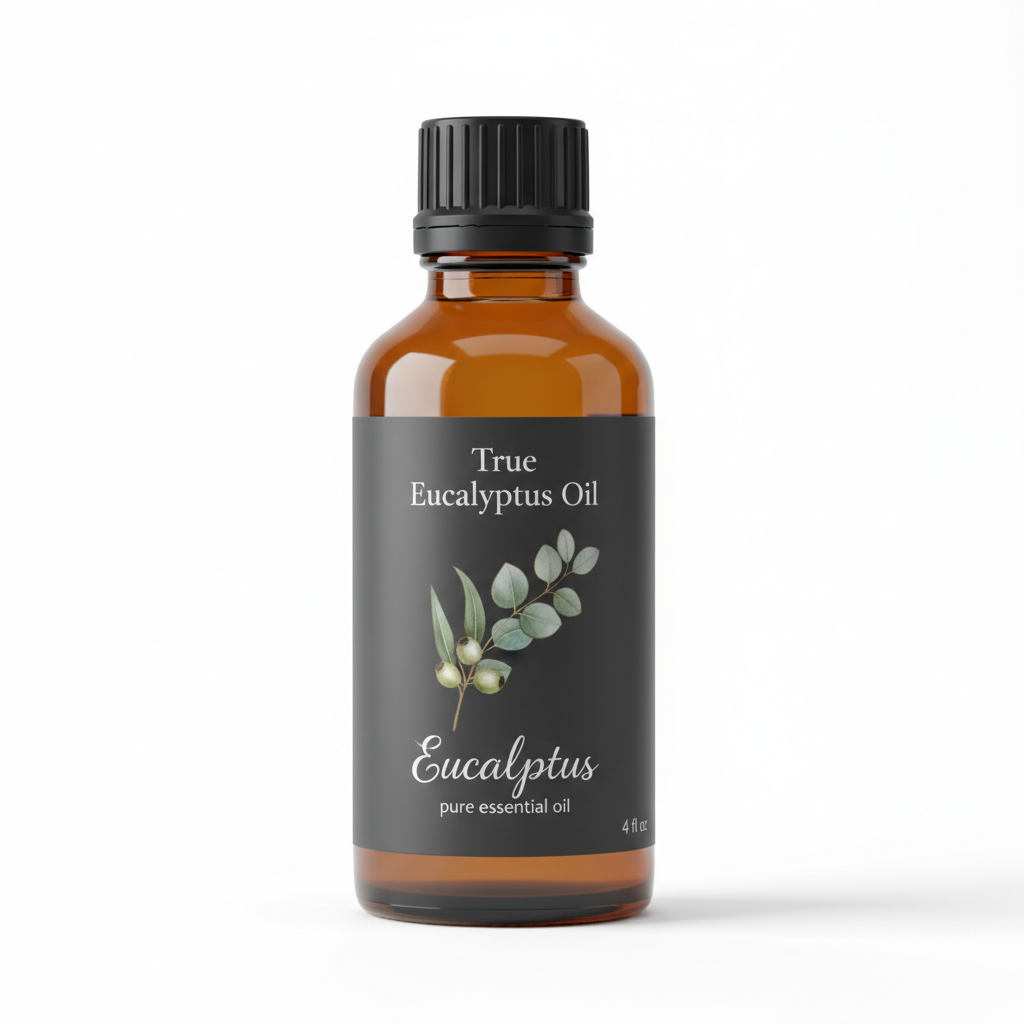
Eucalyptus Essential Oil
Our own Eucalyptus Essential Oil, in sizes from 0.5 oz to bulk.
From $9.99
Shop Now →Species comes first
Eucalyptus is a huge family, and the oil you get depends on which tree the leaves came from. A 1992 review of eucalyptus oil production and markets from the Natural Resources Institute puts it plainly: the composition, and so the quality and marketability, of an oil is largely determined by the species of eucalyptus that is distilled. The same review sorts the commercial oils into types: medicinal oils, rich in cineole, from trees like globulus, smithii and radiata; perfumery oils, such as lemon eucalyptus (E. citriodora); and industrial oils, which include one chemical variant of E. dives. Even within one species, there can be more than one chemical variant.
That is why a label that just says "eucalyptus oil" is hard to compare with anything. It does not say which of those worlds the bottle lives in. We sell five eucalyptus oils from five species (globulus, radiata, lemon eucalyptus, smithii and dives) and keep them in separate listings for this reason, so the name on the page matches the smell and the character you can expect. Our species guide and the page on radiata and dives describe how they differ.
Five questions worth asking of any bottle
Does it name the species in Latin? The common name "blue gum" or "peppermint gum" can describe more than one tree. A Latin name pins it down.
Does it say anything about cineole? The review notes that medicinal eucalyptus oil is almost always specified by cineole content in the trade, unlike many essential oils, which are described by name alone. A brand that says nothing at all has not given you a way to compare. If cineole matters for what you are making, ask the seller to give you the figure for the lot in writing, and rely on the written answer.
Is there a batch report, and what does it cover? A gas chromatography report lists what is in the oil and in what proportion. A simpler certificate, with density and refractive index only, tells you the oil sits in a plausible range but not what it is made of. The Certificate of Analysis we publish is for one batch of lemon eucalyptus and lists appearance, smell, relative density (0.863) and refractive index (1.453). If you need GC-MS for a different oil, or species confirmation, ask us in writing through the contact page before ordering.
Does the report match the product you are buying? A certificate for one species says nothing about another. This sounds obvious, and it is the easiest check to forget.
What does it say about children, pets and swallowing? Poison Control says eucalyptus oil should never be swallowed, and the poisons monograph from the International Programme on Chemical Safety adds that liquid eucalyptus products are best stored in child-resistant containers, in well-filled containers, protected from light. Our product pages say to keep our oils away from children and pets and that they are not for internal use. A good label says something similar without being asked.
One more habit we like is to ask the seller a plain question and see how the answer feels. A good reply is short, specific and comfortable saying "that is not documented yet" when it is not. A vague reply, or one that answers a different question, tells you something too.
A note on grades and origins
Trade shorthand can be confusing. The 1992 review shows that oils were sold under descriptions that combine a country and a cineole figure, as if the two were one thing, while a species table in the same review shows that composition follows the species. So we would not read a country name as a stand-in for quality, and we would not take a single number on a label at face value without knowing what it measures. Our articles on whether origin matters and reading a GC-MS report go further, and our buying guide to species pairs well with this one.
Let your nose have a say
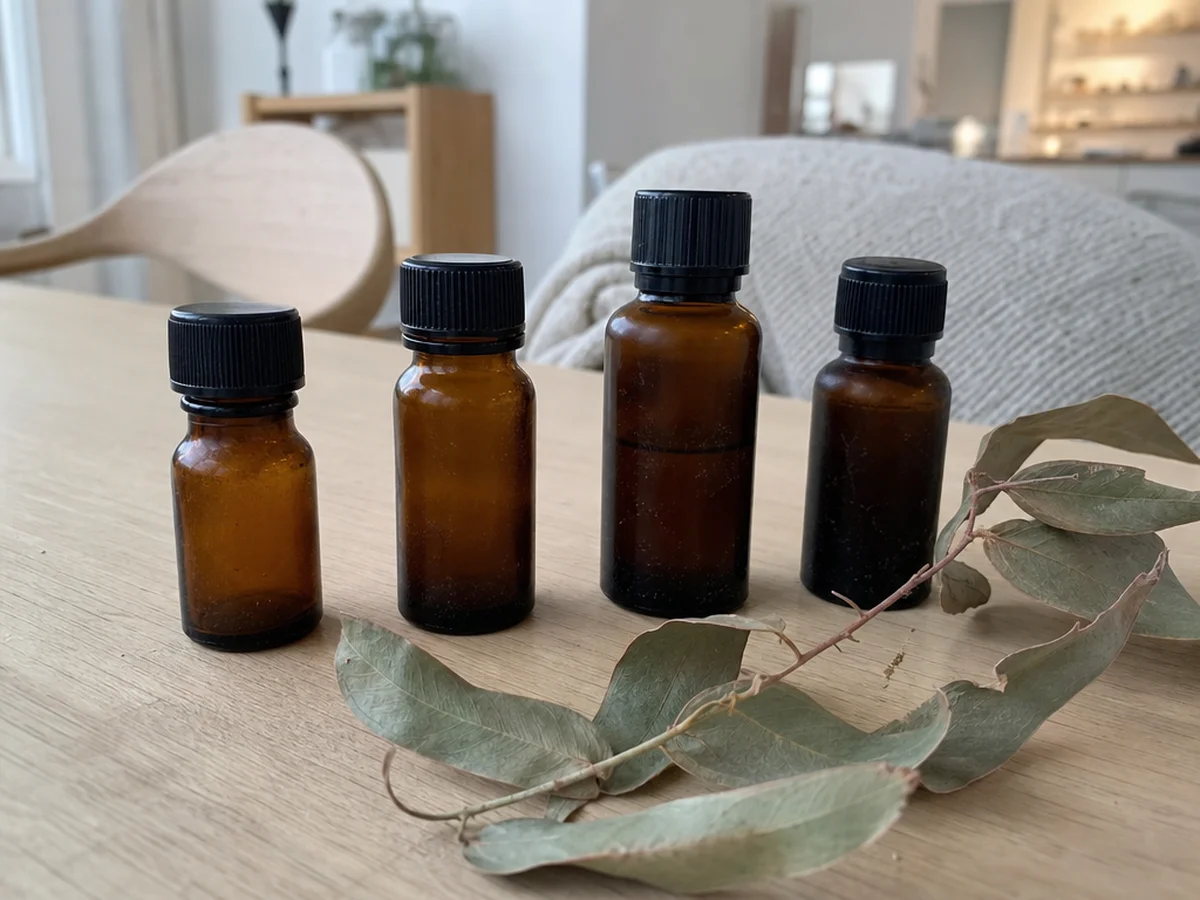
Paperwork is only half of choosing. Once a bottle is in your hands, open it and breathe in from a few inches away. Globulus should read as cool, sharp and camphor-fresh. Radiata, smithii and dives should feel softer and rounder, with dives leaning minty. Lemon eucalyptus should smell bright and lemony. If the scent you are holding does not fit the name on the label, set it aside and ask. It also helps to remember which scent you were after before you started shopping, because a sharp oil in a recipe that wanted a gentle one is the most common disappointment.
What a label cannot tell you
Even a well-written label cannot reveal whether an oil has been blended with something else, which is what a laboratory report is for. Home tests do not settle it either, as we explain in our look at home purity tests. The most practical rule we can give is to buy from the seller who answers the most of these questions plainly, and to ask in writing about the rest.
A little curiosity goes a long way with eucalyptus. Once you know which of the five oils you like, you will find yourself reading every label with a sharper eye.
Eucalyptus Essential Oil
Eucalyptus Essential Oil from our own shop, in sizes from 0.5 oz to bulk.
From $9.99
Shop Now →Sources & Further Reading
- Coppen JJW and Hone GA, 1992, Eucalyptus oils: a review of production and markets (NRI Bulletin 56).
- Poison Control, Eucalyptus oil: Is it safe?
- IPCS INCHEM, Eucalyptus oil (PIM 031).