Best Carrier Oil for Eucalyptus: 4 Options Compared
If you ask ten people for the best carrier oil for eucalyptus you will get ten confident answers, and most of them come down to texture. Feel matters, but two practical questions matter more: how long will the carrier stay fresh, and is anyone who will use the blend allergic to where it comes from? Answer those and the choice gets easy.
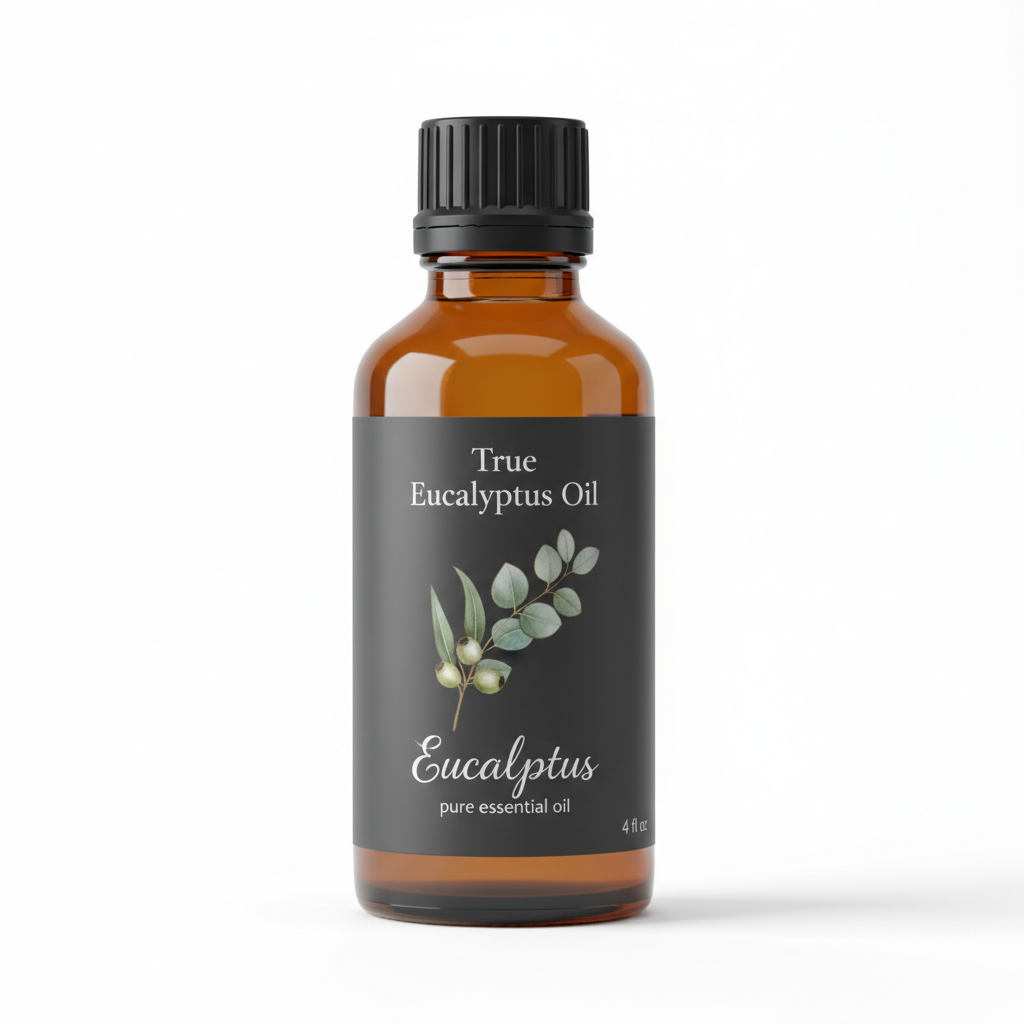
Eucalyptus Essential Oil
Our own Eucalyptus Essential Oil, in sizes from 0.5 oz to bulk.
From $9.99
Shop Now →What a carrier does for us
We sell eucalyptus oil only, sold neat, so the carrier is something you pick up at a craft or soap-supply shop, a pharmacy or a grocery. Its job is dilution. Our guidance is 0.5% to 2% in a carrier oil, which works out to roughly one to two drops per teaspoon, with a patch test on a small area first. A teaspoon is about 4.9 mL, or around 100 drops at the usual planning figure, so one drop is close to 1%. If you want 0.5%, halve it. For a wider look at published ranges, the Tisserand Institute lists 1% to 3% for body oils and lotions and 0.5% to 1.2% for facial products, and we prefer to start at the low end of our own range because eucalyptus is a strong oil and species differ. The carrier does not change those numbers. What it changes is how long your blend keeps and how it feels to use.
Four carriers, honestly compared
| Carrier | What is worth knowing |
|---|---|
| Jojoba | A review of plant oils for the skin describes jojoba oil as showing high oxidative stability and resistance to degradation, which makes it a sensible pick for blends you want to keep. Buy a plain jojoba oil and look for a batch or best-by date. |
| Fractionated coconut | Stays liquid and has little scent. It is often sold under the name caprylic/capric triglyceride, so check your supplier's sheet. The same review lists whole coconut oil as 49% lauric acid, so the fractionated oil is a different product from the jar in your kitchen. |
| Sweet almond | A soft, familiar feel. Almonds are a tree nut, which matters if you are making a blend for anyone else. Quality varies as well: a study of 17 almond oils sold in pharmacies, herbal shops and online found that only two met the European Pharmacopoeia criteria for almond oil it measured. |
| Olive or sunflower | Easy to find and affordable, and fine for a blend you plan to use up quickly. |
Freshness is the quiet deciding factor
A blend is only as fresh as its shortest-lived ingredient, and that is usually the carrier. We describe our eucalyptus oils as keeping roughly 2 to 3 years sealed, cool and dark, while many plant oils turn rancid sooner once opened. As a general rule of thumb (reasoning, not a ranking we measured), oils with more polyunsaturated fat tend to go off sooner, which is why we would reach for jojoba or fractionated coconut for anything you will keep for months, and save almond, olive or sunflower for small batches you will use within weeks. Whatever you choose, buy a size you will use, smell it before you blend, and write the date on the jar.
The allergy question
The FDA names tree nuts, which include almonds, among the major food allergens in the United States, alongside milk, eggs, fish, shellfish, peanuts, wheat, soybeans and sesame. That page is about food, so it cannot tell you how a refined nut oil behaves on one person's skin, and an allergist is the right person for that question. The practical habit is easy: if you are blending for a gift, a household member or a customer, choose a carrier from a source they are comfortable with, and write the carrier on the label.
Feel, scent and how it sits on the skin
Texture is where personal taste comes in. Jojoba feels light and slightly silky and spreads thin. Fractionated coconut is the lightest of the group and disappears quickly, which some people love in a roller bottle and others find too slippery. Sweet almond has a soft, familiar glide. Olive is heavier and carries a gentle scent of its own that you will notice under the eucalyptus. Rub a drop of each between your fingers and see how long it takes to sink in and whether any scent comes through. Eucalyptus is such a bright, cool note that a carrier with almost no smell of its own usually lets it shine.
Matching the carrier to the job
- A roller bottle (see our roller blend ideas): a carrier that stays liquid and keeps, such as jojoba or fractionated coconut.
- A balm (see our balm recipe): almost any liquid oil works, because the beeswax is what sets it. Choose the carrier whose feel you like.
- A bath: oil floats and clings rather than mixing, so read this first.
Our five eucalyptus oils also smell different from one another, from sharp and camphor-fresh globulus to softer radiata, smithii and dives and bright, lemony citriodora, so a carrier with almost no scent lets whichever you choose come through. Our dilution walkthrough covers the rest.
A small-batch habit
Our recommendation for a first blend is to make a very small amount, a teaspoon or two, in a clean glass bottle. Label it with the carrier, which eucalyptus you used and the date. If you love it, make more. If the texture bothers you, you have used almost nothing, and next time you can swap the carrier without changing anything else.
A good carrier is the one that stays fresh and suits the person using it, and everything else is preference.
Eucalyptus Essential Oil
Eucalyptus Essential Oil from our own shop, in sizes from 0.5 oz to bulk.
From $9.99
Shop Now →Sources & Further Reading
- Lin TK, Zhong L, Santiago JL, "Anti-Inflammatory and Skin Barrier Repair Effects of Topical Application of Some Plant Oils", International Journal of Molecular Sciences, 2017
- Berkkan A et al., "Evaluation of Marketed Almond Oils [Prunus dulcis (Mill.) D.A. Webb] in Terms of European Pharmacopoeia Criteria", Turkish Journal of Pharmaceutical Sciences, 2022
- U.S. Food and Drug Administration, "Food Allergies"
- Tisserand Institute, "Dilution for essential oils"