Eucalyptus Roller Bottle: How Many Drops You Need
Here is a number that surprises people: a 10 ml roller bottle at 1% eucalyptus takes two drops. Two, not twenty. A lot of roller recipes online run far higher, and because a roller is something you rub on again and again, we like to show the arithmetic before anyone fills a bottle.
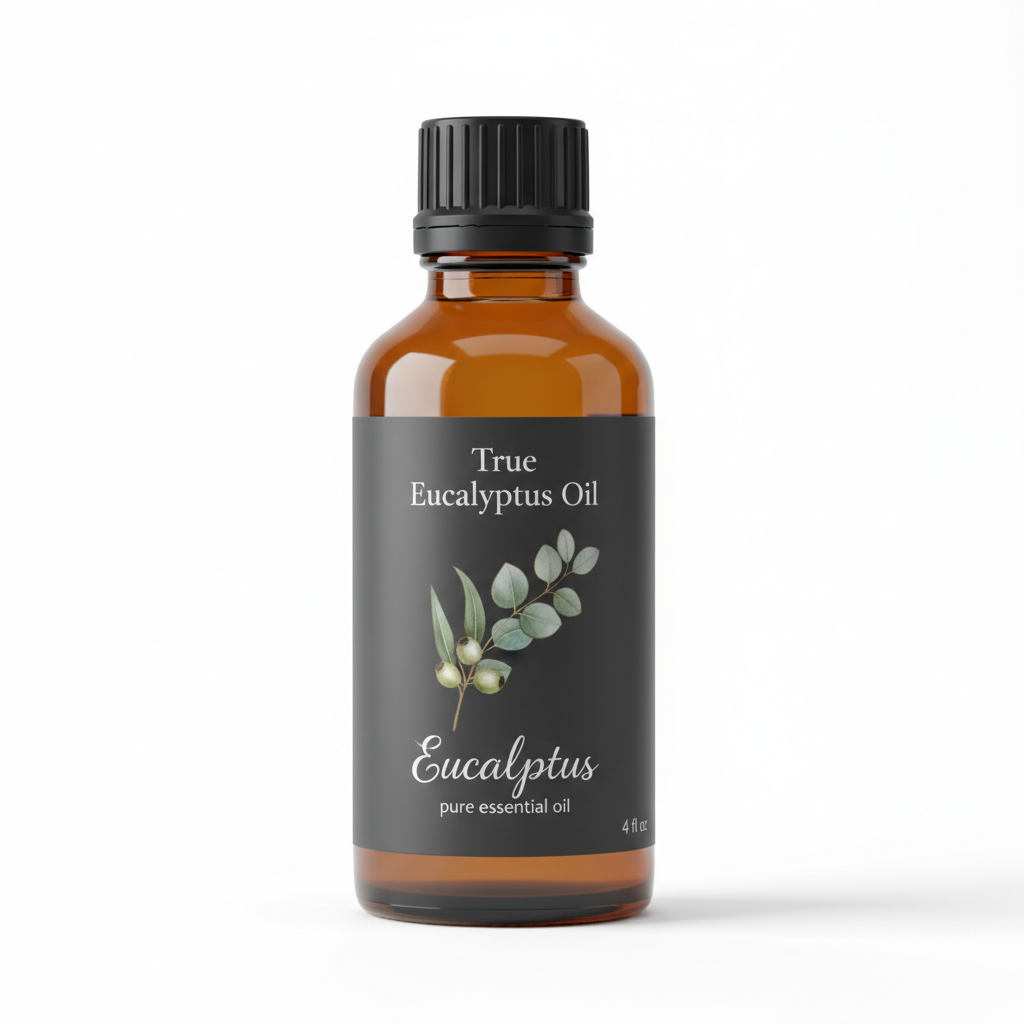
Eucalyptus Essential Oil
Our own Eucalyptus Essential Oil, in sizes from 0.5 oz to bulk.
From $9.99
Shop Now →The maths for a 10 ml roller
We use about 20 drops per milliliter as a planning figure. Droppers vary, so treat it as a guide. Here is how that plays out in a 10 ml bottle:
| Eucalyptus share | Oil volume | Drops at 20 per ml | Carrier to add |
|---|---|---|---|
| 0.5% | 0.05 ml | 1 | about 9.95 ml |
| 1% | 0.10 ml | 2 | about 9.9 ml |
| 2% | 0.20 ml | 4 | about 9.8 ml |
That lines up with our dilution guidance of 0.5% to 2% in a carrier oil, or roughly one to two drops per teaspoon. A teaspoon is about 4.9 ml, close to 100 drops, so one drop is about 1% and two drops about 2%. For our radiata the guidance is roughly 3 to 12 drops per ounce of carrier, which works out to the same 0.5% to 2%. We would begin at 1% and treat 2% as the ceiling.
When drops are a rough measure
With only one to four drops in the bottle, a single drop of error is a big deal. If your dropper delivers 15 drops per ml, "2 drops" is really 0.133 ml, or 1.33% in 10 ml. If it delivers 30 drops per ml, you have 0.67%. That is a third more or less than the 1% you aimed for, which is why we like the fixes below.
There are two easy fixes. If you have a 0.01 g scale, weigh the oil: 1% of 9 g of carrier plus oil is about 0.09 g. Or make a bigger batch and share it: 1% in 30 ml is 0.3 ml, around 6 drops, where one drop of error is about 17% rather than 50%. Make only what you will use, because the carrier is the part that ages. Our carrier oil comparison will help you choose one that keeps well.
What the guidelines say, and why we stay lower
The Tisserand Institute lists dilution ranges by purpose: 0.2% to 1% for sensitive or impaired skin, 0.5% to 1.2% for facial cosmetics, 1% to 3% for body oils and lotions, 2% to 4% for bath and wash-off products, and 3% to 10% for what it calls pain and feel-good rollerballs. It describes all of these as guidelines and says the rule of thumb is to start low and increase only if needed (Dilution for essential oils). Those are ranges for essential oils in general and do not name eucalyptus, and the top roller tier is meant for purposes we make no claims about. We keep to the range we can stand behind for fragrance and cosmetic use: 2% at most, and 1% as a comfortable default.
The same institute explains why a small roller area does not justify a stronger blend. Maximums set to avoid skin reactions are the same however much skin is covered, because they are about the concentration of oil on the skin (Q&A safety maximums for dermal application - Tisserand Institute).
If you blend, the lowest ceiling wins
Most blend recipes pick a percentage for the bottle and split it evenly between oils, but every oil has its own ceiling. The Tisserand Institute's example is lemongrass, with a maximum of 0.7%. A 10 ml roller at 2% total, split between two drops of eucalyptus and two of lemongrass, puts the lemongrass at 1%, over its limit. Drop to one drop of each at 1% total and lemongrass sits at 0.5%. We are not recommending lemongrass; it simply shows that the most cautious oil in the bottle sets the total. Look up each partner oil's limit at the source before you add it. If a cool, minty pairing appeals, our peppermint and eucalyptus post is a good starting point.
A single-oil roller, step by step
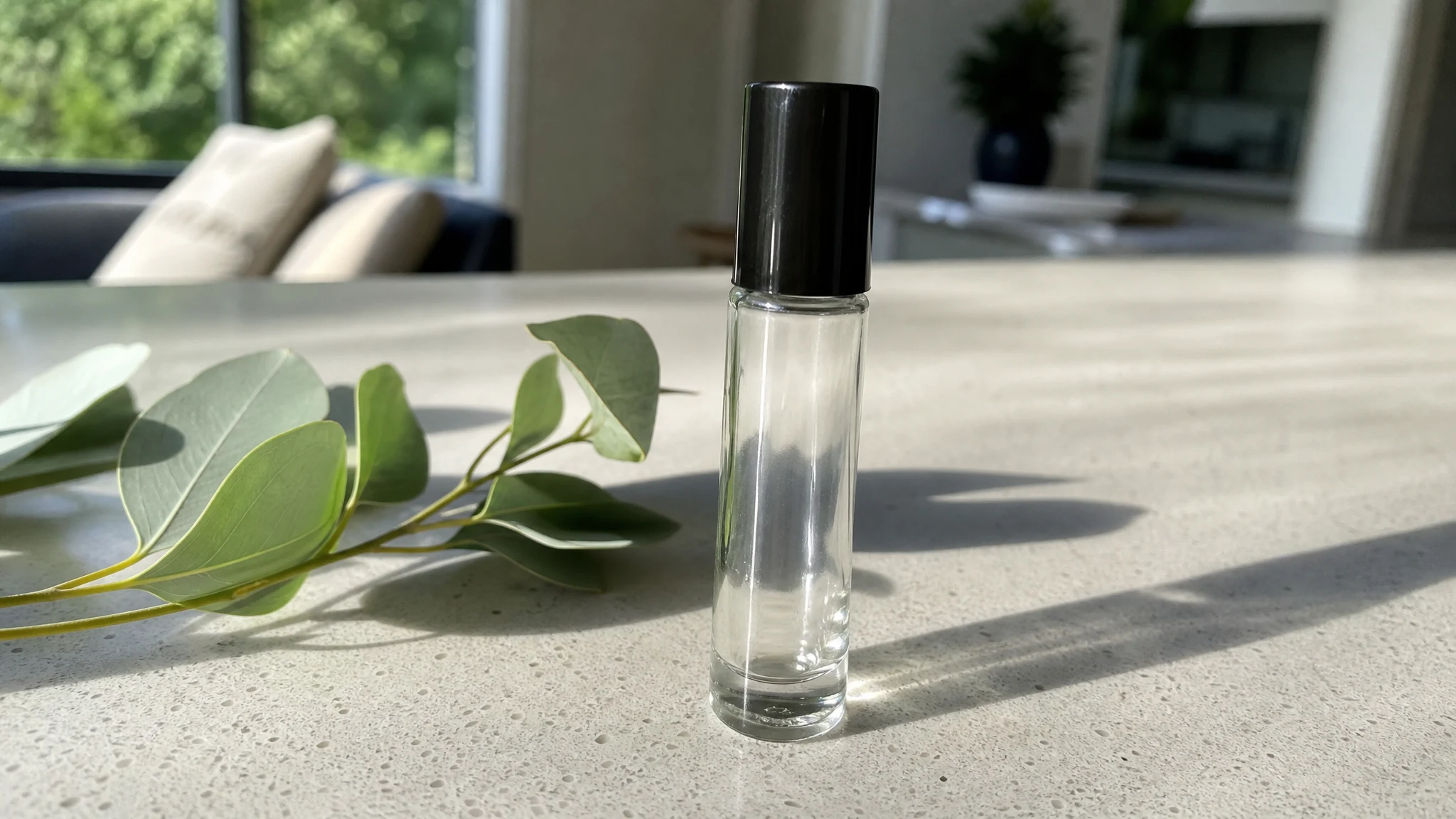
- Choose a 10 ml roller bottle from a craft or supply shop, and ask the seller whether the ball, cap and any plastic suit essential oils.
- Fill with about 9.9 ml of a liquid carrier such as fractionated coconut or jojoba, also from a craft shop or pharmacy.
- Add 2 drops of eucalyptus oil, which is a 1% suggestion, or weigh about 0.09 g.
- Cap, roll gently between your palms, and label it with the date, the percentage and "adults, not on the face."
- Patch test on a small area first, as we always say, and keep it away from the eyes and nostrils.
Which oil goes in? Our globulus is cool and camphor-fresh, radiata and smithii are the softer ones, dives is minty and sweet, and lemon eucalyptus is bright and lemony. Pick by aroma and enjoy the difference.
A few small habits that help
Rollers are charming little objects, and a handful of habits make them nicer to use. Label every bottle the moment you fill it, because two clear rollers that look the same are easy to confuse. Keep the bottle capped and upright when it is not in use. And if you are giving one to a friend, write the percentage on the label so they know exactly what is inside.
It also helps to think about where a roller will live. A bag, a desk drawer and a bathroom shelf are all fine, as long as the cap is on and small hands cannot reach it.
Who should leave the roller on the shelf
We advise that high-cineole oils are not appropriate for babies and young children, and that eucalyptus should stay away from the face of an infant or small child. A roller in a bag is also easy for small hands to find, and keep in mind that eucalyptus accounted for 46.4% of essential-oil poison-centre calls in one Australian review of 4,412 exposures. If anyone swallows oil, call Poison Help at 1-800-222-1222. If you are pregnant, breastfeeding, dealing with broken skin or a reaction history, ask your clinician first.
Our oil is sold neat, so the dilution arithmetic is yours, and a tiny number of drops is all a roller needs.
Eucalyptus Essential Oil
Eucalyptus Essential Oil from our own shop, in sizes from 0.5 oz to bulk.
From $9.99
Shop Now →