Eucalyptus Balm Recipe: Beeswax, Oil and 1% Dilution
A homemade balm is one of the nicest ways to carry a scent around with you. Beeswax and a liquid oil melt together into something soft and scoopable, and a little eucalyptus turns it into a cool, camphor-fresh jar for hands, neck and shoulders. This is a formulation worked out from published ratios and arithmetic, so start with a small batch and see how you like the texture.
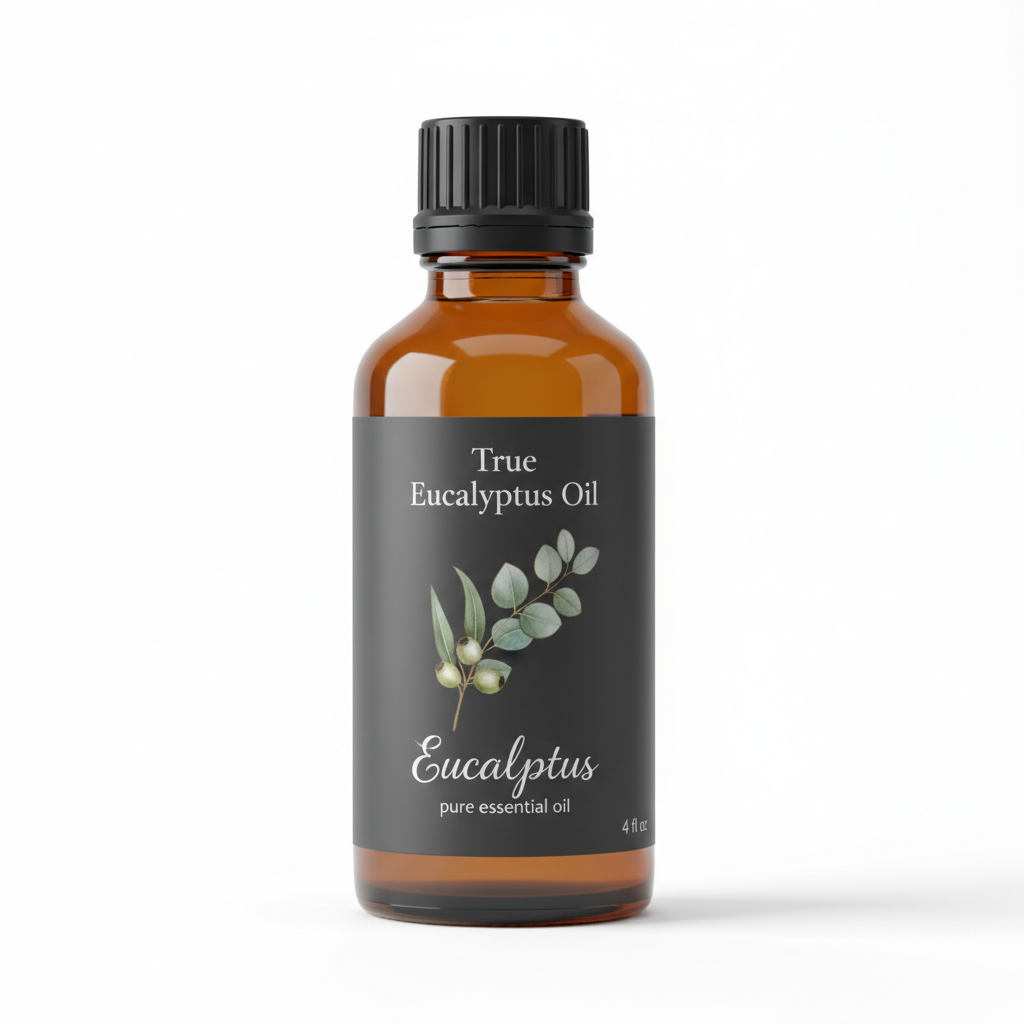
Eucalyptus Essential Oil
Our own Eucalyptus Essential Oil, in sizes from 0.5 oz to bulk.
From $9.99
Shop Now →Start with the base
For a balm, the usual rule of thumb is one part beeswax to three to five parts of oil, with more wax for a firmer result. A Hobby Farms guide to salves and balms gives that range and adds that you can remelt and adjust, since more wax makes a harder balm and less makes it creamier. Reasoning from that range, a 1 to 4 split by weight is a good first try: wax is 20% of the base. If the finished jar sets too hard to scoop, remelt it with a little more oil, and if it stays soft, add a little more wax.
We sell eucalyptus oil only, so beeswax and a carrier oil come from a craft or soap-supply shop. Jojoba and fractionated coconut keep well, and our carrier comparison helps you choose.
The arithmetic at 1%
Our dilution guidance is 0.5% to 2% in a carrier, and we start at the lower end for a leave-on product, so 1% is the figure used here. Tisserand Institute publishes 1% to 3% for body oils and lotions, and 0.5% to 1.2% for facial products. That is a reason to keep this balm for the body and leave it off the face.
Small amounts are fiddly to weigh, so the batch below is 100 g. Scale it down only if you have a scale that reads to 0.01 g.
| Ingredient | Amount | Share |
|---|---|---|
| Beeswax | 20 g | 20% |
| Liquid carrier oil | 79 g | 79% |
| Eucalyptus oil, one of our five | 1 g | 1% |
One gram of eucalyptus oil is roughly 1.1 mL if we assume a density near 0.9 g/mL (an assumption, since we publish a density only for one lemon eucalyptus batch, 0.863), or about 20 to 22 drops at the usual 20 drops per mL. Weighing is more reliable than counting.
Before you start, lay everything out: the jar, the tin, a spoon, a towel and a clean surface. Melted wax is quick to set, and it is much nicer to have everything within reach than to hunt for a spoon with a hot jar in your hand.
Making it
- Melt the wax and carrier together in a heatproof jar set in a pan of simmering water. Beeswax is flammable, so keep it off a direct flame.
- Lift the jar out and let it cool until it is just warm and still pourable.
- Stir in the eucalyptus oil, which is delicate and best added once the heat has dropped.
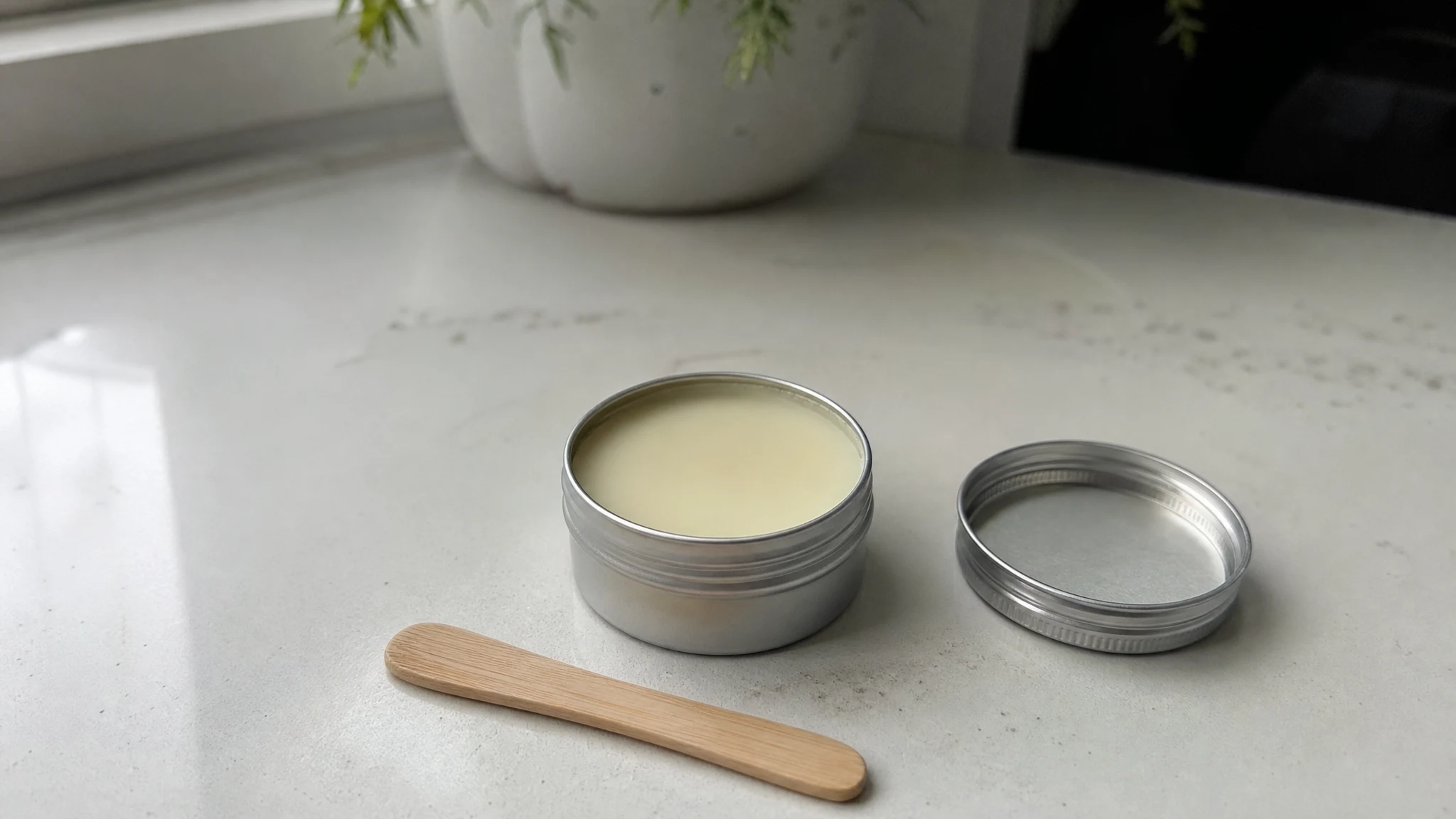
- Pour into a clean tin or jar, let it set undisturbed, then cap.
What to expect when it sets
When you pour the balm, it looks like clear golden oil. As it cools it turns cloudy and then opaque, which is the wax doing its job. Leave the jar alone while this happens, because moving it can leave a dip or a rough surface on top. Once it is fully set, press a fingertip into the surface: it should feel soft but hold its shape. If the scent seems quiet at first, give it a day, since the aroma often settles and rounds out after a night in the jar.
Choosing which eucalyptus
Our five oils give five different balms. Globulus is sharper and more camphor-fresh. Radiata, smithii and dives are softer, with dives leaning minty and sweet. Lemon eucalyptus is bright and lemony. They are different species and not interchangeable, so if a recipe was written for another one, expect a noticeably different scent. Our species guide lays them side by side.
Small touches that make it nicer
We suggest making balm in small tins, since a small tin gets used up while the scent is still fresh. Label each one with the date and which eucalyptus went in, because a few weeks from now you will not remember which one smells like what. If you want to give one away, add a tag that lists the ingredients, and remember that anyone with a tree-nut allergy will want to know whether the carrier came from one.
Who this balm is for
This is a scented balm for adults. Our Standards page says high-cineole oils are not appropriate for babies and young children and that eucalyptus should stay away from the face of an infant or young child, so please do not make it for them, and ask a pediatric clinician if you are unsure. Patch test a small area first, keep it away from eyes and broken skin, and speak to your physician if you are pregnant, nursing or have a medical condition. It is a cosmetic balm, not a remedy for anything.
The jar also needs a safe home. Poison Control notes that swallowed eucalyptus oil can cause seizures and advises locking essential oils out of sight and reach of children and pets, which includes a balm on a nightstand. Read our post on babies if there are little ones in the house.
A small jar of homemade balm, labelled and dated, makes a lovely thing to have close at hand.
Eucalyptus Essential Oil
Eucalyptus Essential Oil from our own shop, in sizes from 0.5 oz to bulk.
From $9.99
Shop Now →