Eucalyptus Oil and Babies: Why We Keep It Out of Nurseries
A nursery is the one room where we would rather you keep things simple. Eucalyptus has a cool, clean aroma that many adults love, and for exactly that reason it turns up in plenty of homes with new babies. Our honest advice is to leave it out of the nursery and to ask your pediatrician before using it around any infant or young child.
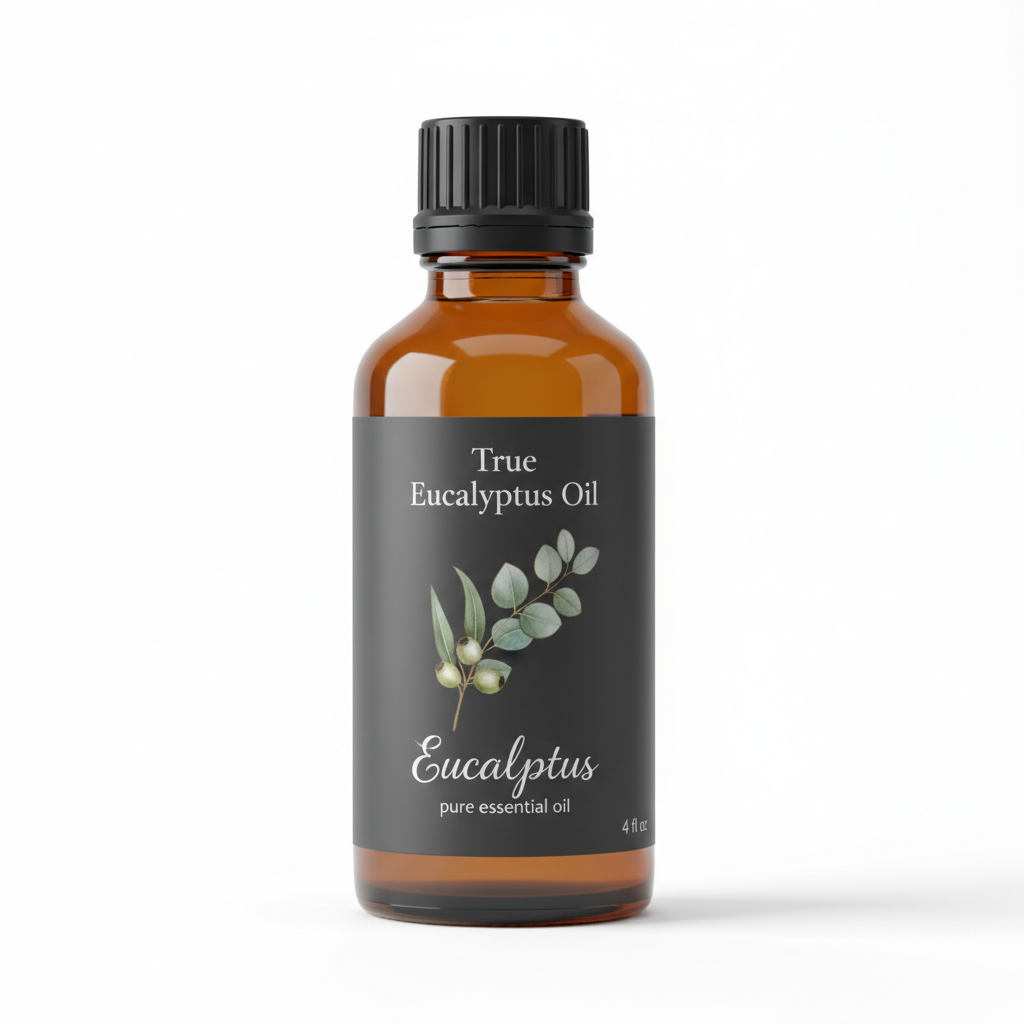
Eucalyptus Essential Oil
Our own Eucalyptus Essential Oil, in sizes from 0.5 oz to bulk.
From $9.99
Shop Now →What we recommend, and why it is deliberately cautious
We sell five eucalyptus oils as external cosmetic oils for adults. We do not recommend applying eucalyptus on or near the face of an infant or young child, and we advise keeping scent light in any room where a small child sleeps. High-cineole oils are not appropriate for babies and young children. We also do not give a baby dilution, because we would be inventing it: the 0.5% to 2% in a carrier oil that we suggest for general skin use is guidance for adults, and nothing we know of supports stretching it to infants.

That caution lines up with what authorities say. Poison Control's page on eucalyptus oil states: "Children under 2 years of age should not be given eucalyptus oil." That sentence is about giving the oil to a child, and it does not set an age for when other uses are fine. The poisons monograph from the International Programme on Chemical Safety is candid that for babies the gap is mostly data. It describes an adult topical use of eucalyptus oil at 0.5% to 3% as a skin-warming agent, calls skin exposure a possible irritant, and offers no recommended paediatric dose. When the evidence for the youngest people is thin and the product is optional, we think leaving it out is the sensible default.
It helps to say plainly why this page is firmer than most of our others. A baby cannot tell you if something stings, cannot move away from a smell, and cannot be asked how they feel. Adults can choose, test and stop. That difference is why we ask you to lean cautious here and why the answer is so short: leave it out, and ask your pediatrician if you wonder.
Why young children get their own rules
Most of what is known about babies and eucalyptus comes from poisonings, and those stories shape our caution. A review of 109 children admitted to the Royal Children's Hospital in Melbourne over twelve years found clinical effects in 59% of them, including drowsiness or loss of consciousness in 28%, after swallowing quantities that were often only a few milliliters. All recovered, though many needed hospital care. A Victorian study of young children found that most exposures came through home vaporizers placed at floor level, where small hands could reach them. A Toronto review of poison-centre calls counted 251 young children who had swallowed an essential oil or an oil-based product, with eucalyptus oil, camphorated oil and vaporizing liquids among them.
These are not stories about diffusers causing harm through the air. They are stories about curiosity and reach, and that is the useful lesson. A baby soon becomes a crawler and then a climber. Any bottle in the house, ours included, belongs on a high shelf, capped, out of sight. The same goes for any dish, pad or diffuser reservoir that holds oil. The Poison Control page suggests keeping children away from liquid in vaporizer units and buying products with child-resistant closures where available.
What a welcoming nursery smells like
The nicest nurseries tend to smell of very little: clean cotton, a hint of fresh air, perhaps a little baby lotion. If you want the room to feel welcoming, wash soft furnishings with your usual unscented detergent, open the curtains for daylight and let the room air out in the morning. It sounds plain, and it is, but it is also the fragrance most people remember fondly.

Keep your eucalyptus for the parts of the house where an adult can enjoy it, like the bathroom after the baby has gone to bed or the kitchen on a quiet afternoon with the door shut.
A grown-up routine for the bottle
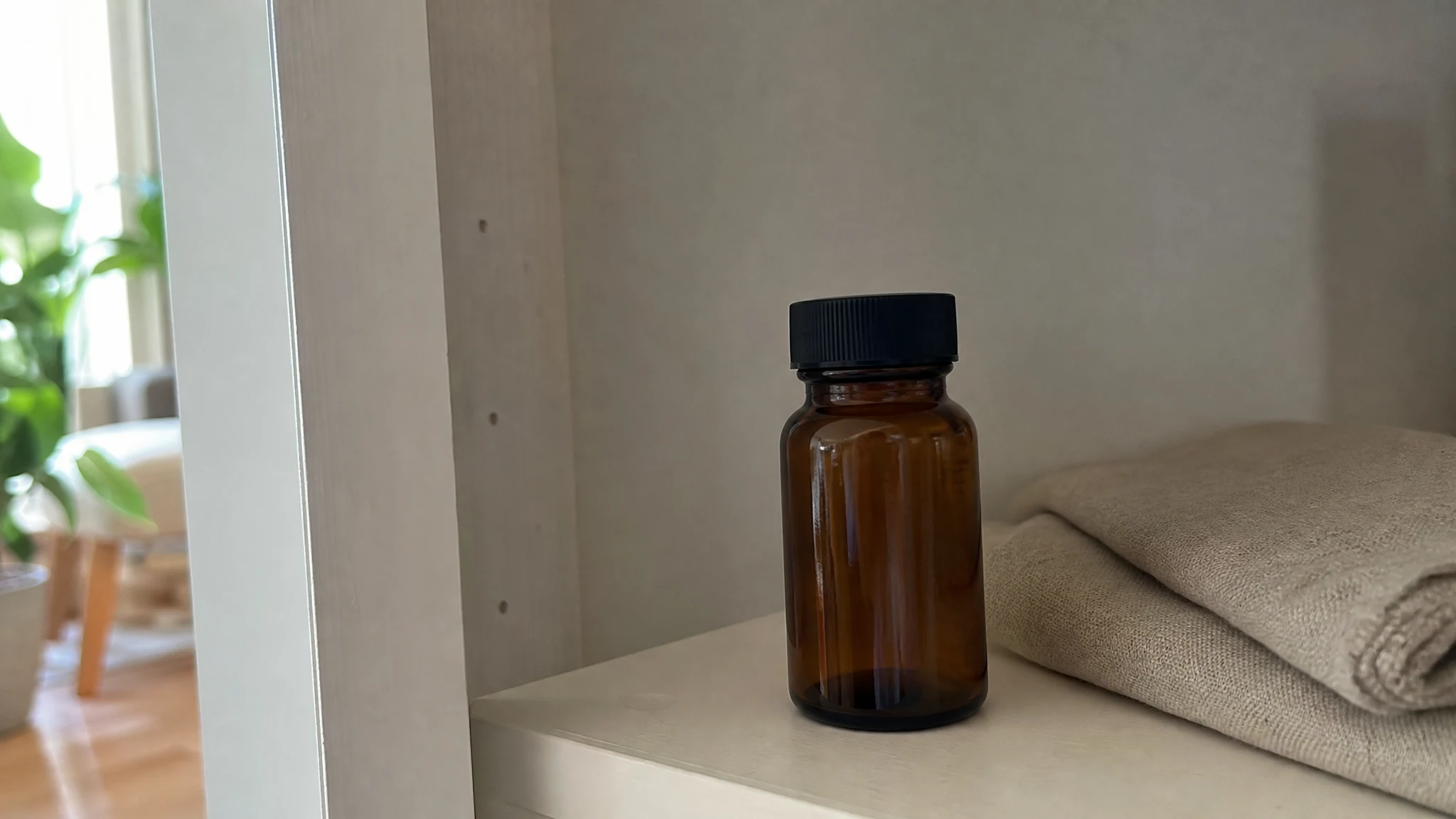
When you are done with the oil, cap it fully, wipe the outside of the bottle and put it away at once, up high and behind a closed door. Do it every time, even when you are tired. If you share a home, make sure everyone who might pick it up knows where it lives and why.
If you would still like a pleasant-smelling room
You do not need eucalyptus for that. Fresh air, clean bedding and a window that opens do the real work, and a scent-free nursery is a perfectly good one. If you enjoy eucalyptus yourself, enjoy it in another part of the house, with the door closed and a window open, and keep the bottle where the baby will not meet it. Our air freshener guide covers keeping a room fresh with a light touch, and our article on what poison centers say to do is worth reading before you ever need it. If a bottle is swallowed or gets in the eyes, Poison Control lists a free, confidential helpline at 1-800-222-1222 in the United States.
Questions about a particular baby, especially one with asthma, eczema or a history of seizures, belong with your pediatrician. They can weigh what a website cannot. Our overview of who should skip eucalyptus covers other situations too, and our page on pregnancy and nursing is the companion to this one.
There will be plenty of years for the cool, leafy scent of eucalyptus. The nursery is not where we would start.
Eucalyptus Essential Oil
Eucalyptus Essential Oil from our own shop, in sizes from 0.5 oz to bulk.
From $9.99
Shop Now →Sources & Further Reading
- Poison Control, Eucalyptus oil: Is it safe?
- IPCS INCHEM, Eucalyptus oil (PIM 031).
- Tibballs J, 1995, Clinical effects and management of eucalyptus oil ingestion in infants and young children.
- Day LM et al., 1997, Eucalyptus oil poisoning among young children: mechanisms of access and the potential for prevention.
- Flaman Z et al., 2001, Unintentional exposure of young children to camphor and eucalyptus oils.