Is Eucalyptus Oil Safe for Cats? What Owners Should Know
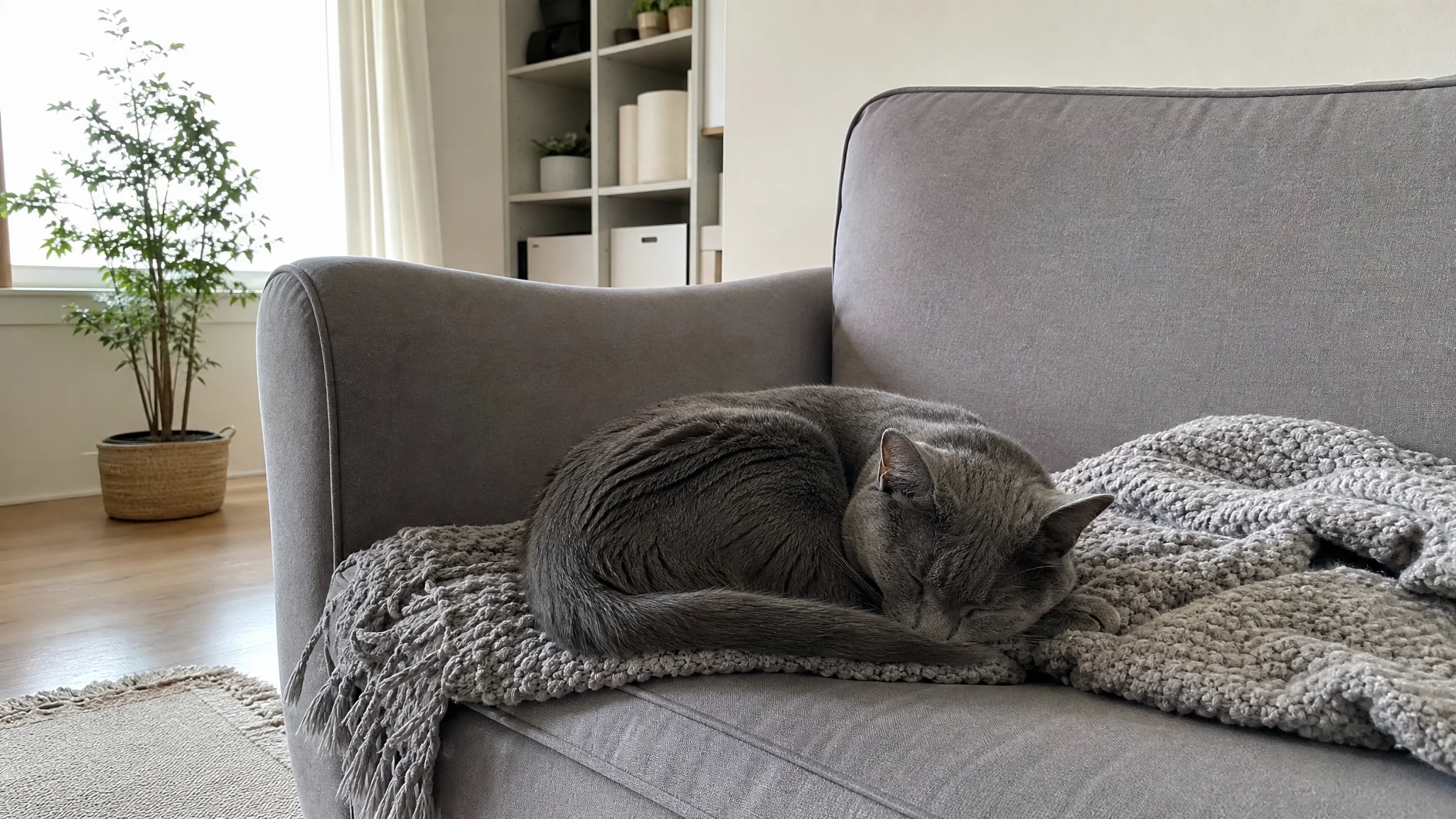
If you share your home with a cat, it is worth knowing where the guidance on eucalyptus lands before you open a bottle. The short version: no source we found says eucalyptus oil is safe for cats, and the ones that speak to cats point toward caution. We make no pet claim for our five eucalyptus oils, and our product pages say to keep them away from pets.
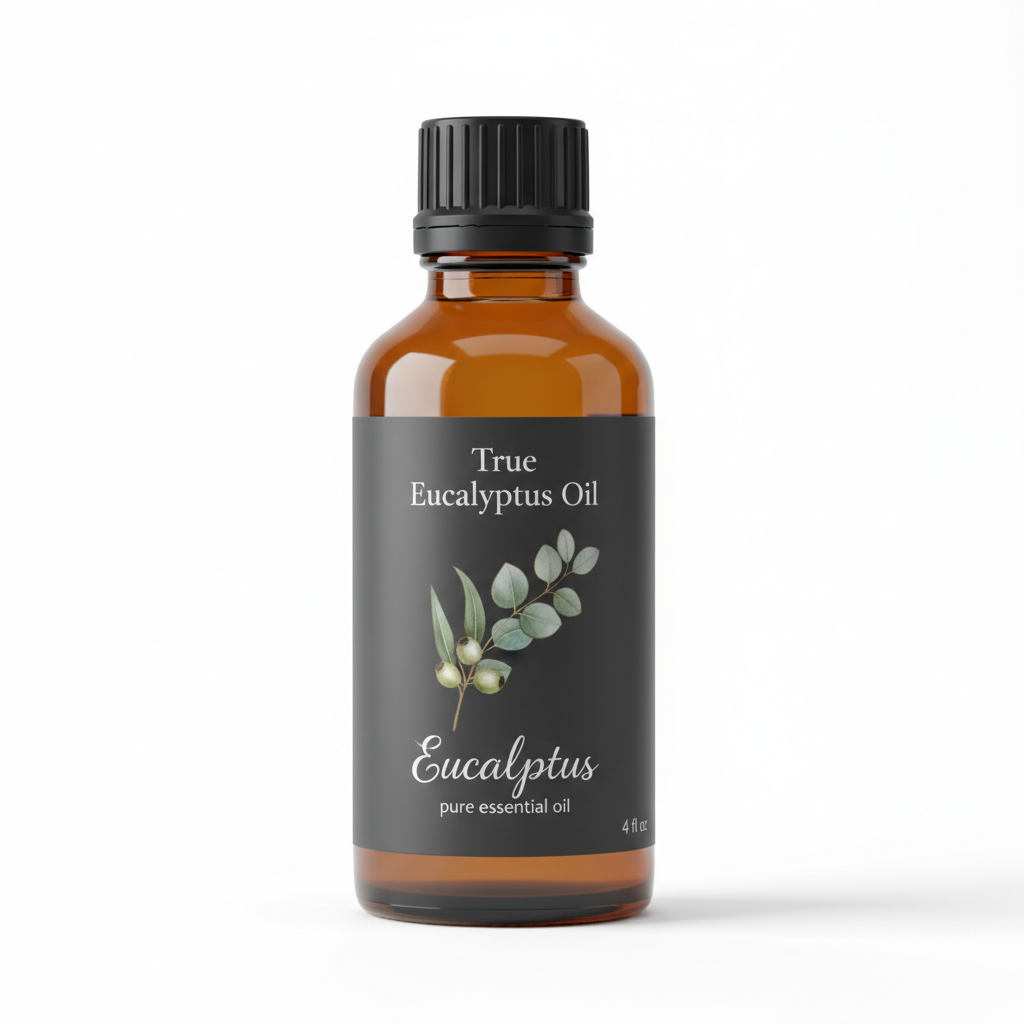
Eucalyptus Essential Oil
Our own Eucalyptus Essential Oil, in sizes from 0.5 oz to bulk.
From $9.99
Shop Now →What the pet-safety organizations say
The ASPCA lists the eucalyptus plant as toxic to dogs, cats and horses, naming essential oils and eucalyptol as the toxic principle and listing salivation, vomiting, diarrhea, depression and weakness as signs. That entry is about the plant and gives no dose. In a June 2020 article on household products the ASPCA adds that cats are especially sensitive to essential oils, that swallowing significant amounts can cause stomach upset, central nervous system depression and even liver damage, and that inhaling oils could lead to aspiration pneumonia. It recommends not using essential oils where pets have access unless they are supervised or your veterinarian approves.
Pet Poison Helpline lists eucalyptus among the oils that can cause poisoning and says essential oil toxicosis can affect all species, but cats and birds are at the greatest risk. Its common signs are drooling, vomiting, lethargy and loss of appetite, usually within 6 to 8 hours, and it ranks oral exposure as the highest risk, then skin, then breathing.
None of this is a feeding or exposure trial of eucalyptus oil in cats, so the guidance is a precaution built from the plant listing and the poison-center experience. It is still a clear and consistent one.
Why cats are different
The explanation most often offered is liver chemistry. Cats are slow at glucuronidation, one of the routes the body uses to clear foreign compounds. Court and Greenblatt compared liver tissue from cats, dogs, humans and other species using acetaminophen as the test compound and found the high-affinity glucuronidation rate was over 10-fold lower in cats than in dogs and humans. That study tested acetaminophen, not eucalyptol, so we do not claim it proves anything about eucalyptus. It does show a genuine gap in one pathway.
Regulators have acted on the same idea. In its 2023 opinion on eucalyptus oil as a feed flavouring, EFSA set maximum safe levels in complete feed of 10 mg/kg for cats and 58 mg/kg for dogs. The panel raised the required safety margin for cats from 100 to 500 because cats have a low capacity for glucuronidation, citing Court and Greenblatt. It also classed the oil as an irritant to skin, eyes and the respiratory tract and as a skin sensitiser. A feed limit is a figure for food mixed evenly, so it says nothing about oil on fur. What it does show is that a regulator reviewing the data judged the margin for cats too thin to allow the dog figure.
How exposure tends to happen at home
Because oral exposure ranks highest, grooming is the pathway to think about. This is our reasoning, not a cited finding: a cat that picks up oil on a paw or flank will lick it off within minutes, so a skin exposure can become an oral one. A tipped bottle, a wet diffuser reservoir or a damp cleaning cloth is more of a concern than a scent drifting through a room.
The one dataset that counts cats looked at essential-oil flea products. Genovese and colleagues reviewed ASPCA poison-control records for 39 cats and 9 dogs and found 92% had at least one adverse effect, including 36 of the 39 cats, even when the products were used according to the label. Those were commercial blends and eucalyptus was not singled out, so it describes a product category and not our oils. Our page on eucalyptus oil and fleas goes further.
Diffusers, plants and dried bundles
No study we found measured eucalyptus vapor in a home with a cat. Pet Poison Helpline ranks breathing as the lowest-risk route, which is reassuring for a brief, contained exposure, and the ASPCA still asks for supervision or veterinary approval. Our practical suggestion: keep the cat out of the room, close the door, ventilate afterward, and skip diffusing altogether if your cat has any breathing problem. Our diffuser article assumes a household without a cat in the room. The ASPCA also lists the plant as toxic to cats, so hang dried eucalyptus well out of reach.
If your cat has been exposed
Call a veterinarian or a pet poison hotline and have the bottle with you, without waiting for signs. For skin exposure, Pet Poison Helpline advises bathing with liquid dishwashing detergent, and it advises against inducing vomiting because of the aspiration risk. Which steps suit your cat is a veterinarian's decision.
Small habits that keep a cat household easy
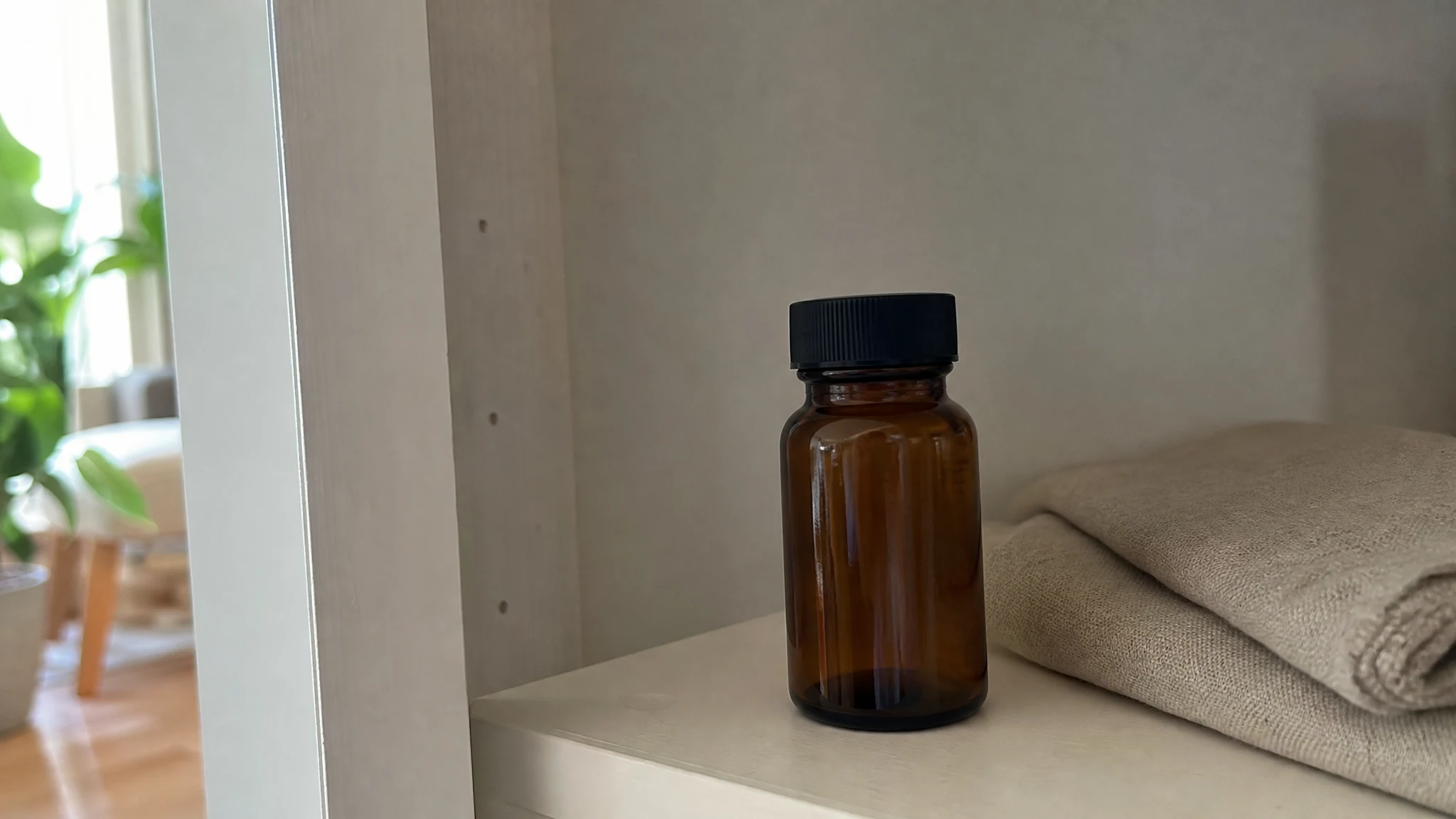
Cats are explorers, and a bottle on a low shelf is an invitation. We suggest choosing a closed cupboard or a high cabinet as the permanent home for any essential oil, and returning the bottle there the moment you are done. If you have ever watched a cat knock a glass off a table for fun, you will know why a tall shelf with a cat-proof edge is better than a tidy-looking windowsill.
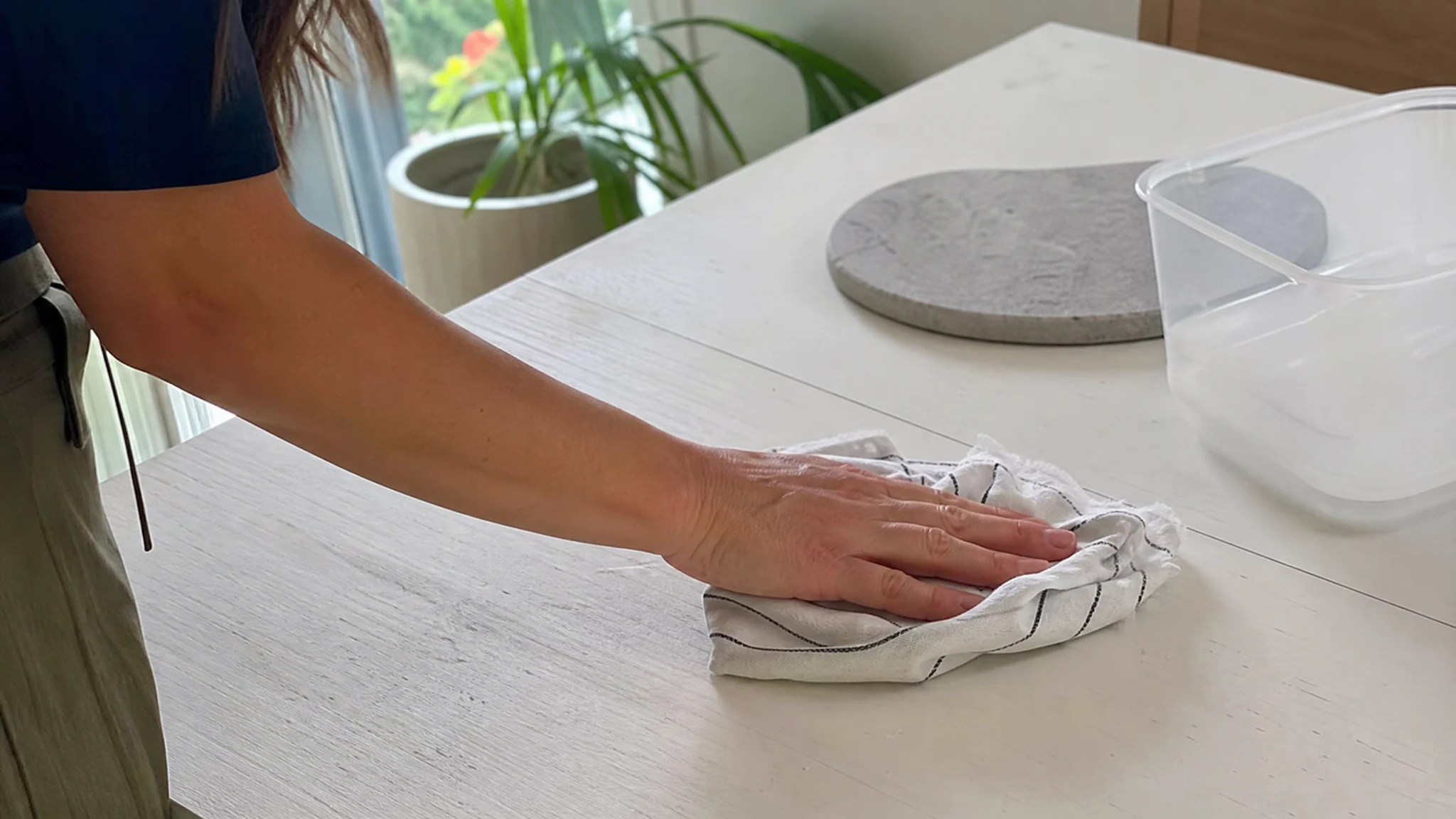
Keep a roll of paper towel nearby when you are measuring oil, and wipe any drip straight away so there is nothing on the counter for a curious paw to find. Wash your hands before you stroke a cat, too.
Our own routine
Our rule follows from the sources: bottle capped and stored high, no oil on or near the animal, and a call to your vet before anything else if something spills. Our 0.5% to 2% skin guidance is for people only. Dogs differ from cats in useful ways, and our dog article covers them. For the human side, see who should ask first.
A little planning makes a eucalyptus-scented home and a happy cat entirely compatible, and your veterinarian can tailor it to your own animal.
Eucalyptus Essential Oil
Eucalyptus Essential Oil from our own shop, in sizes from 0.5 oz to bulk.
From $9.99
Shop Now →Sources & Further Reading
- Toxic and Non-toxic Plants: Eucalyptus, ASPCA.
- Pet Poisons: Be Mindful of these Household Products and Cleaning Agents, ASPCA, 4 June 2020.
- Essential Oils, Pet Poison Helpline.
- Safety and efficacy of a feed additive consisting of an essential oil derived from Eucalyptus globulus Labill. (eucalyptus oil) for all animal species (FEFANA asbl), EFSA Journal, 2023.
- Molecular basis for deficient acetaminophen glucuronidation in cats. An interspecies comparison of enzyme kinetics in liver microsomes, Court MH and Greenblatt DJ, Biochemical Pharmacology, 1997.
- Adverse reactions from essential oil-containing natural flea products exempted from Environmental Protection Agency regulations in dogs and cats, Genovese AG, McLean MK and Khan SA, Journal of Veterinary Emergency and Critical Care, 2012.