Eucalyptus Oil Poisoning: First Steps and Who to Call
If someone has swallowed eucalyptus oil, or you think they might have, call Poison Help at 1-800-222-1222 now, or use the online tool at poison.org, and read the rest of this page afterwards. The service is free, confidential and open around the clock, and the specialists on the line do this every day. If the person has collapsed, is having a seizure or is struggling to breathe, use your local emergency number instead.
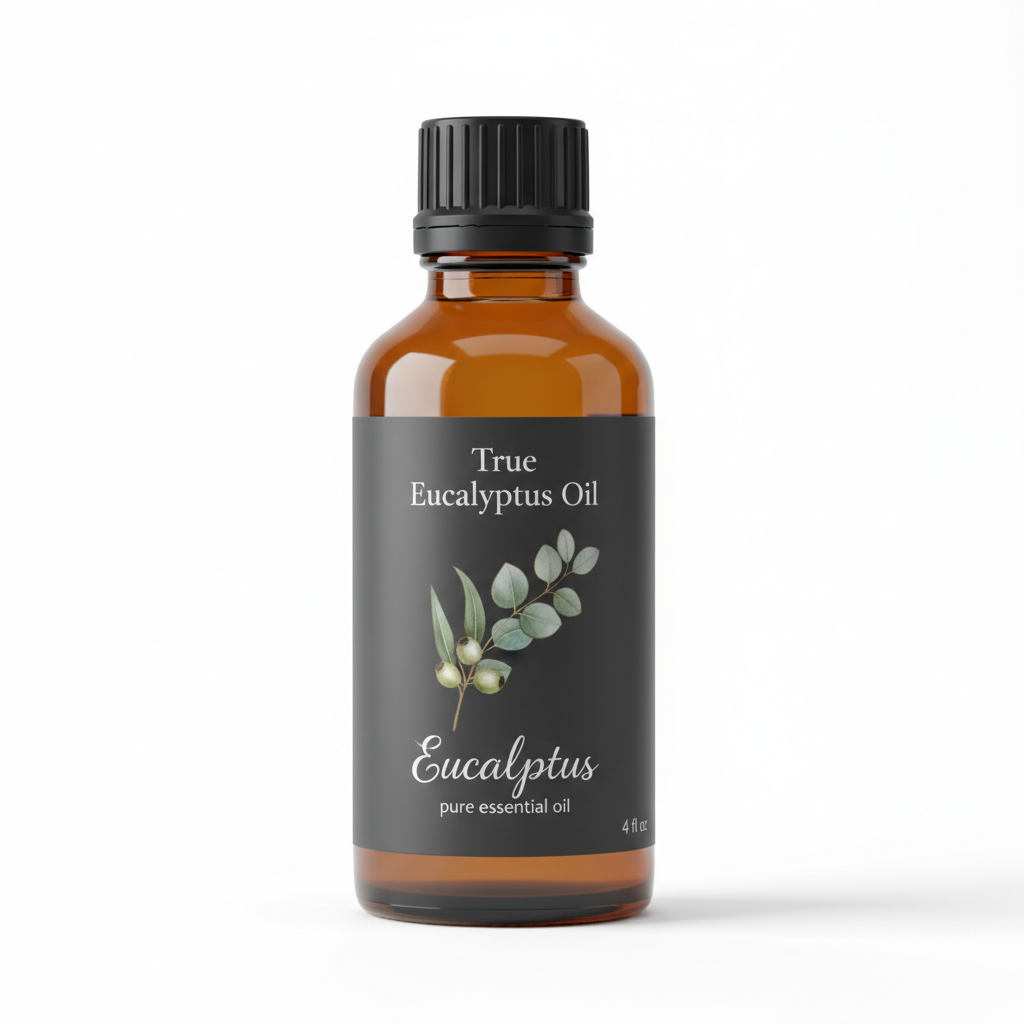
Eucalyptus Essential Oil
Our own Eucalyptus Essential Oil, in sizes from 0.5 oz to bulk.
From $9.99
Shop Now →The first few minutes, in order
This is a summary of what poison centers and medical references say, so you know what to expect. It is not a substitute for the call.
- Do not make the person vomit unless poison control or a health professional tells you to. MedlinePlus says so in its eucalyptus oil overdose entry, and the international poisons monograph is more specific: vomiting is contraindicated, and breathing the oil into the lungs is a major risk.
- Skin or eyes: MedlinePlus says to flush with lots of water for at least 15 minutes, and Poison Control says an eye splash is a reason to use the online tool or call.
- Have the facts ready: the person's age, weight and condition, the product name with ingredients and strength if you know them, when it happened and how much. Take the bottle to the phone.
- Stay with the person. Poison Control says symptoms usually appear within 30 minutes but can be delayed for up to 4 hours, so a quiet start is not an all-clear. The poisons monograph describes watching people who have no symptoms for six hours.
Why the amount is so hard to judge
The specialist will ask how much was swallowed, and that is the hardest question to answer. A dropper delivers roughly 20 drops to the millilitre, so a teaspoon, about 5 ml, is around 100 drops. Poison Control states that a teaspoonful or less of undiluted eucalyptus oil can be fatal. For comparison, a half-ounce bottle holds about 14.8 ml by simple arithmetic, which is three times that figure. If a child has been near any bottle and you cannot say it was capped and untouched, say plainly on the call that the amount is unknown.
The research explains why nobody can promise a safe threshold. An Australian hospital review of 109 children found clinical effects in 59 percent, and the authors anticipated significant drowsiness or worse after 5 ml or more of undiluted oil, with milder effects possible at 2 to 3 ml. All of those children recovered, though hospital stays averaged 22 hours. Another series from Queensland found that most of its children, 80 percent, had no symptoms at all, including four who reportedly swallowed more than 30 ml, and yet it found no link between the amount reported and whether symptoms appeared. Reported volumes are parents' estimates, so the sensible reading is that you cannot predict the outcome, which is exactly why the call matters.
Most accidents start with access
The study that asked parents what happened is the most useful for everyday life. A Victorian survey of 109 families whose children under five had swallowed, or might have swallowed, eucalyptus oil found that 74 percent of children reached it through a home vaporizer unit, most often placed at ground level. That is a storage story, not a story about careless people, and it points to a few habits:
- Store the bottle up, away and out of sight, ideally locked, as Poison Control advises for eucalyptus products.
- Keep children away from liquid in any vaporizer, simmer pot or diffuser, and keep them off the floor.
- Do not decant oil into a cup, dish or unmarked bottle, where it can be mistaken for a drink.
- Buy products with child-resistant closures where they are available. Our bottles are amber glass with a black cap, and we make no child-resistant claim, so shelf height is the protection we recommend.
A good habit is to walk through your home once, slowly, as a toddler would. Look at what can be reached from the floor, then from a chair, then from the arm of a sofa. Check the bathroom shelf, the bedside table, the diffuser on the kitchen counter, and any bag left on the floor. Visitors' handbags count too, so ask guests to keep their bottles zipped up and out of reach. It takes five minutes and it changes the picture completely.
While you are at it, save the Poison Help number in your phone as a favorite and write it on a card on the fridge. When you need a number, you will not want to be searching for it.
Pets and other household members
The same caution covers animals. The ASPCA lists eucalyptus as toxic to dogs and cats, and if a pet may have licked or swallowed any oil, call your veterinarian or the ASPCA Animal Poison Control line at (888) 426-4435. Our dog guide and cat guide explain more.
What these sources do and do not cover
These studies describe eucalyptus oil in general, a lot of it sold in Australia as vaporizer fluid, so they cannot tell you how any one bottle behaves. We sell five eucalyptus oils neat for external, aroma-led use, and they are not for internal use. Our overview of eucalyptus oil safety sets out how to use them well, and our note on storage covers where to keep them.
Keep the number somewhere you can find it in a hurry. A call that turns out to be unnecessary costs nothing, and the specialists would much rather hear from you early.
Eucalyptus Essential Oil
Eucalyptus Essential Oil from our own shop, in sizes from 0.5 oz to bulk.
From $9.99
Shop Now →Sources & Further Reading
- Poison Control. Eucalyptus oil: Is it safe? poison.org
- MedlinePlus. Eucalyptus oil overdose: MedlinePlus Medical Encyclopedia. medlineplus.gov
- IPCS INCHEM. Eucalyptus oil (PIM 031). inchem.org
- Tibballs J, 1995. Clinical effects and management of eucalyptus oil ingestion in infants and young children. Medical Journal of Australia. PubMed
- Webb NJ, Pitt WR, 1993. Eucalyptus oil poisoning in childhood: 41 cases in south-east Queensland. Journal of Paediatrics and Child Health. PubMed
- Day LM, Ozanne-Smith J, Parsons BJ, Dobbin M, Tibballs J, 1997. Eucalyptus oil poisoning among young children: mechanisms of access and the potential for prevention. Australian and New Zealand Journal of Public Health. PubMed
- ASPCA. Toxic and Non-toxic Plants: Eucalyptus. aspca.org