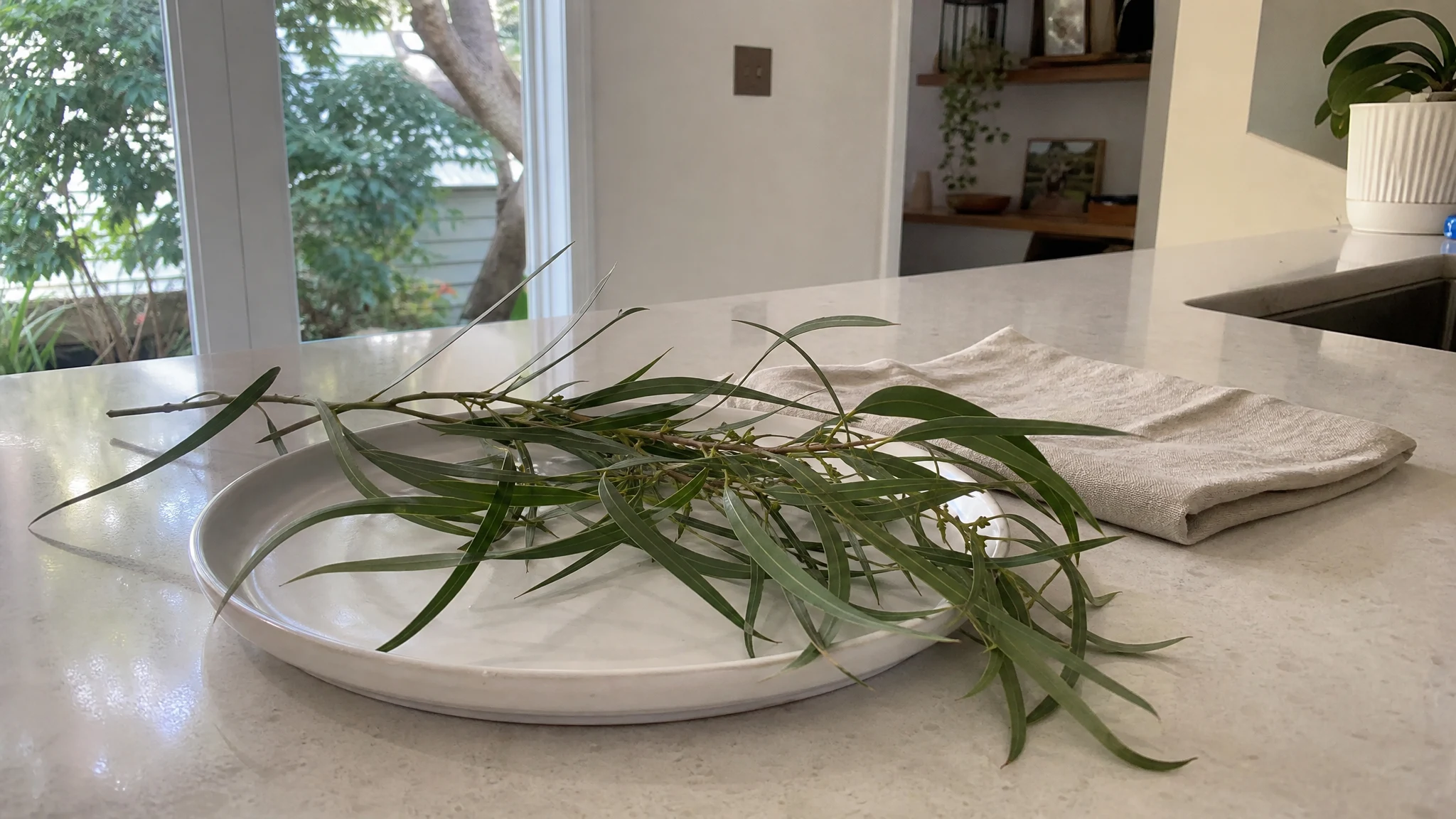
Eucalyptus Radiata Oil: The Gentler Eucalyptus
Most people meet eucalyptus through the sharp, bracing smell of globulus, and then someone hands them radiata and they pause. It is softer and rounder, with a gentle camphor note and a sweet, faintly citrus finish. We think radiata is one of the most pleasant surprises in the eucalyptus family, and it has a story that goes right back to the beginning of the Australian oil trade.
Eucalyptus Essential Oil
Our own Eucalyptus Essential Oil, in sizes from 0.5 oz to bulk.
From $9.99
Shop Now →A tree with history
Radiata is the narrow-leaved peppermint gum, Eucalyptus radiata. It was the species a pharmacist and a botanist distilled in 1852 when they built a crude still at Dandenong Creek in Victoria, where it grew profusely, and that is where commercial eucalyptus oil production is said to have begun (An Introductory Overview of the Essential Oil Industry in Australia). We find it a charming detail that the oil which started the trade is the gentle one. If you would like the full timeline, our history of eucalyptus oil walks through it.
Why radiata smells the way it does
Here is the interesting part. You might expect a softer-smelling oil to contain much less of the big eucalyptus compound, 1,8-cineole. The CSIRO species profile says otherwise: the cineole form of radiata sits around 70%, and the oil quality target is 65 to 75% cineole. The profile says that this cineole, working together with alpha-terpineol and other components, gives a sweeter and less harsh odour than other cineole-rich oils. It even notes that a producer believes higher cineole levels mask the sweeter aromas the oil is known for (Narrow-leaved Peppermint (Eucalyptus radiata Sieber ex DC subsp. radiata)).
So the difference you notice between radiata and globulus is not one big gap in the main ingredient. It is the supporting cast. Think of a chord: the same root note, but different notes layered on top. That is our reading of the published profile rather than a measurement of our own oil, and we do not list a cineole figure for any oil we sell. If a number matters for your formula, please ask us in writing before you order.
What radiata smells like in the room
Open the bottle and let it sit under your nose for a moment. The first thing you notice is a soft, fresh, clean smell, with the camphor turned down to a murmur. Give it a little longer and a sweet, citrus-tinged finish drifts in behind it. It is the kind of eucalyptus that people who find globulus a bit stern tend to warm to, and that is why we are fond of it.
In a diffuser, radiata feels more like a gentle open window than a blast of cold air. It sits comfortably with lavender and lemon, and it is a nice choice for a room where you want freshness without a lot of drama.
Radiata, dives and a bit of name confusion
Two of our oils carry "peppermint gum" in their common names, and they are different trees. Radiata is narrow-leaved peppermint. Dives is broad-leaved peppermint, and we describe it as minty and sweet over a camphoraceous spine, nearer to peppermint than to globulus. The names get tangled in the trade because both species come in several chemical forms. CSIRO's profile for dives describes one form built around piperitone and phellandrene and others rich in 1,8-cineole (Broad-leaved peppermint (Eucalyptus dives)), and the radiata profile reports several chemotypes too, only one of which it discusses.
The takeaway is friendly and practical: a species name tells you the tree, and the nose tells you the rest. If you are planning something where chemistry matters, ask any supplier for the analysis, ourselves included. Our species explainer, Globulus, Radiata, Citriodora, covers the same ground across all five oils.
Choosing between radiata and globulus
We would pick by room and by mood, not by the label.
- You want a bracing, clean-camphor character in a shower or steam room: that is our globulus.
- The camphor edge is not for you but you love a eucalyptus top note: radiata is the one we would reach for. It blends nicely with lavender, lemon, peppermint, rosemary, tea tree and pine oils, which you can find at a craft or aromatherapy supply shop.
- You want something minty and sweet: look at our dives.
- You want lemony: that is our lemon eucalyptus, a different chemistry altogether.
The skin arithmetic is the same for every one of them. Our radiata is sold neat, and our guidance is 0.5% to 2% in a carrier oil, roughly 3 to 12 drops per ounce of carrier. At about 20 drops per ml and 29.57 ml per ounce, an ounce holds roughly 590 drops, so 3 drops is about 0.5% and 12 drops about 2%. Droppers differ, so weigh the oil if the percentage matters, patch test first and keep it away from the eyes. We would start at the low end.
Little ways to enjoy it
- In the diffuser: a small amount, on its own or with one partner oil, in a room you control.
- In a shower: a few drops on the floor, away from the drain and the direct stream, with a hand on the wall because oil makes the floor slippery.
- In a handmade project: soap or candle makers often like it where they want a gentle green note rather than a loud one.
As with every oil we sell, begin with less than you think you need. You can always add a drop; you cannot take one back.
A word on where it grows
CSIRO reports that most cineole-type radiata oil today comes from plantations in South Africa, where the tree grows well. We do not state an origin for our radiata, so we will not guess, but it is a useful reminder that where a species is grown and where it is famous are not always the same place.
Because radiata is a cineole-rich oil, the same sensible cautions that apply to eucalyptus in general apply here. We advise against using high-cineole oils with babies and young children and keep diffusion light where a small child sleeps; for pregnancy, pets or a health condition, ask your own clinician or veterinarian. For everyone else, radiata is a soft, friendly way into the eucalyptus family.
Eucalyptus Essential Oil
Eucalyptus Essential Oil from our own shop, in sizes from 0.5 oz to bulk.
From $9.99
Shop Now →