Does Eucalyptus Oil Kill Mold? Why Moisture Comes First
Mold in a bathroom or basement makes people reach for anything in the cupboard, and eucalyptus oil, with its clean, medicinal smell, often gets a look. It deserves an honest answer. Our eucalyptus oils are sold for their aroma and are not a mold, mildew or antifungal product, and the best advice for a real moldy surface does not involve a scented oil at all.
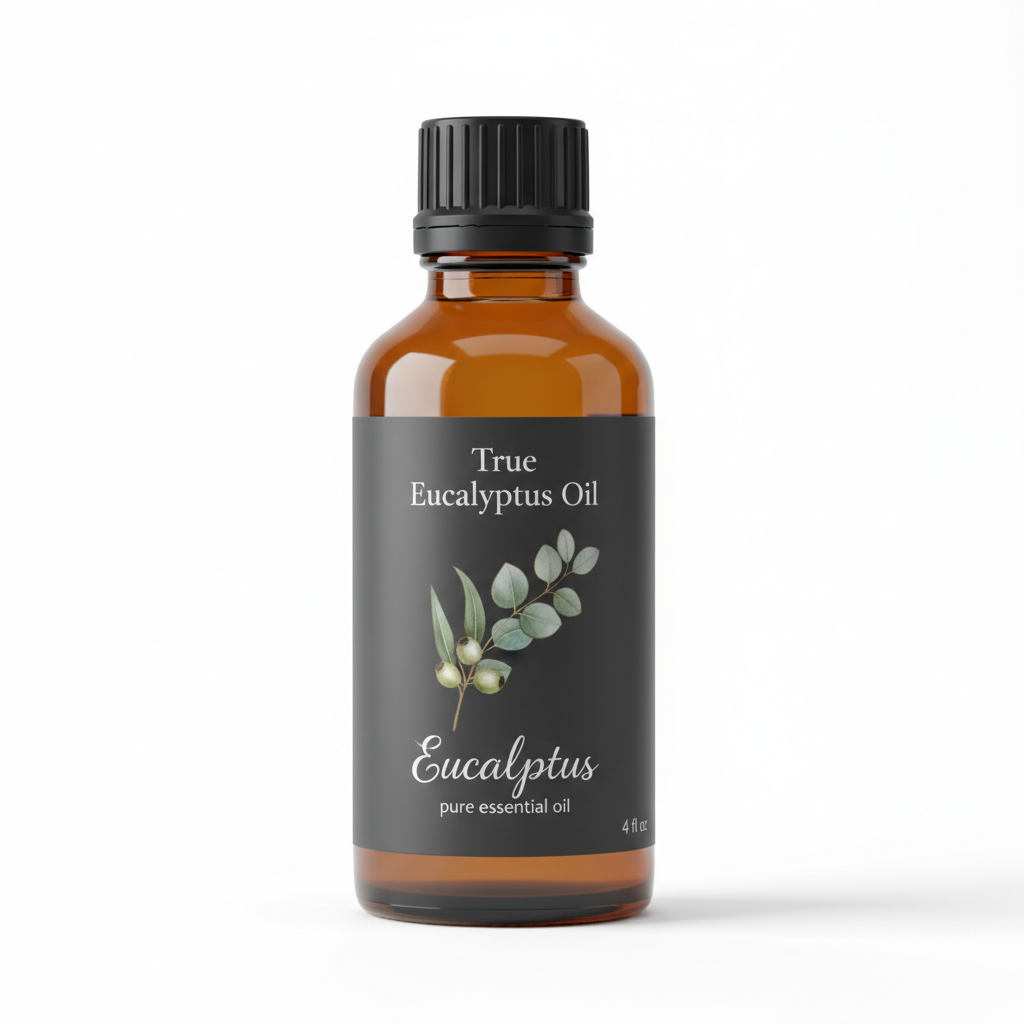
Eucalyptus Essential Oil
Our own Eucalyptus Essential Oil, in sizes from 0.5 oz to bulk.
From $9.99
Shop Now →What the lab has reported
Researchers do study eucalyptus oil against fungi. One 2023 study in the journal Plants analyzed a Eucalyptus globulus oil that was 63.1% 1,8-cineole and tested it on agar plates. Against microscopic fungi the clear zones around the oil measured 11.00 to 12.33 mm, and the vapor phase worked better than direct contact. That tells us a plate of fungus grew less near the oil in a lab, under controlled conditions, with that particular oil. It does not tell us what would happen on grout, drywall or a shower wall, and the study did not involve homes, people or our oils. Plate results are a starting point for scientists, not a cleaning method.
Why moisture is the real story
The EPA's guidance puts it plainly: the key to mold control is moisture control. If mold is a problem, clean it up promptly and fix the water problem, and dry water-damaged areas and items within 24 to 48 hours. Surface treatments cannot outrun a leak, a steamy room with no ventilation, or a damp wall.
EPA adds two practical points. First, dead mold may still cause allergic reactions in some people, so it is not enough to simply kill the mold; it has to be removed. Second, absorbent or porous materials such as ceiling tiles and carpet may have to be thrown away once they are moldy, because growth can fill the spaces inside them where a surface spray never reaches. Together, those points explain why even a product with good lab results does not finish the job.
It is worth saying what you may notice before you ever see mold: a musty, closed-in smell in a cupboard, a bathroom that never quite dries, a window sill that stays damp. Those are the early hints that the room has a moisture problem, and they are a much better signal to act on than any scent. Follow your nose to the cause, and sort it out first.
What to do instead
For a small patch on a hard surface such as tile, glass or a sealed counter, EPA says to scrub the mold off with detergent and water and dry the area completely. The agency says that if the moldy area is less than about 10 square feet, roughly a 3 ft by 3 ft patch, you can in most cases handle the job yourself. For scale, one tiled shower wall that is 3 ft wide and 6.5 ft high is already about 19.5 square feet, so growth that has climbed a shower wall is often past the do-it-yourself size before it looks bad. Larger areas, or significant water damage, are a job for a professional with mold experience, and EPA recommends consulting its guidelines for those cases.
If someone in the household has asthma, allergies or a weakened immune system, a physician is the right person to ask about mold exposure.
Keeping a bathroom dry, the unglamorous way
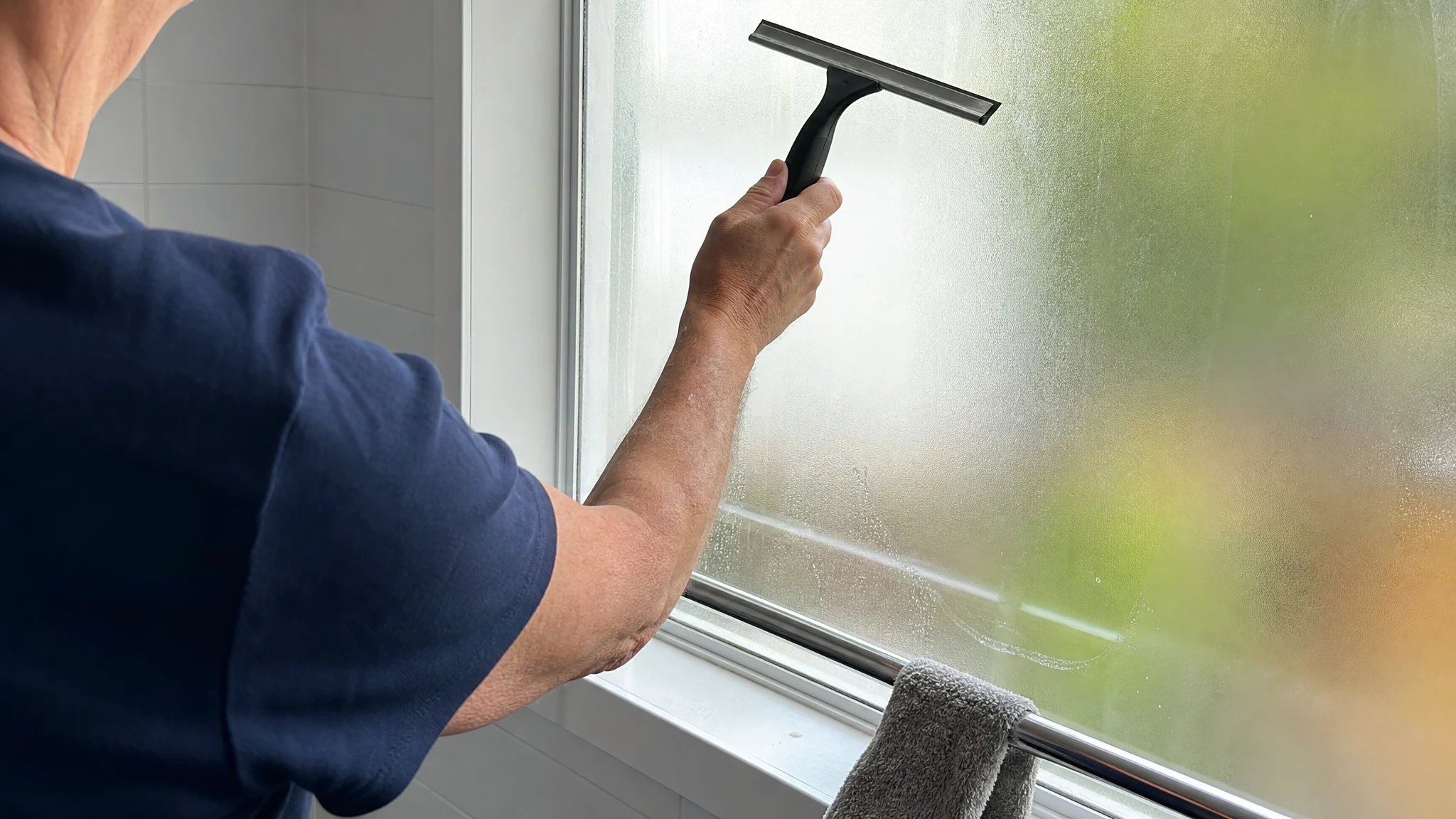
The habits that keep a bathroom comfortable are not exciting, which is probably why they get skipped. Run the fan or open the window while you shower and for a while afterwards. Hang towels so they can dry out instead of bunching on a hook. Squeegee or wipe the shower wall if you have a minute, and leave the shower curtain spread out rather than scrunched at one end.
You will also notice the places where water likes to sit: the corner of a window sill, the seam where tile meets tub, the underside of a bath mat. A quick glance at those spots now and then tells you far more than a scented bottle ever will.
Where eucalyptus does belong
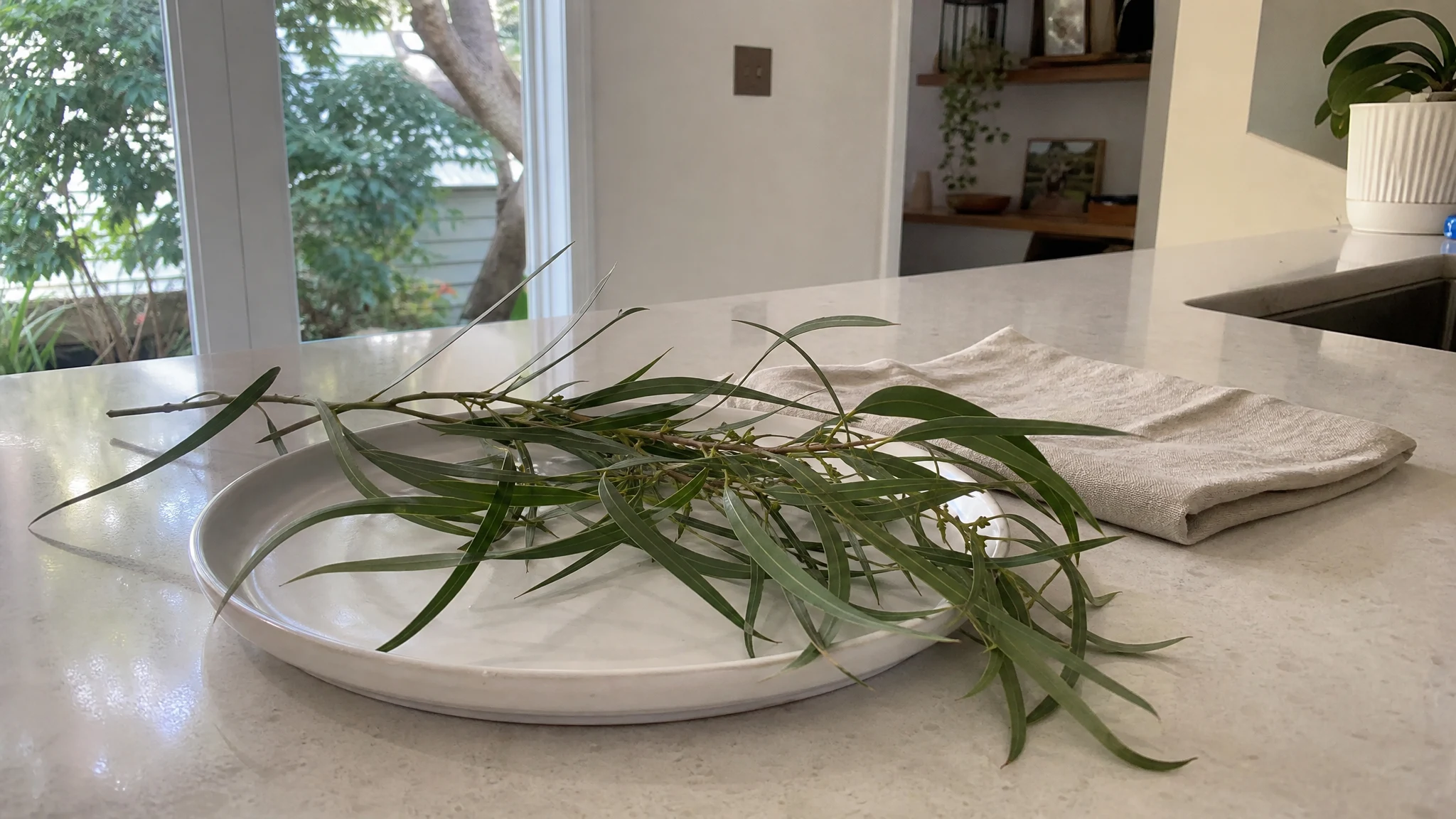
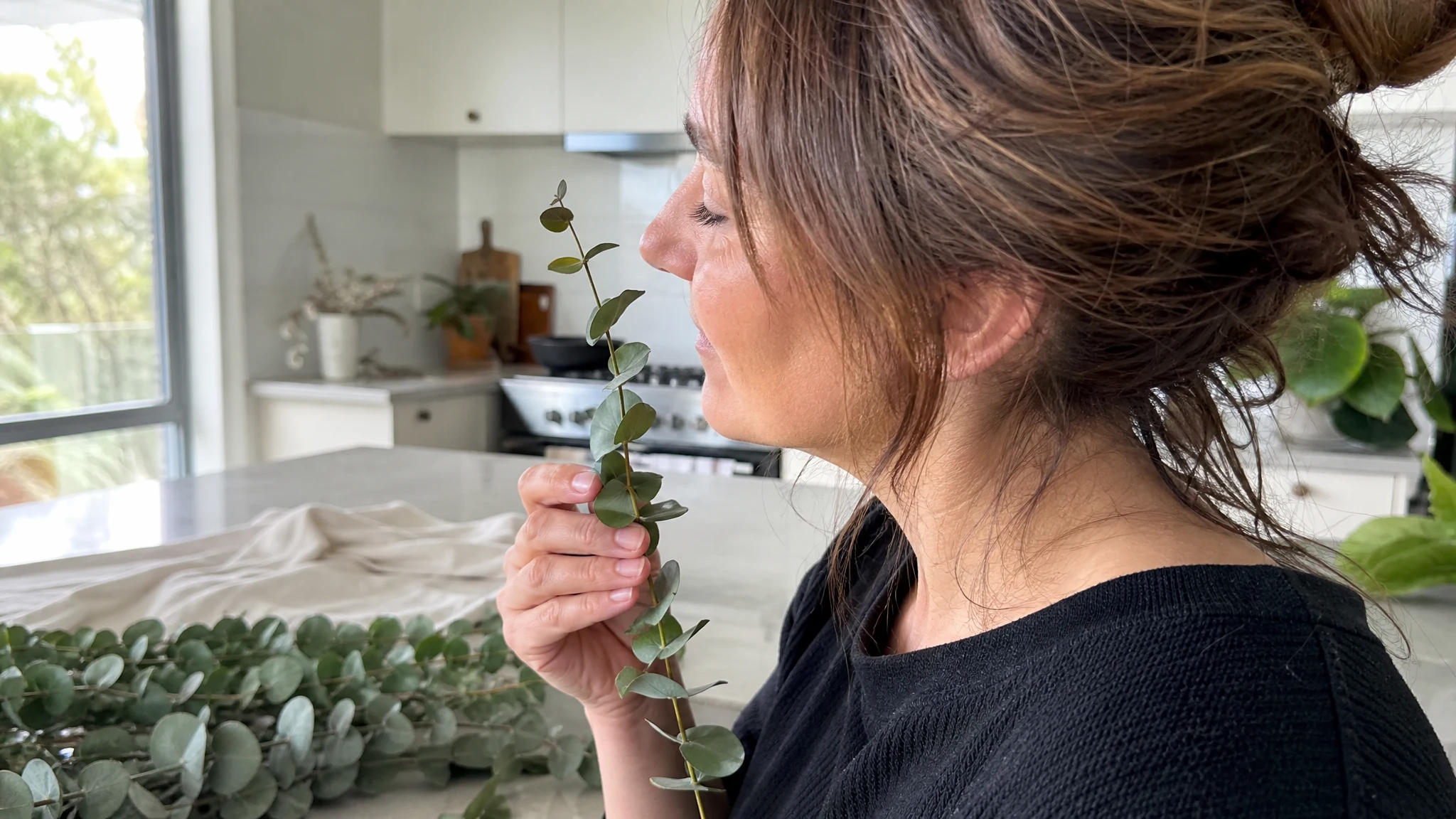
Once the water problem is fixed and the surface is clean and dry, eucalyptus oil can do something it does well: make a room smell fresh. Our globulus has a cool, camphor-fresh scent with a faintly sweet, woody finish, and lemon eucalyptus is bright and lemony. If you want to scent a bathroom after cleaning, a few drops in a diffuser or in a rinse step is a pleasant finishing touch, and our cleaning overview and spray formulation show how to do it without marking finishes. Check a hidden spot first, as our surfaces guide explains.
It also helps to keep oils out of the mix with other products. Never add essential oil to a bleach solution or to any cleaner you are not sure about, and EPA specifically warns never to mix bleach with ammonia or detergents containing ammonia, because toxic fumes can result.
A freshly cleaned and dried bathroom is the nicest place to open a bottle of eucalyptus. The cool, green scent seems to belong with the clean tile and the open window, and that is the kind of fresh we love it for.
Our oils are made for scent, and mold is better left to the tools made for it: a hardware store carries the detergents and scrub brushes, and a remediation professional can help with bigger jobs.
A tip we would pass along: keep a small bucket, a stiff brush and a bottle of your usual detergent together in one spot, so a quick clean is never an effort. The easier it is to start, the more likely a small damp patch gets handled before it grows into a big one.
Fix the water, scrub with detergent, dry it well, and then enjoy a fresh eucalyptus scent in a room that is genuinely clean.
Eucalyptus Essential Oil
Eucalyptus Essential Oil from our own shop, in sizes from 0.5 oz to bulk.
From $9.99
Shop Now →