Eucalyptus and Asthma: Why Capsules Differ from Scent
Search for eucalyptus and asthma and you will find two stories that sound like they contradict each other. In one, researchers gave people with asthma capsules of cineole, the main compound in many eucalyptus oils, and saw real changes. In the other, asthma organizations warn that strong scents can set off an attack. Both are true, and the reason is that they describe very different things.
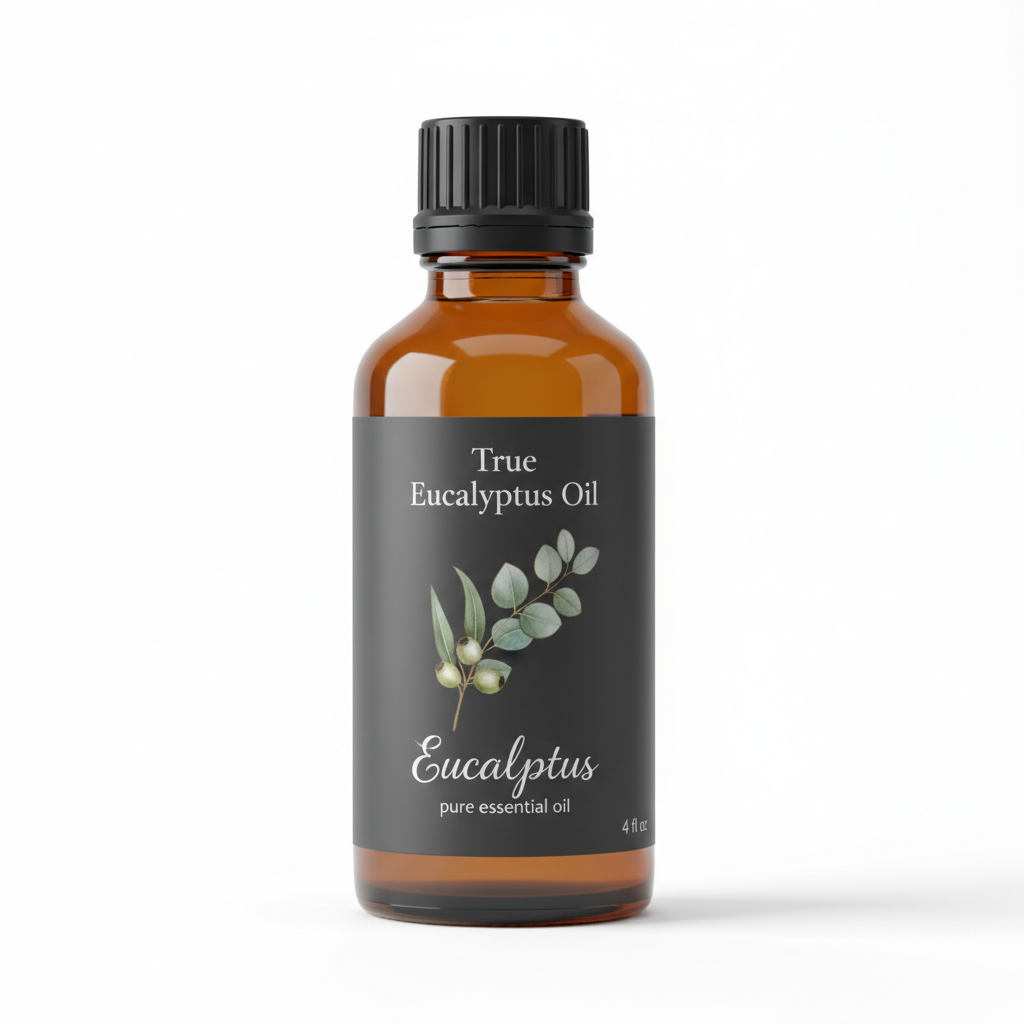
Eucalyptus Essential Oil
Our own Eucalyptus Essential Oil, in sizes from 0.5 oz to bulk.
From $9.99
Shop Now →The capsule trials
Eucalyptus oil is rich in 1,8-cineole in many species, so cineole is where the research tends to point. In a double-blind trial from 2003, 32 adults with severe, steroid-dependent asthma took 200 mg of cineole or a placebo three times a day in small gut-soluble capsules for 12 weeks, while doctors stepped their oral steroid doses down. The people on cineole tolerated a larger reduction in their daily prednisolone (36% against 7% on placebo), and twelve of sixteen managed to cut their steroids against four of sixteen on placebo. A later trial in 242 people with COPD, a different condition, found fewer flare-ups over six months of winter with cineole capsules added to usual care.
Look at what those studies actually were, though. The material was a purified compound in a pharmaceutical capsule, swallowed, by patients under a physician's care whose medicines were being adjusted. Nobody in them inhaled eucalyptus oil from a diffuser, steamed with it, or put it on skin. They are interesting science about one molecule in a medical setting, and they are not a guide to using an essential oil at home. They are certainly not a reason to swallow oil: Poison Control states plainly that eucalyptus oil should never be swallowed and that even a small dose can cause seizures, coma and death.
It helps to keep the two stories apart in your head. One is a laboratory story about a purified compound, and the other is an everyday story about how a scented room feels to the people in it. Mixing them up is where most of the confusion starts.
The scent side of the story
The other literature is about fragrance in general, not eucalyptus. The Asthma and Allergy Foundation of America says there is no evidence that essential oils can help asthma, and that breathing in the particles from the oils may trigger an attack, because their strong odors contain volatile organic compounds that affect indoor air, much as incense, air fresheners and scented candles do. A US survey of adults found that people with asthma were far more likely than others to report problems from fragranced products: 64.3% of those with asthma reported at least one adverse effect, and 41% reported trouble from air fresheners or deodorizers. Surveys rely on people's own reports and do not prove what caused a reaction, but the pattern is consistent enough to take seriously.
So when asthma is part of someone's life, a scented room is not a neutral thing. A scent that one person finds crisp and refreshing can be exactly what makes another person's chest tighten.
Why one person's crisp is another's too much
Scent is personal in a way that is easy to forget when you love a smell. The same cool, camphor-fresh burst that makes one person say "that smells clean" can make the person next to them reach for the window. Neither is wrong. You may notice that a scent you adore at home feels very different in a small closed room with other people in it, and a good habit is to ask before you introduce one into a shared space, especially in an office, a car or a bedroom that someone else uses.
What this means for how we talk about our oils
We sell five eucalyptus oils as external cosmetic oils for aroma and sensory use. We do not offer them for asthma, breathing or any health purpose, and we would not want anyone to read the capsule trials as a reason to try our oil for that. If you or someone in your home has asthma, the simplest rule is to ask your own clinician before bringing in any new scent, and to let the person with asthma decide whether the room smells welcoming or not. Many people with asthma prefer a scent-free home, and that is a perfectly good choice to respect.
For everyone else who enjoys eucalyptus, the practical lessons are the ones that apply to any strong aroma. Keep amounts small, keep air moving, and notice how the room feels. Our guides to using eucalyptus in a diffuser and to what the respiratory trials studied go further into both sides. Because cineole is such a prominent molecule in eucalyptus, our look at eucalyptol explains why it keeps turning up in research.
If you want to enjoy eucalyptus in a way that is easy to undo, choose something you can remove. A cotton pad on a saucer can be carried out of the room in seconds, while a scent that has been sprayed or heated into the air takes much longer to clear. That simple difference, how easily you can take the scent away, is worth thinking about before you start.
Eucalyptus has a reputation for being good for the chest, and the honest answer is that the research behind that reputation is more specific and more medical than the reputation suggests. We love the aroma for what it is, and we would rather you enjoy it comfortably than expect it to do more.
Eucalyptus Essential Oil
Eucalyptus Essential Oil from our own shop, in sizes from 0.5 oz to bulk.
From $9.99
Shop Now →Sources & Further Reading
- Juergens UR et al., 2003, Anti-inflammatory activity of 1.8-cineol (eucalyptol) in bronchial asthma: a double-blind placebo-controlled trial.
- Worth H, Schacher C, Dethlefsen U, 2009, Concomitant therapy with Cineole (Eucalyptole) reduces exacerbations in COPD: a placebo-controlled double-blind trial.
- Asthma and Allergy Foundation of America, AAFA Explains: Can Essential Oils Help Asthma?
- Steinemann A, 2018, Fragranced consumer products: effects on asthmatics.
- Poison Control, Eucalyptus oil: Is it safe?