What Is Eucalyptol? Why Species Changes the Oil
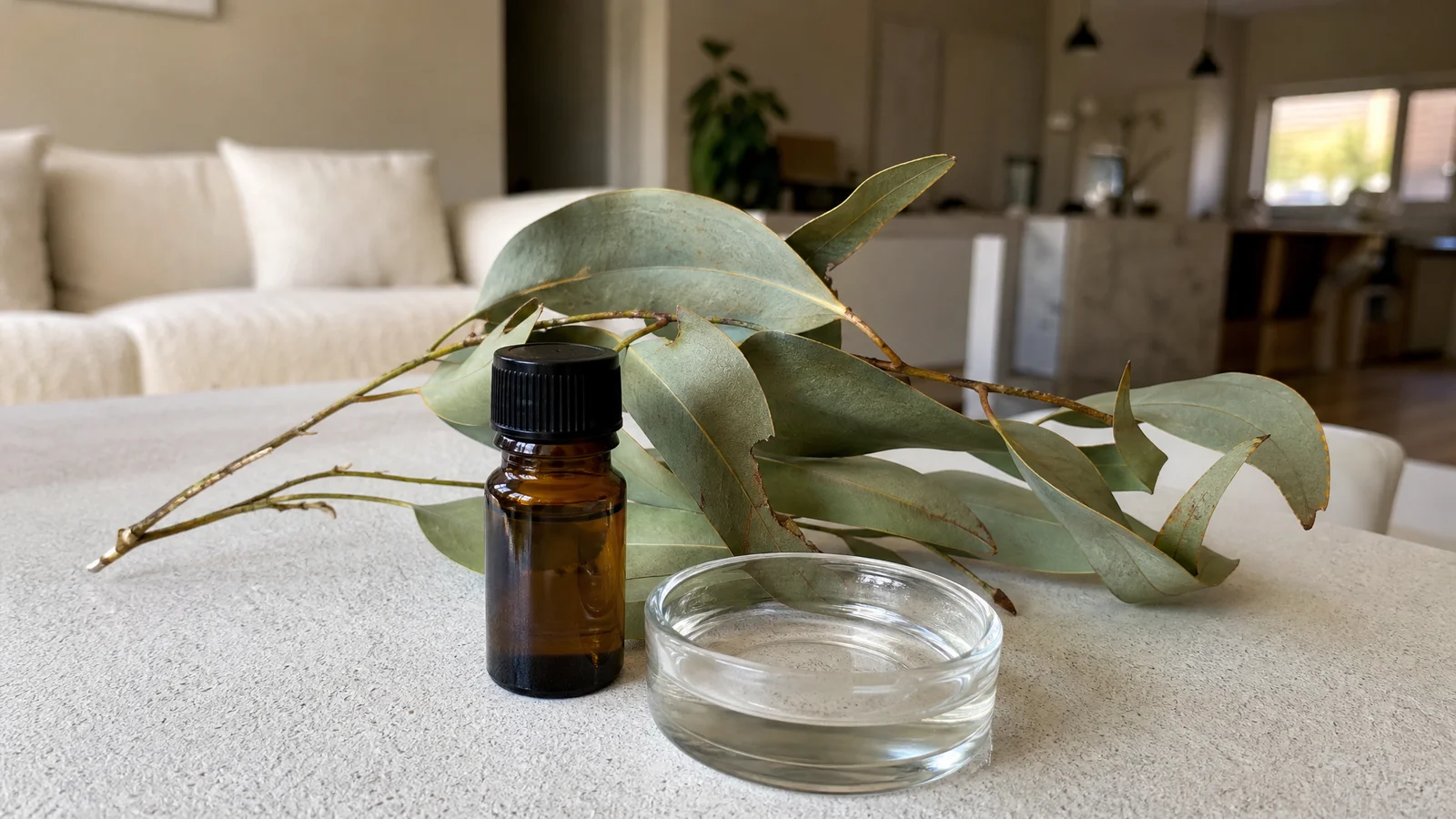
Eucalyptol sounds like a brand name, or a grade, or a promise. It is none of those. It is simply the everyday name for 1,8-cineole, the molecule that gives the best-known eucalyptus oils their cool, camphor-fresh character, and understanding it takes one short detour that changes how you read every eucalyptus label.
Eucalyptus Essential Oil
Our own Eucalyptus Essential Oil, in sizes from 0.5 oz to bulk.
From $9.99
Shop Now →One molecule, three names
Eucalyptol, 1,8-cineole and "cineole" on a trade price list all mean the same compound. The trade bulletin we lean on for this article, Eucalyptus oils: a review of production and markets, notes that "cineole" is usually shorthand for the 1,8 form, to tell it apart from a rarer 1,4 cousin. In the trade, "eucalyptol" also has a narrower meaning: essentially pure cineole, about 98% or more, which sits at the top of the price ladder. So the word names a molecule at one end of the scale, and the oils we sell are mixtures with a good deal more going on.
The leaf decides almost everything
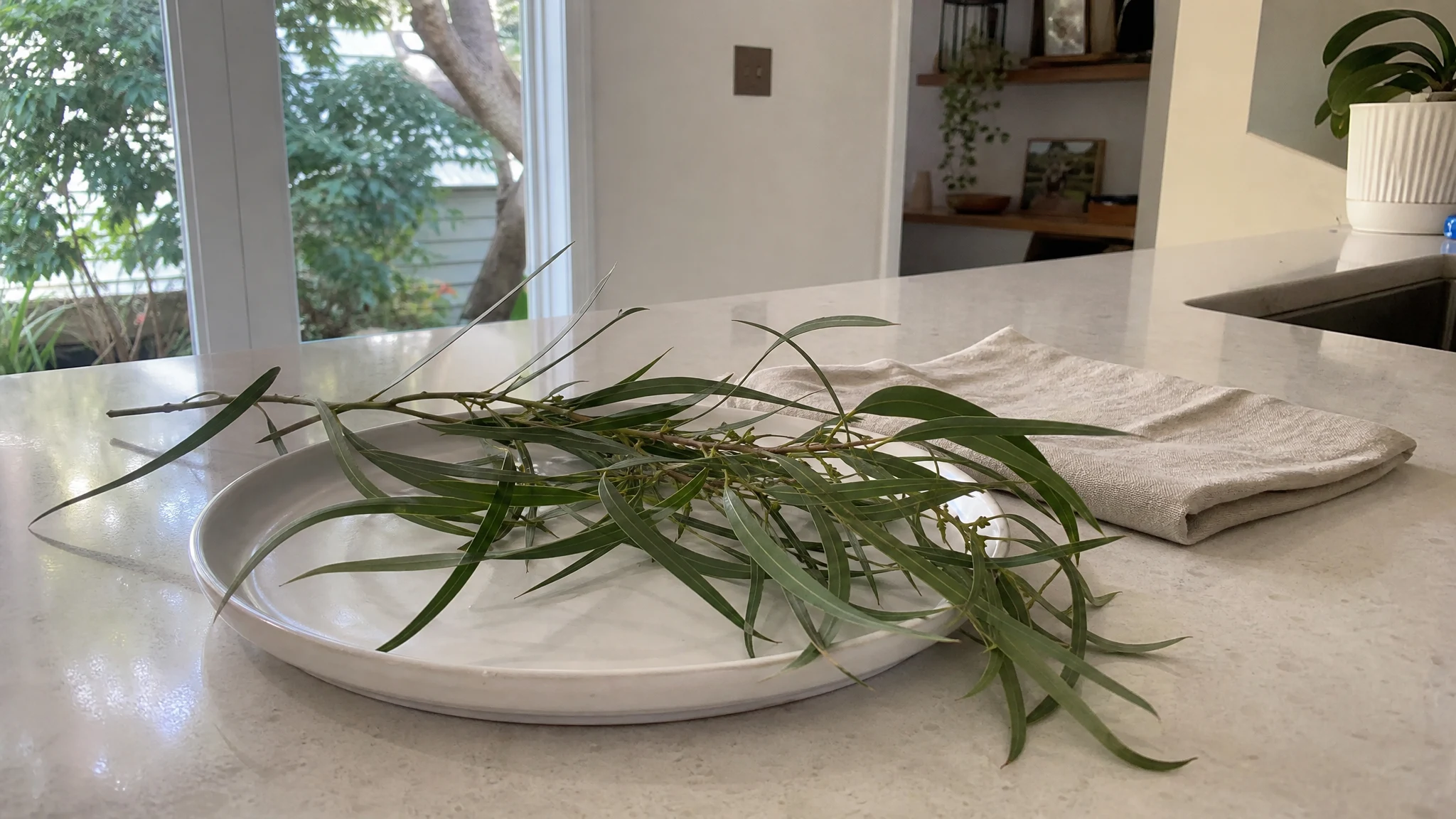
Here is the part we find most interesting. The same bulletin says the make-up of a eucalyptus oil depends mainly on genetics rather than on environment, which makes the species the single biggest influence on what the oil is like. Over 300 eucalyptus species hold oil in their leaves, and fewer than 20 have ever been used commercially. The commercial ones fall into broad families: cineole-rich oils, sold for their sharp, medicinal-smelling profile; lemon-scented oils from Eucalyptus citriodora, built around a different compound entirely (citronellal); and a few industrial types.
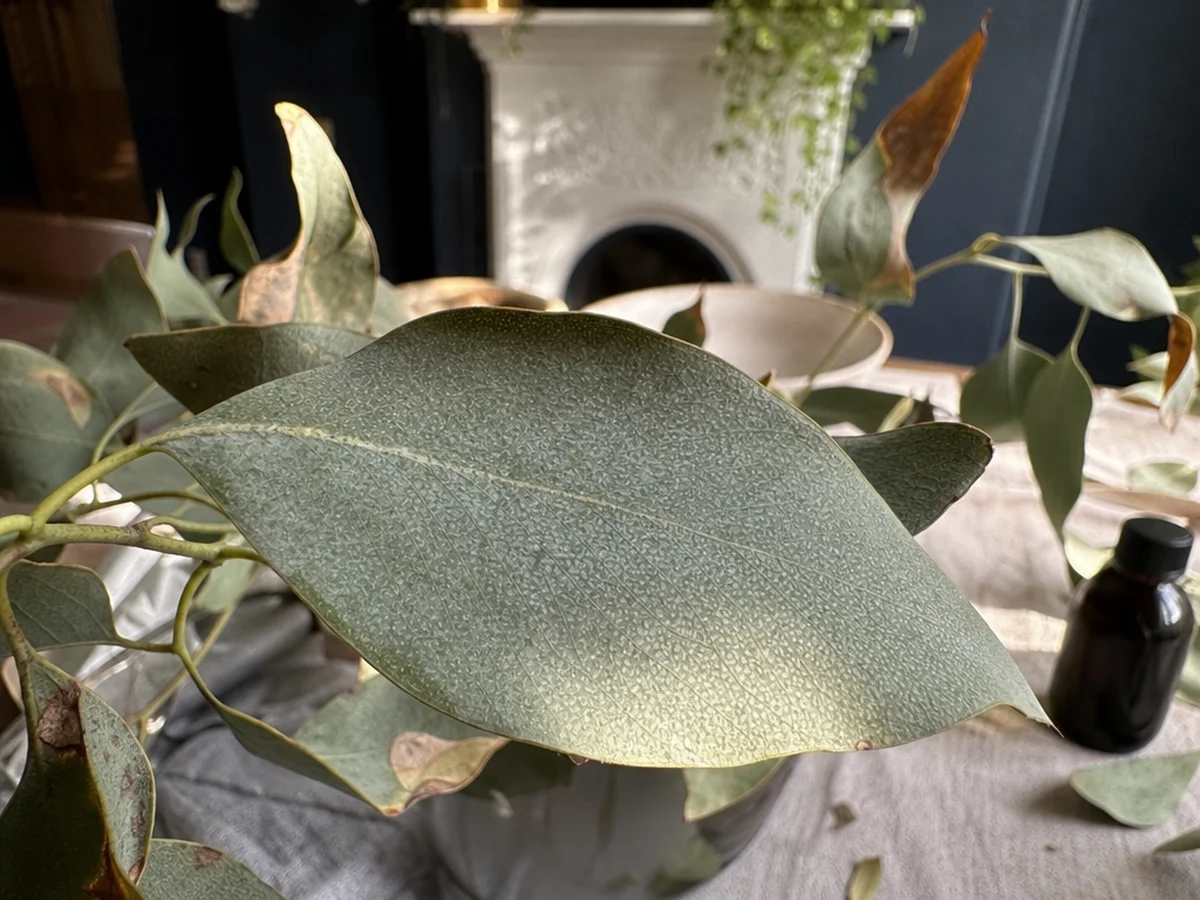
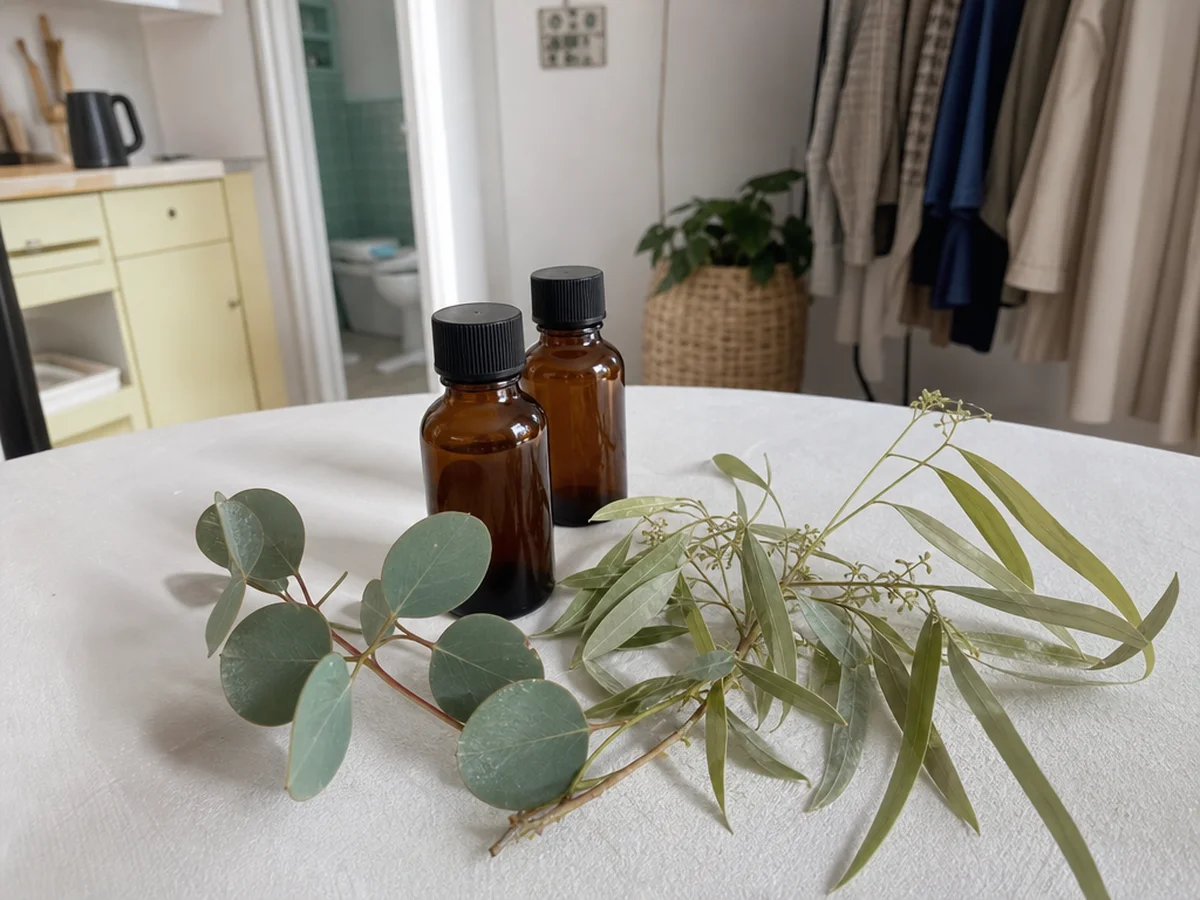
That is why we sell five oils from five species and not one "eucalyptus." Our globulus is the crisp, camphor-fresh one. Radiata, smithii and dives are the softer, rounder ones, with dives leaning minty. Lemon eucalyptus smells bright and lemony, and it works from a different chemical backbone than the rest. A higher cineole share is a different oil, not a better one, and plenty of people reach for the gentler species on purpose.
If you want to feel the difference rather than read about it, put a drop of two different eucalyptus oils on separate cotton pads and breathe in slowly from a few inches away. The cineole-rich one tends to hit first with a cool, clean sharpness. The lemon-scented one smells like a different plant altogether. It is a quick way to see that one word, "eucalyptus," covers a lot of ground.
Why a single percentage never tells the whole story
Because buyers talk in cineole shares, the trade names grades by them. Standards such as the British Pharmacopoeia set a minimum of 70% cineole for medicinal-type eucalyptus oil, and the higher grades you see quoted, like "70/75%", are usually redistilled (rectified) versions of the crude oil. In rectification the cineole-rich fraction is collected and the heavier leftovers stay behind, so the figure can be nudged upward.
Even without that step, real batches move around. A 2023 EFSA scientific opinion on a Eucalyptus globulus oil analysed seven batches by GC-MS and reported 1,8-cineole averaging 79.5% of the chromatogram area, with a range of 72.5% to 86.9%. One species, one specification, and a spread of about 14 percentage points. For a buyer that is the useful lesson: a printed percentage describes one lot at one moment, and the report behind it matters more than the headline number.
What we can tell you about ours
We sell our eucalyptus oils neat and steam distilled from the leaf, and we describe their aromas the way you would on a shop counter: sharp and camphor-fresh for globulus, soft and faintly citrus-tinged for radiata, lemony for lemon eucalyptus. The Certificate of Analysis we publish is for one batch of our lemon eucalyptus oil and lists density and refractive index. If you need a cineole share, a full GC-MS report or species confirmation for a particular oil, ask us in writing through the contact page and get the answer in writing before you rely on it. Our guide to reading a GC-MS report shows what to look at when one arrives, and the species explainer puts the five side by side.
How we choose among them
Our own recommendation is to pick by the scent you want and not by a number. If you love that sharp, spa-steam freshness, globulus is the oil to try first. If you find that too bold, radiata and smithii are friendlier starting points, and dives adds a minty sweetness. If you would like the leafiness of eucalyptus without the medicinal edge, lemon eucalyptus is the one to sniff. Nobody needs to memorise a percentage to make that choice, and a bottle you enjoy opening is the one you will actually use.
A few handling facts that follow from the chemistry
Cineole is volatile, which is why eucalyptus announces itself the moment you open a bottle. It is also a flammable liquid, with a closed-cup flash point of 49 °C for the pure compound, so keep the bottle capped and away from heat. EFSA's opinion describes eucalyptus oil as an irritant and a skin sensitiser, which is the reason our dilution guidance is 0.5% to 2% in a carrier with a patch test first, and why the oil stays away from eyes, children and pets. It is for external, aroma and cosmetic use, never for swallowing. For the dilution maths, see how to use eucalyptus oil, and for the bigger picture of where an oil comes from, does origin matter.
Next time you see a bottle shouting a percentage, you will know what it is describing, and what it leaves out.
Eucalyptus Essential Oil
Eucalyptus Essential Oil from our own shop, in sizes from 0.5 oz to bulk.
From $9.99
Shop Now →Sources & Further Reading
- Eucalyptus oils: a review of production and markets (NRI Bulletin 56), Coppen and Hone, Natural Resources Institute
- Safety and efficacy of a feed additive consisting of an essential oil derived from Eucalyptus globulus Labill. (eucalyptus oil) for all animal species (FEFANA asbl), EFSA Journal, 2023
- PubChem record 1,8-Cineole (CID 2758), Flash Point