How to Dilute Eucalyptus Oil: Drops and Percentages
Our eucalyptus oils arrive neat, which is part of their charm: a little goes a long way. It also means the dilution is yours to do before the oil goes near skin. Our guidance is 0.5% to 2% in a carrier oil with a patch test first, and the arithmetic behind those numbers is easier than it sounds.
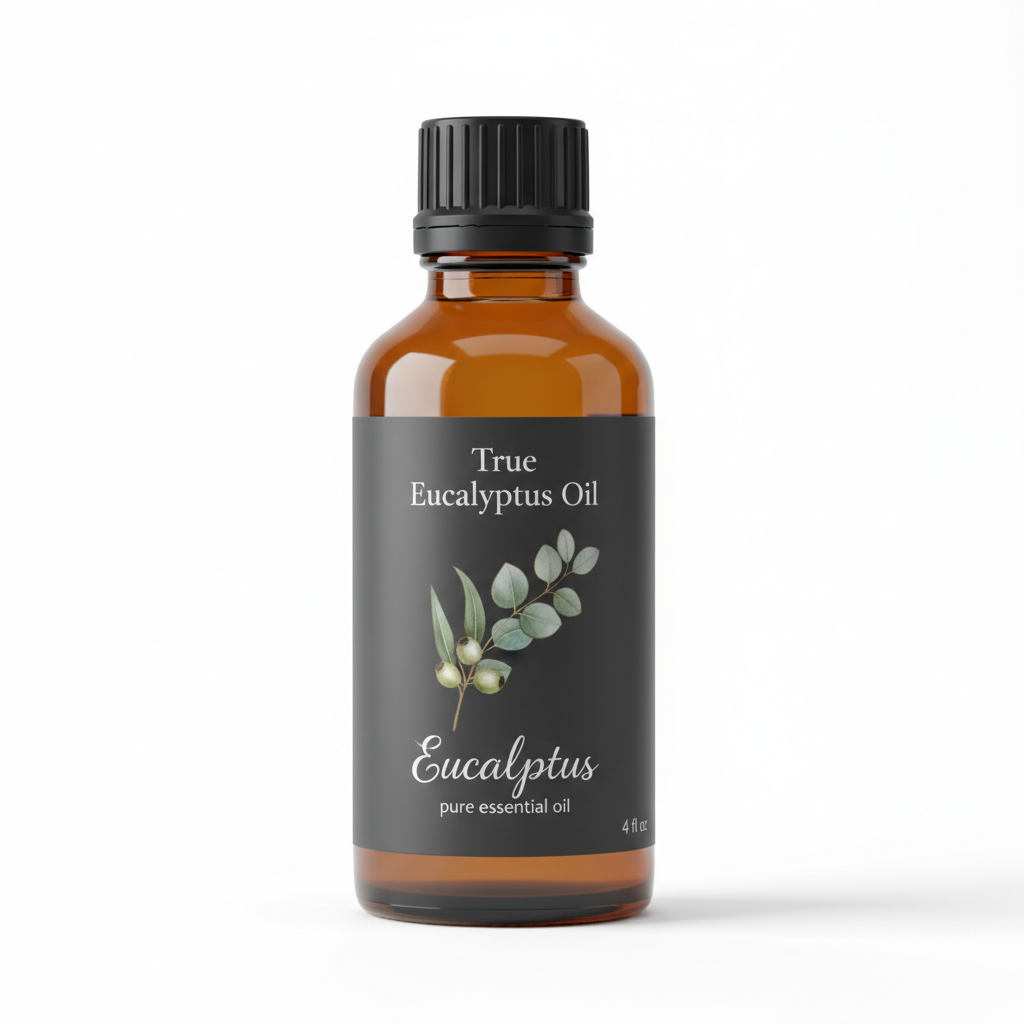
Eucalyptus Essential Oil
Our own Eucalyptus Essential Oil, in sizes from 0.5 oz to bulk.
From $9.99
Shop Now →Turning percentages into drops
A teaspoon is about 4.9 mL, and a typical dropper delivers around 20 drops to the milliliter, so a teaspoon of carrier is roughly 100 drops of volume. Droppers vary, so treat the numbers as approximate. On that basis one drop in a teaspoon is about 1%, and two is about 2%. For a lighter blend, make more at once, because half a drop is not something a dropper can deliver.
| Strength | Drops in 1 teaspoon (about 4.9 mL) | Drops in 1 fl oz (about 29.6 mL) |
|---|---|---|
| 0.5% | about half a drop | about 3 |
| 1% | about 1 | about 6 |
| 2% | about 2 | about 12 |
If you own a small scale, weighing is steadier than counting: 1% of 30 g of carrier is 0.3 g of oil. This is our arithmetic and a suggestion, not a verified safe dose, and our own preference would be to begin at the lower end, around 0.5% to 1%, and see how your skin feels before going further.
Why we start low
Eucalyptus is a strong oil. The EFSA opinion on eucalyptus oil concludes it should be considered an irritant to skin, eyes and the respiratory tract and a skin sensitiser, though it also describes the evidence behind that as limited. The IPCS poison monograph notes the oil has been used as a topical rubefacient, a skin reddener, at 0.5% to 3%. We do not know of a eucalyptus-specific ceiling that applies to every species and product, and our five oils come from five different species. If you are formulating for a particular product, such as a face cream or a leave-on lotion, check the current IFRA standards for your formulation.
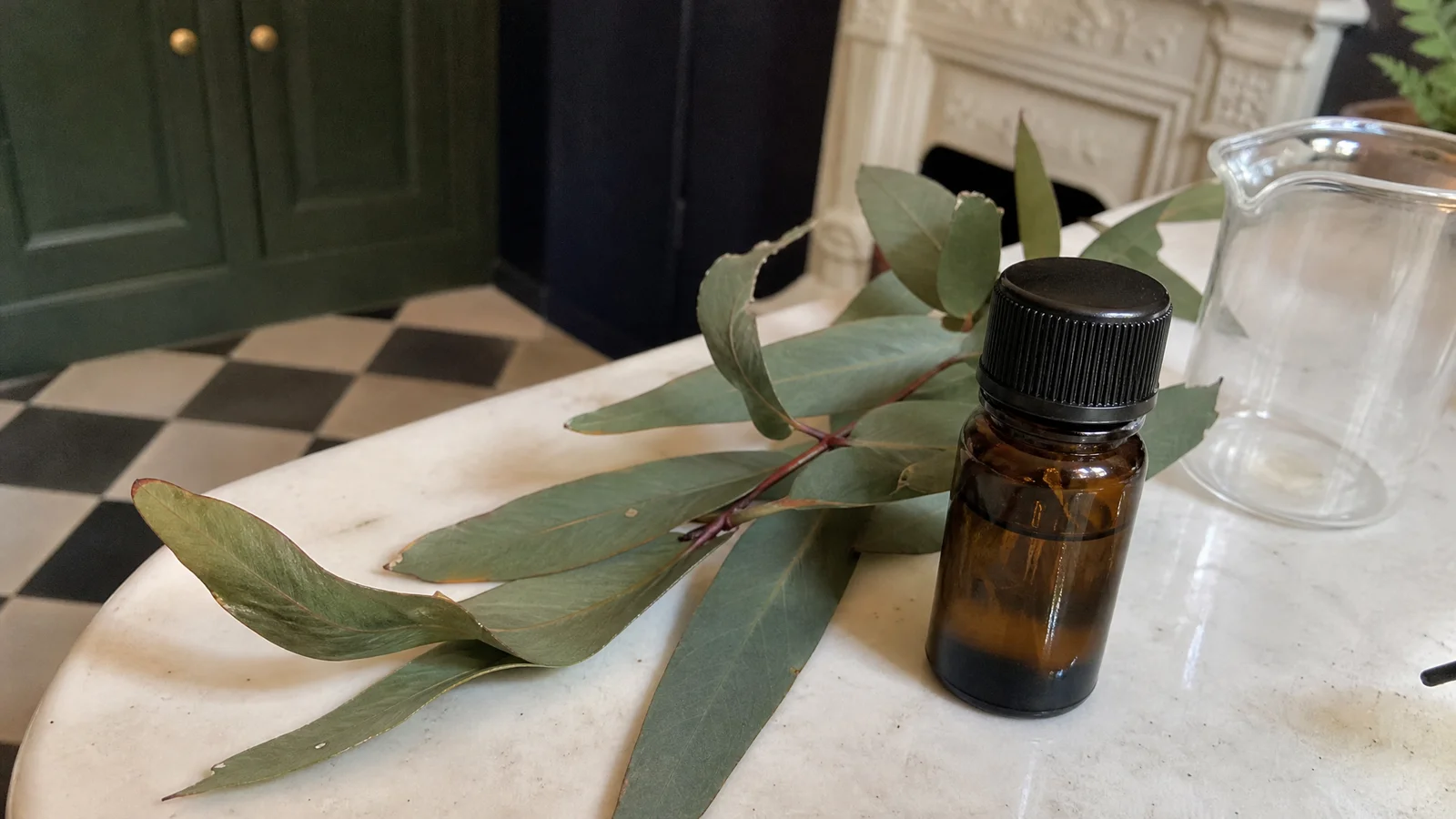
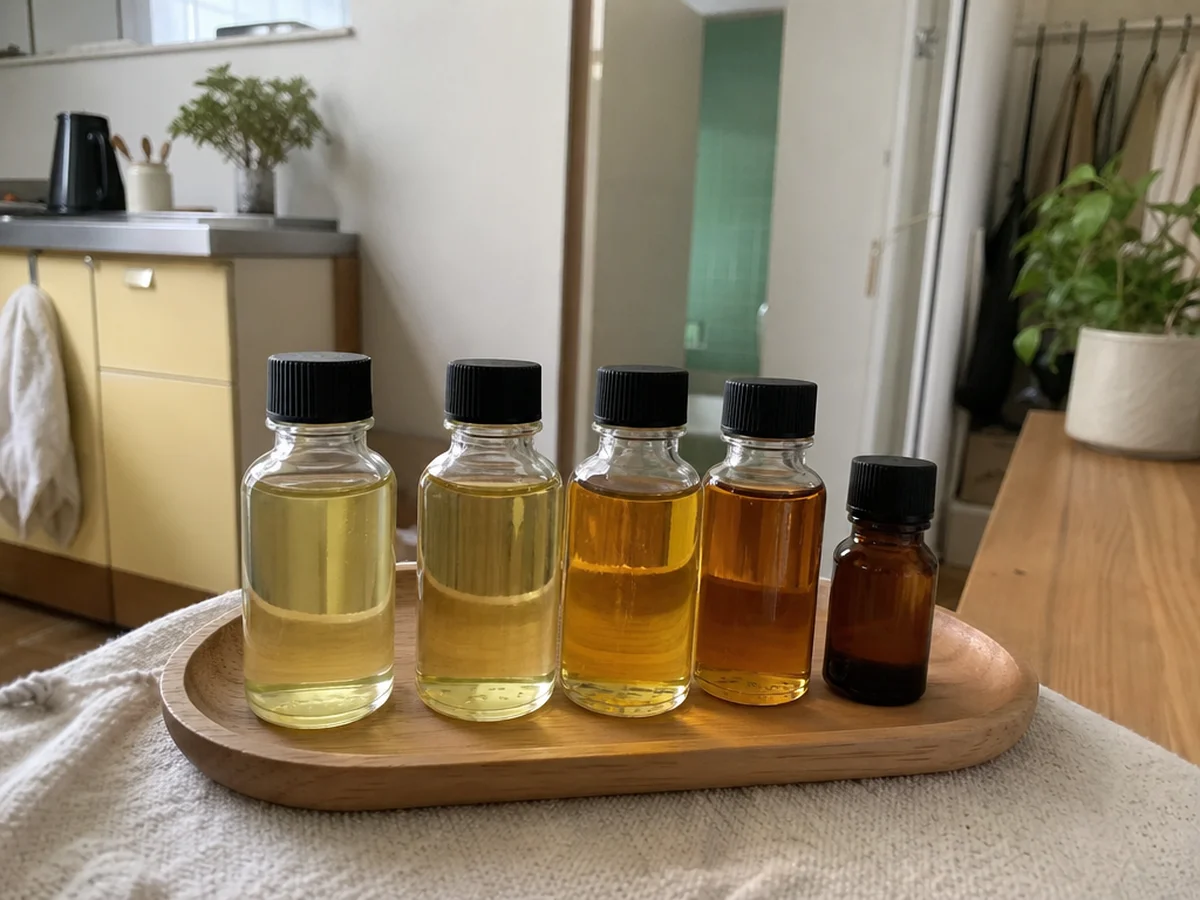
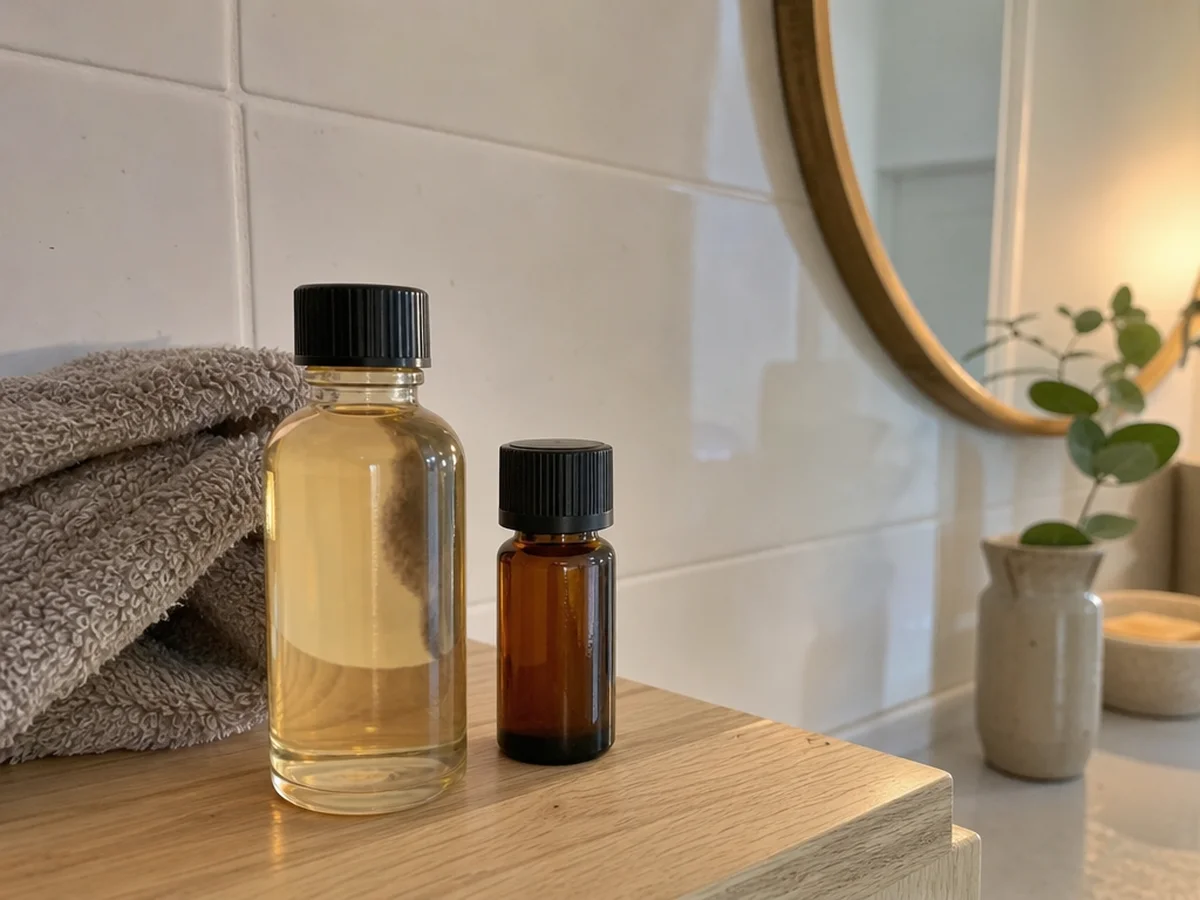
A word on bottles: small amber or dark glass bottles are a good choice for blends, because they protect the oil from light and are easy to label. A recycled bottle works too if it is washed and dried thoroughly first. Whatever you pick, avoid anything that was last used for food or a strong product, since leftover smells will mingle with the eucalyptus.
A first-use routine
- Decide the use first. A body oil, a bath product and a face product are different jobs, and a diffuser needs no dilution at all. Our roller bottle article has worked percentages for a small bottle.
- Choose a carrier you can buy easily, such as jojoba or sweet almond. We sell the eucalyptus only, so the carrier and a clean bottle come from a pharmacy, craft shop or grocery store. Our carrier comparison helps you choose.
- Put the carrier in first, then the oil. Stir, label with the date and percentage, and store the bottle capped, cool and out of light.
- Patch test. Try a small spot on the forearm and wait 24 hours. A patch test catches an obvious reaction, and it cannot promise there will never be one.
- Keep it away from eyes and broken skin. Poison Control says to avoid putting essential oils on damaged skin, and notes that dilution in a carrier oil is the best way to avoid a bad reaction from direct contact.
Little habits that make dilution easier
Good dilution is mostly about being tidy. Work on a clean, flat surface, line up the bottle, the carrier and a small clean jar, and put a paper towel underneath so a drip lands on something you can throw away. Count the drops out loud if you need to. If you lose count, start the blend again rather than guessing: a fresh jar of carrier is far cheaper than an irritated patch of skin.
Write the date and the percentage on a label before you do anything else. A blend with no label is a mystery in a week, and it is the first thing you will wish you had done.
How the blend should smell
Once mixed, open the jar and take a gentle sniff. A well-diluted eucalyptus blend smells softer and rounder than the bottle, with the cool, camphor-fresh note present but not sharp. If it smells overpowering, that is a hint to try a lower strength next time.
Who should skip these ratios
These percentages are for healthy adults. Poison Control says children under 2 should not be given eucalyptus oil, and we advise against using it on or near the face of an infant or young child. Ask a pediatric clinician about older children. Poison Control also does not recommend eucalyptus oil during pregnancy or when breast- or chest-feeding, so an obstetric clinician or midwife is the right person to ask. Our nursery article goes into more detail.
The oil is for external use only. Poison Control states that a teaspoonful or less of undiluted eucalyptus oil can be fatal, with symptoms usually within 30 minutes but sometimes delayed up to 4 hours, so keep the bottle capped, out of sight and out of reach, and call 1-800-222-1222 if it is ever swallowed. Pets are a separate question for your veterinarian, which our safety article covers.
Start small, label everything, and let your skin set the pace. A bottle you use carefully will last, and a light touch is usually what a strong, cool oil like this wants anyway. If you want to try the oil, our shop lists the sizes we sell, bulk sizes have their own page, and our guide to buying eucalyptus essential oil in bulk explains how bulk buying works.
Eucalyptus Essential Oil
Eucalyptus Essential Oil from our own shop, in sizes from 0.5 oz to bulk.
From $9.99
Shop Now →Sources & Further Reading
- Safety and efficacy of a feed additive consisting of an essential oil derived from Eucalyptus globulus Labill. (eucalyptus oil) for all animal species (FEFANA asbl), EFSA Journal, 2023.
- Eucalyptus oil (PIM 031), International Programme on Chemical Safety, INCHEM.
- Eucalyptus oil: Is it safe?, Poison Control.
- Essential oils: Poisonous when misused, Poison Control.