Eucalyptus Oil in the Sauna: How to Use It Safely
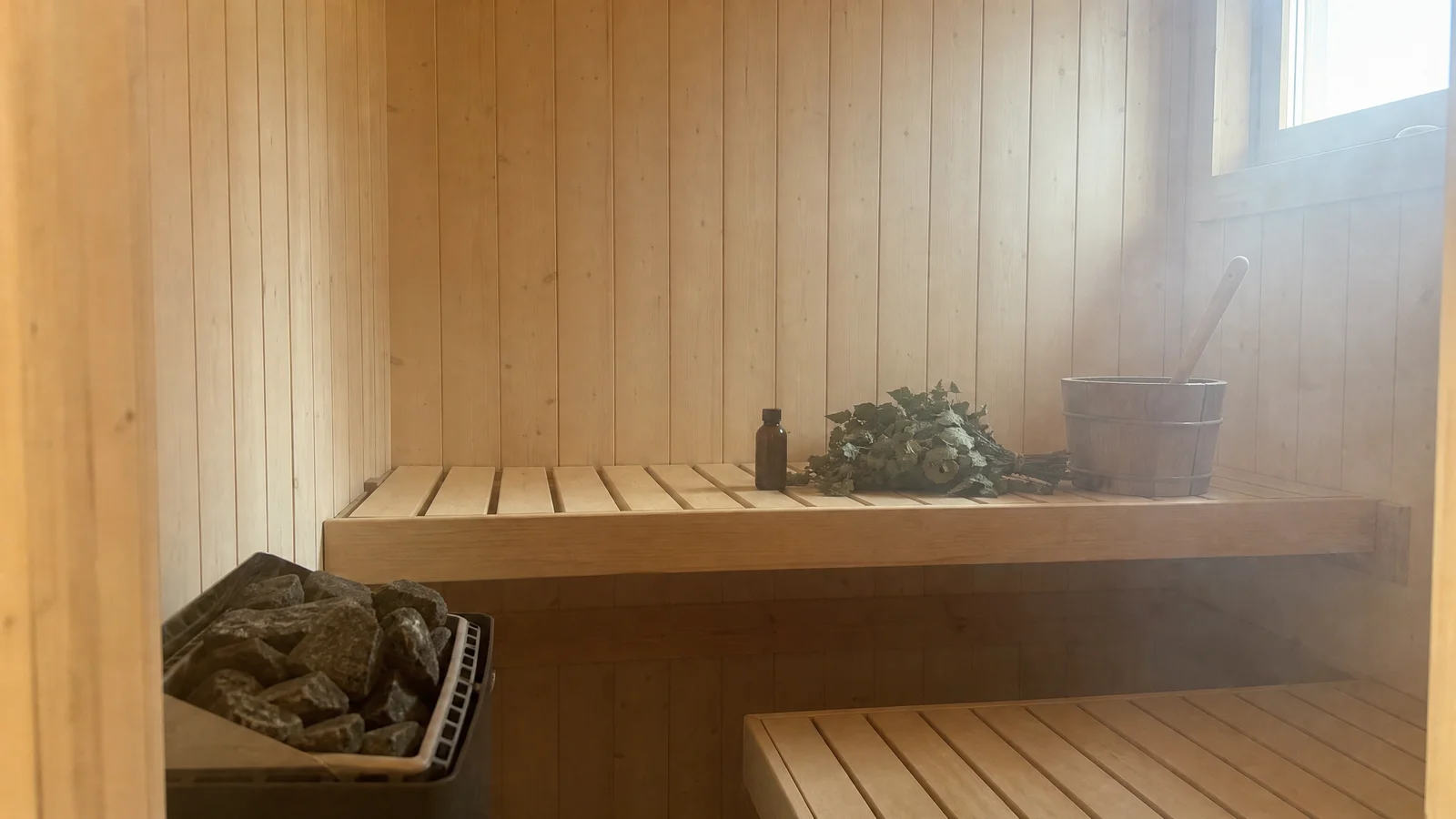
A scented sauna comes down to one small gesture: a ladle of water tipped onto hot stones, a soft rush of steam, and a cool, camphor-fresh note rising with it. Eucalyptus is a natural fit for that moment. The part worth getting right is what is in the ladle, because the answer is water first and oil second.
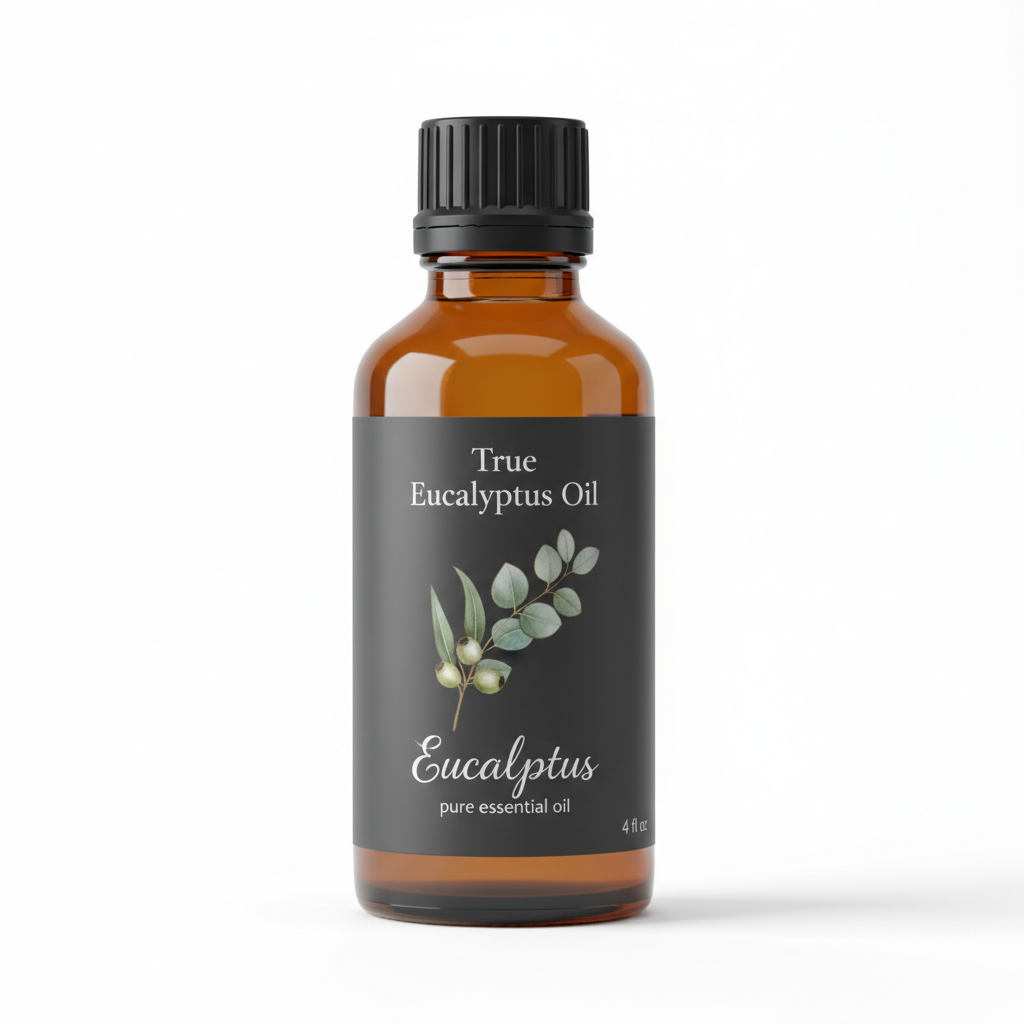
Eucalyptus Essential Oil
Our own Eucalyptus Essential Oil, in sizes from 0.5 oz to bulk.
From $9.99
Shop Now →A modern habit, not an ancient rite
Sauna itself is deeply rooted in Finland, where a representative survey of a thousand adults found that 59 percent bathed at least once a week before the pandemic. That survey asked about how often people go, not about scent, so we will not tell you that eucalyptus is a centuries-old Nordic custom. It is better described as a modern pleasure that suits steam well, and one you can enjoy sensibly with a little care.
The bucket, not the stones
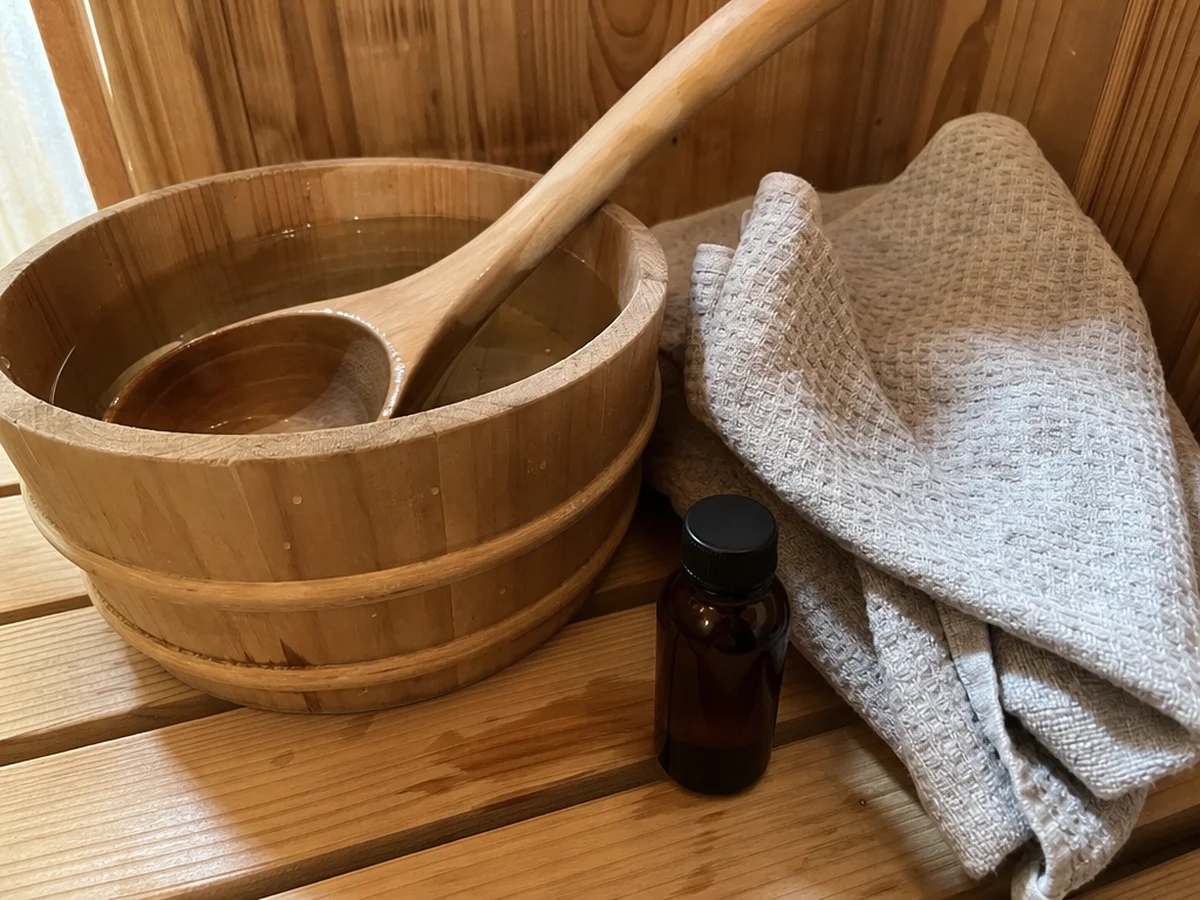
The heater makers and sellers we read describe the same routine. Harvia, which makes sauna heaters, says its scents can be mixed into the water that is poured onto the heater stones, or applied to surfaces designed for scent vaporizing, such as scent cups and steam channels. Saunafin, a sauna retailer, says that most commonly a few drops of oil go into the sauna water bucket, that essential oils must be diluted in water before use, and that they should not be poured directly onto the stones because that could pose a fire hazard. It adds that some heaters have a small well in the rock tray made for a bit of oil, which is a good reminder that your own heater's design is the final word.
There is a simple reason behind the caution. The main compound in eucalyptus oils, 1,8-cineole, has a closed-cup flash point of 49 C (120 F) according to PubChem, so a flammable liquid dropped neat onto a very hot surface is a fire question. That figure belongs to the pure compound and not to any particular oil of ours, but the principle carries over without any extra arithmetic.
Getting the oil to travel with the water
Oil and water do not truly mix. PubChem records 1,8-cineole as insoluble in water in one source and at about 3.5 grams per liter in another, and either way the drops in a bucket will float and cling rather than disappear. In practice that means the first ladle can carry more scent than the last. Stir the bucket before you ladle, pour gently, and let the room tell you when it is enough. As a suggestion rather than a published rule, begin with two or three drops in a full bucket and raise it only if the cabin still smells like nothing.
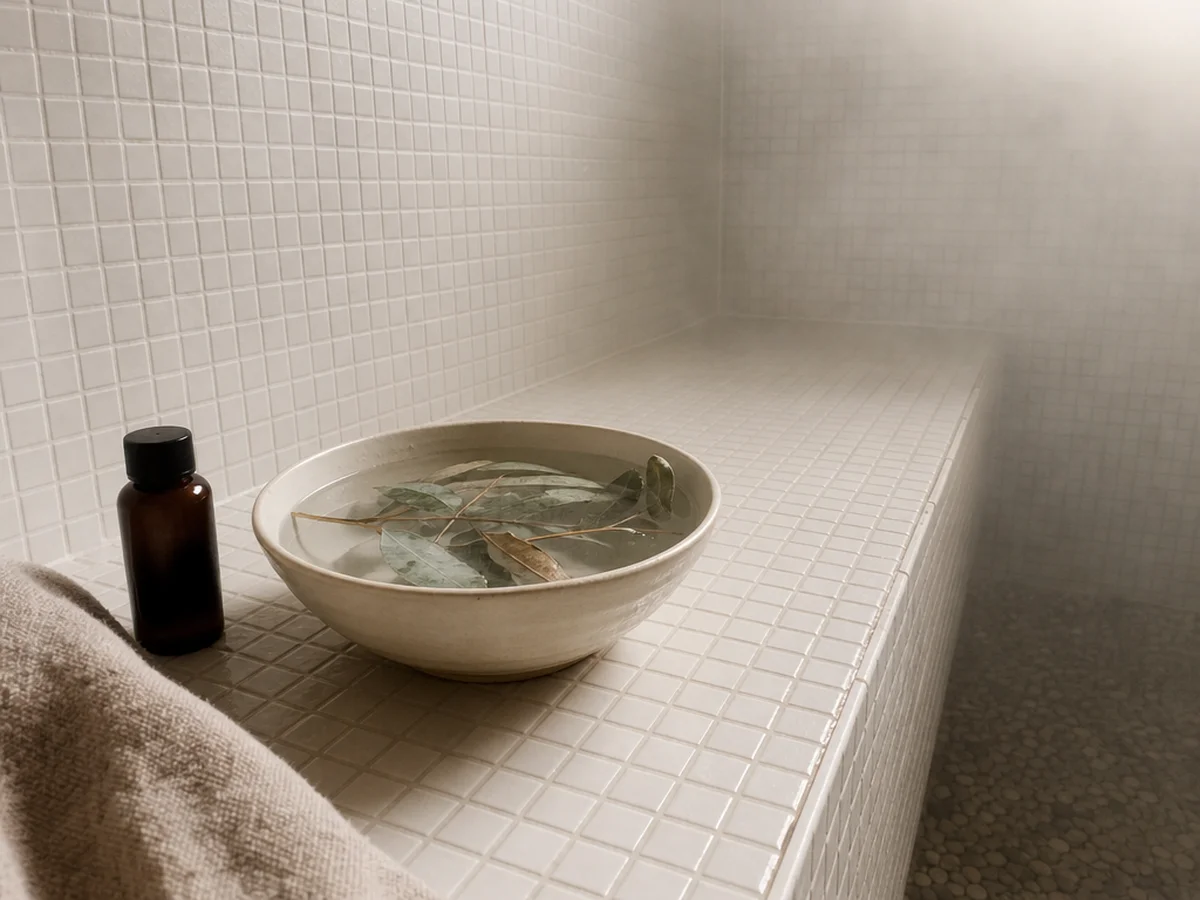
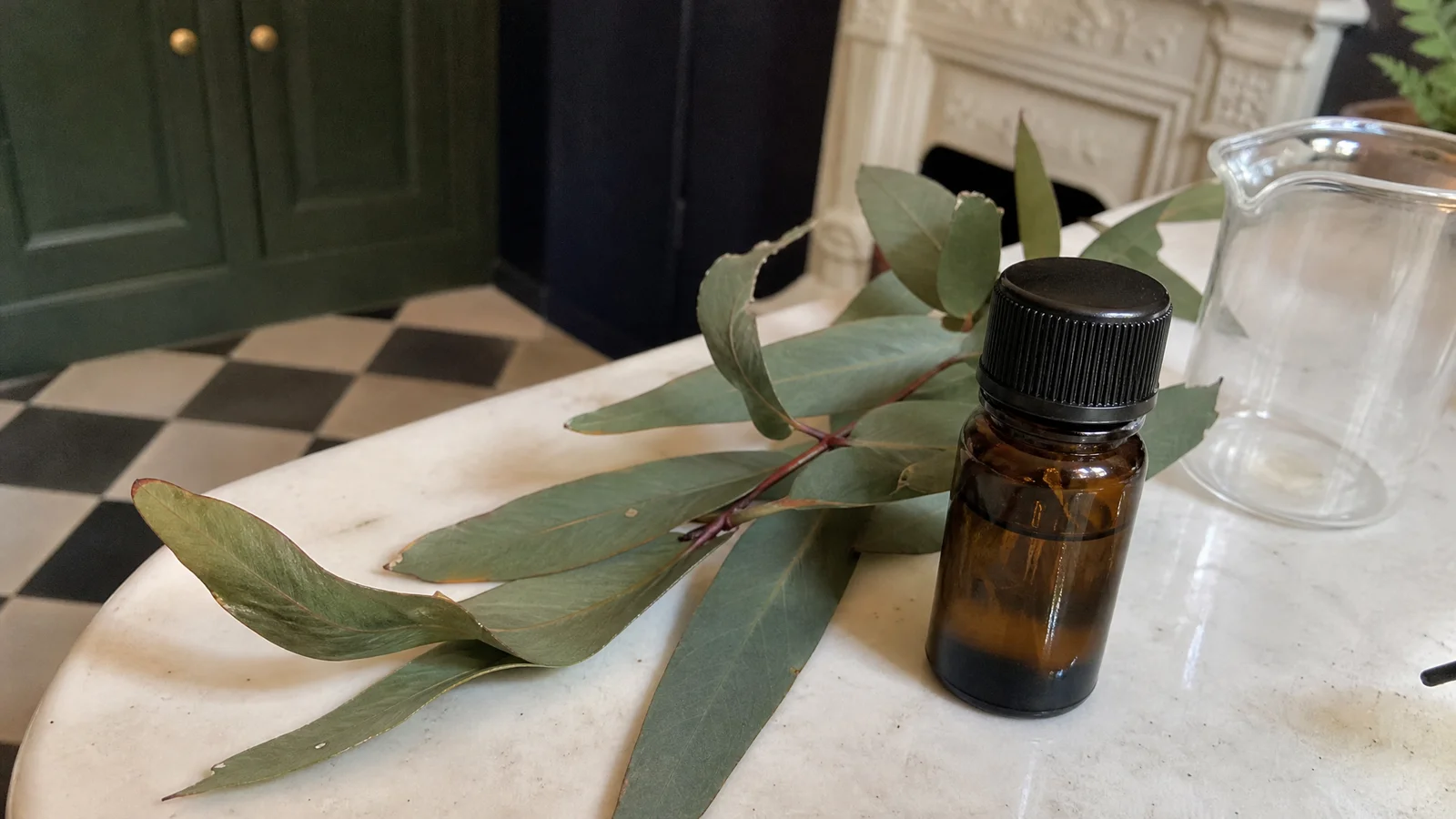
Which oil you pick matters more in a hot room than it does in a diffuser, because heat makes everything louder. Our globulus eucalyptus is cool, clean and camphor-fresh, with a faintly sweet, woody finish, and we describe it for shower steam and spa-style blends. Our radiata, which we call the gentler of the common eucalyptus oils, is a good thing to reach for in a small cabin where globulus might feel sharp. That pairing is our reasoning, not a test result. The five oils we sell come from different species, so they are not interchangeable in a recipe, and you will notice the difference the first time you swap one for another.
For a first scented session, go gently. Add the drops, stir, and pour a ladle or two, then pause and see how the cabin smells before you add more. A scent that feels pleasant after a few minutes in the heat is the one you wanted, and it is easy to add a little but hard to take it back out of the air.
Who should check first
Most of the cautions are about the heat itself, and they apply whatever is in your bucket. A review in the American Journal of Medicine lists unstable angina, a recent heart attack and severe aortic stenosis as reasons to avoid sauna bathing, and says alcohol in the sauna raises the risk of low blood pressure, arrhythmia and sudden death. If any of that sounds like you, the conversation to have is with your physician before you think about scent at all.
Eucalyptus oil adds its own considerations. Poison Control says it is not recommended during pregnancy or while breast- or chest-feeding, that children under 2 should not be given it, and that oil that is undiluted or not thoroughly diluted can irritate the airways and cause coughing and difficulty breathing. If you live with asthma, our look at eucalyptus oil and asthma is the place to start, and a clinician is the right person to ask. Our nursery guide covers the youngest family members, and we advise against use on or near the face of an infant or young child.
Pets deserve a thought too. The ASPCA lists eucalyptus as toxic to dogs and cats, with essential oils (eucalyptol) as the toxic principle, so a home sauna is a room to keep animals out of while it is scented. Our product pages ask you to keep our oils away from children and pets, and they are not for internal use.
The same oil, other steamy places
If you do not have a sauna, the shower floor is the other classic spot, and we cover it in eucalyptus in the shower. For the bathtub, where dispersal matters even more, see eucalyptus oil in the bath.

Whatever room you scent, the order stays the same: read the heater manual, put the oil in the water, stir, ladle gently and stop if anyone feels irritated. Do that and eucalyptus will do what it does best, which is make a hot room smell wonderfully fresh.
Eucalyptus Essential Oil
Eucalyptus Essential Oil from our own shop, in sizes from 0.5 oz to bulk.
From $9.99
Shop Now →Sources & Further Reading
- Liikkanen LA, Laukkanen JA. Sauna bathing frequency in Finland and the impact of COVID-19. Complementary Therapies in Medicine, 2021. Europe PMC
- Harvia. Sauna accessory Harvia Healing with Heat sauna and steam scent set. harvia.com
- Saunafin. Aromatherapy for Saunas: What Essential Oil is Best for You? saunafin.com
- PubChem. 1,8-Cineole (CID 2758): flash point and solubility records. pubchem.ncbi.nlm.nih.gov
- Hannuksela ML, Ellahham S. Benefits and risks of sauna bathing. American Journal of Medicine, 2001. Europe PMC
- Poison Control. Eucalyptus oil: Is it safe? poison.org
- ASPCA. Toxic and Non-toxic Plants: Eucalyptus. aspca.org