Eucalyptus Oil for Hair: Where the Wash-Day Tingle Is From
Anyone who has put a eucalyptus-scented product on their scalp knows the feeling: a cool, slightly prickly sensation that makes the whole thing seem to be doing something. It is a good moment to ask where that sensation actually comes from, because the answer says a lot about how to enjoy the oil sensibly on wash day.
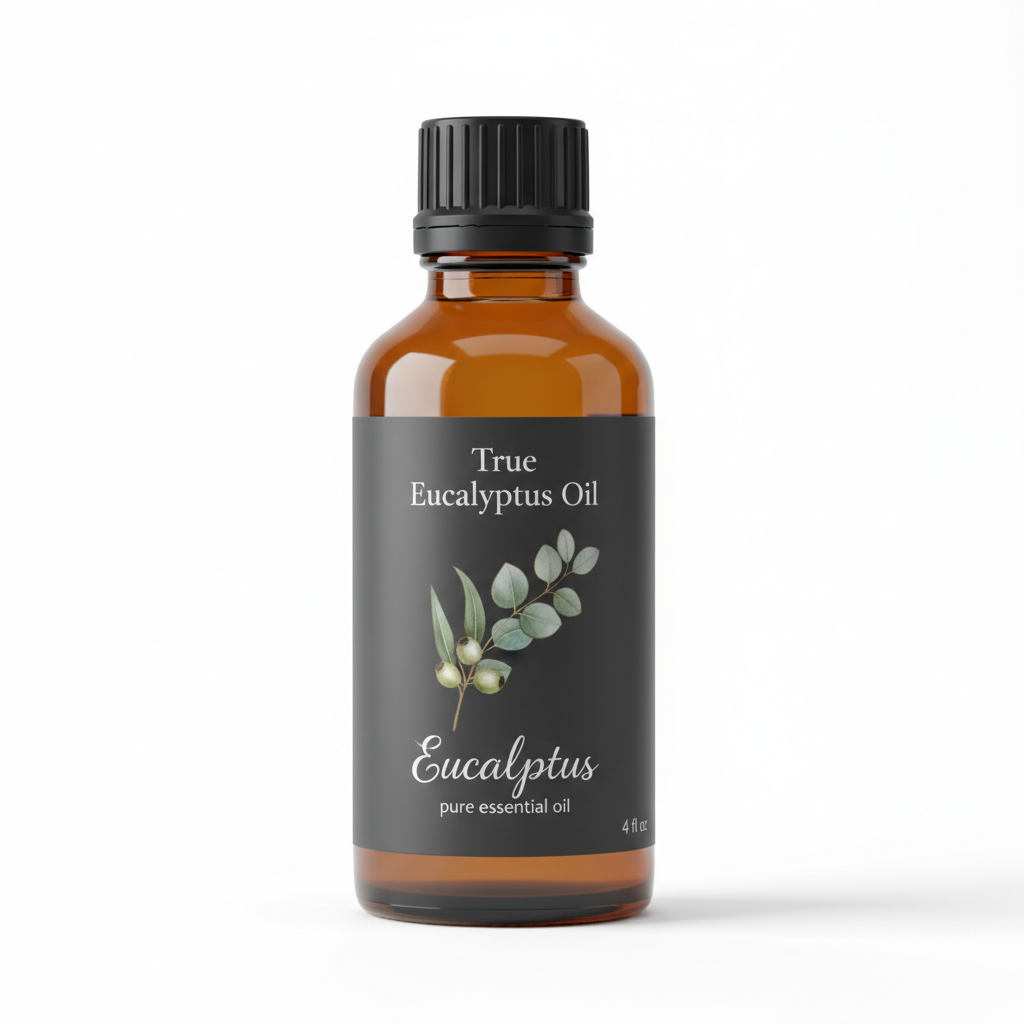
Eucalyptus Essential Oil
Our own Eucalyptus Essential Oil, in sizes from 0.5 oz to bulk.
From $9.99
Shop Now →The cold sensor in your skin
The cool feeling of menthol and its relatives comes from a receptor called TRPM8, a cold-sensing channel found in sensory nerve endings. Eucalyptol (1,8-cineole), the main component of most eucalyptus oils, can switch that receptor on. In a screening of 70 odorants on the mouse version of the receptor, it did, but it needed an EC50 of 7.7 millimolar, where menthol needed 4.1 micromolar (Behrendt et al., 2004). By our arithmetic that makes eucalyptol something like 1,900 times weaker than menthol in that test.
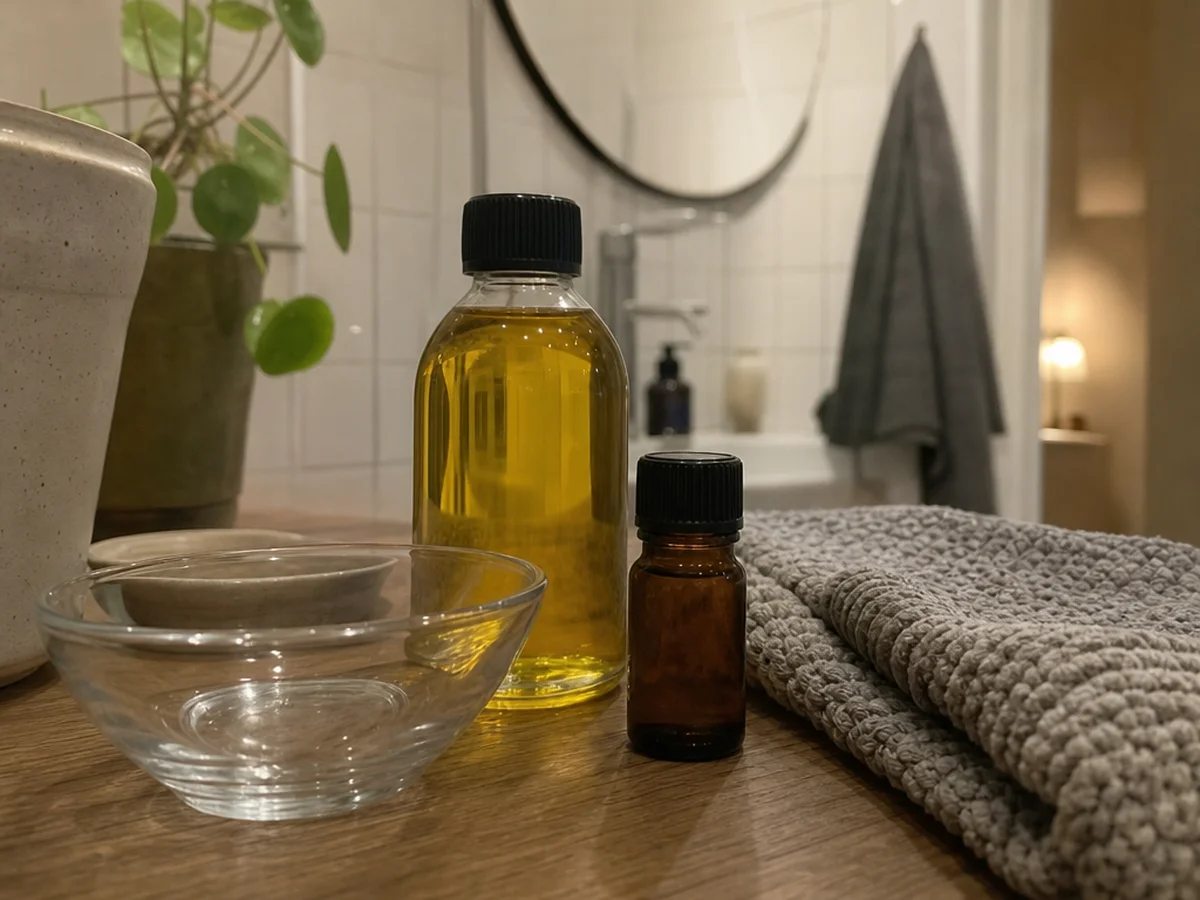
It was a single compound on an isolated mouse receptor, so it is a guide to scale and not a prediction of what you will feel. Our reading of those numbers is that eucalyptus gives a fresh, camphor-bright cool rather than an icy one, a different character from a mint oil. That is a lovely quality in a wash-day scent, and a good reason to pick it for aroma.
You will notice that a scented shampoo or conditioner is a gentle thing to smell, and a bottle of neat oil is not. The neat oil is much more intense, which is why we never suggest sniffing it from right under your nose. Hold the bottle at arm length, waft a little air toward you, and let the scent come to you.
Why the amount matters
Because the tingle sits close to the edge of irritation, dilution is the whole game. Poison Control notes that undiluted eucalyptus oil can irritate and burn the skin and eyes, and that the oil should never be swallowed (Poison Control). Our oils are sold neat, so the mixing is yours to do.
We recommend 0.5% to 2% in a carrier oil, with a patch test first. Here is what that looks like in 30 mL (about 1 oz) of carrier, using roughly 20 drops to the millilitre:
- 0.5% is 0.15 mL, about 3 drops.
- 1% is 0.3 mL, about 6 drops.
- 2% is 0.6 mL, about 12 drops.
Those drop counts are our arithmetic, and droppers vary, so weigh if you can. For anything that will sit near the eyes, as a scalp mixture does, we would start at the low end of the range and stay there. IFRA publishes limits for different kinds of product, and they can sit below our general range for some oils and uses, so check them against what you are making.
Patch test, then keep it simple
Put a little of your finished, diluted mixture (never the neat oil) on the inside of your forearm and wait a full 24 hours. If all is well, keep the first scalp use short, rinse thoroughly, and stop at the first sign of burning, redness or itching. Tingle that fades is one thing; burning that builds is another. Keep the mixture out of your eyes, and rinse well if it gets there.
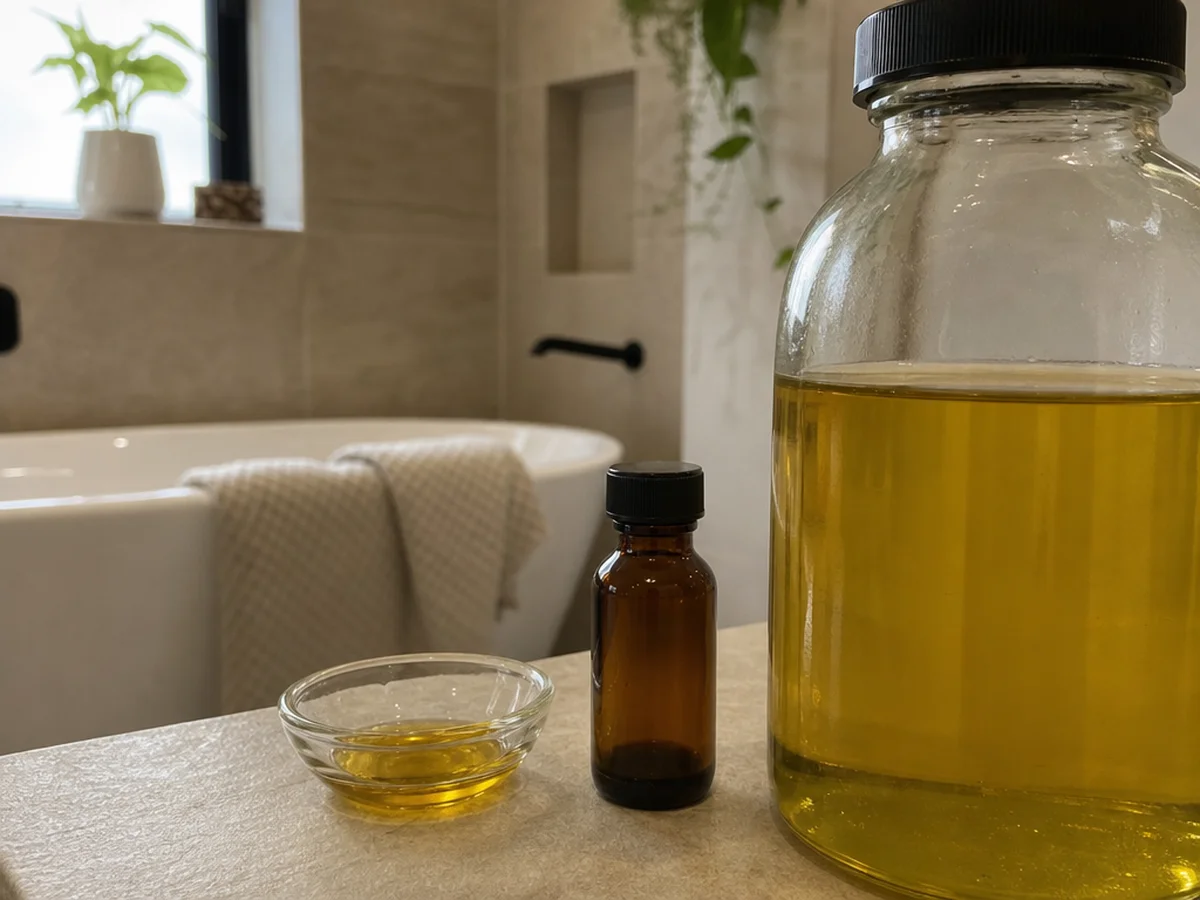
A carrier does two jobs, diluting the oil and helping it spread. Jojoba and sweet almond are common choices, and you will find them at a grocery, craft or supply shop, since we sell only eucalyptus oils. Our carrier oil comparison goes through the choices, and our dilution ratios guide covers the first steps in more detail. If you use a prescription product on your scalp or skin, ask a pharmacist or dermatologist before layering anything over it.
Make wash day a little ritual
A scented wash day is a small pleasure, and it does not need much. Put a towel within reach, get the water comfortably warm and keep your mixture in a labelled bottle on the shelf. When you first work it through, notice how the cool sensation arrives slowly and then fades. If you feel anything that builds or burns, that is your cue to rinse and stop, not to push through.
Wash your hands well after mixing, and rinse the bottle or jar so oil does not sit on the shelf. Towels that have caught a little oil are best washed on their own.
Picking a eucalyptus for the scent
We keep this post to scent and sensation. We make no claim about hair or scalp condition for any of our oils, and if you have a concern about your hair or scalp, a dermatologist is the person to ask.
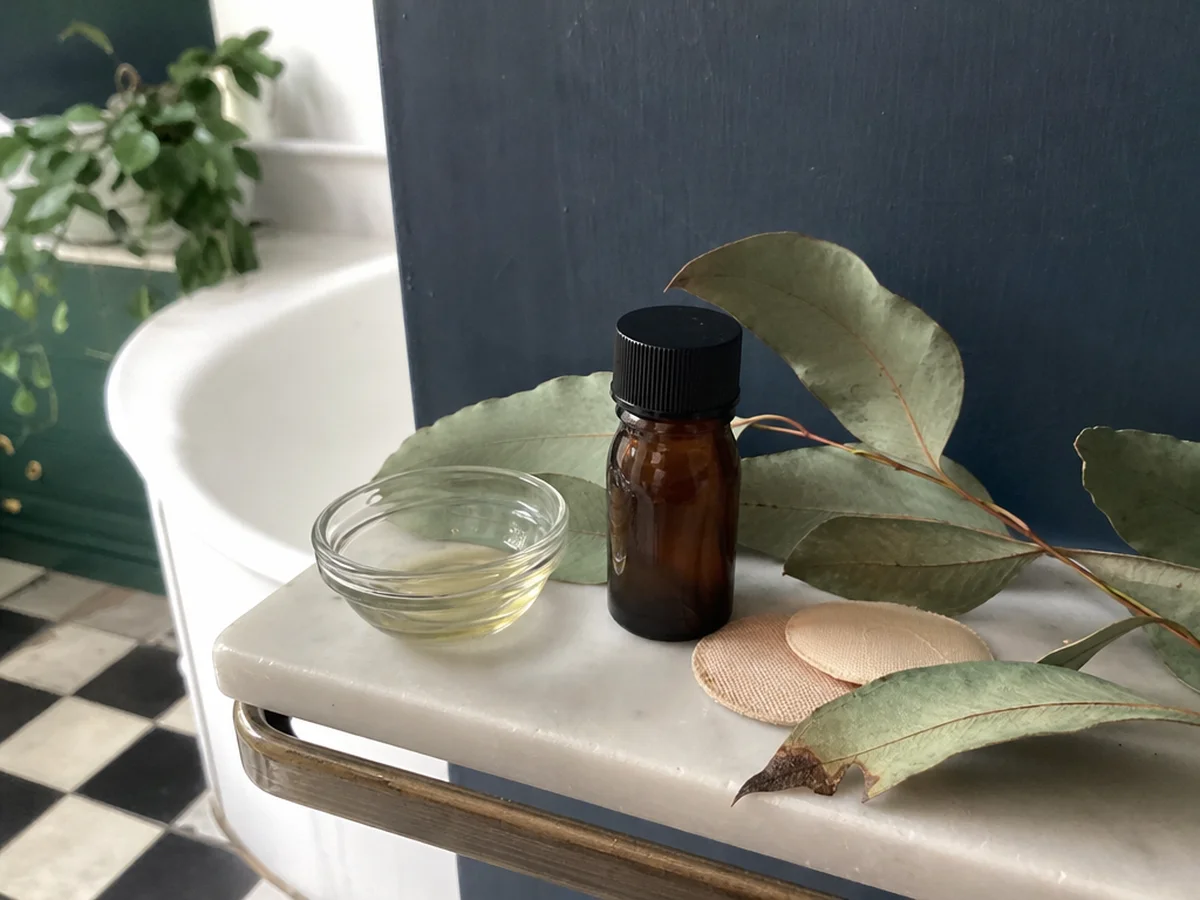
On scent alone, we sell five eucalyptus oils and they are not interchangeable. Our globulus is cool, clean and camphor-fresh, with a faintly sweet, woody finish. Radiata is softer, with a gentle camphor note and a citrus-tinged finish. Smithii is soft, smooth and gently camphoraceous, and dives is minty and sweet over a camphoraceous spine. Lemon eucalyptus is bright and lemony. If you like the idea of a wash-day mix with a peppermint accent, our piece on peppermint and eucalyptus shows how the pairing works, and what eucalyptus smells like helps you choose.
Keep any oiled towels and pillowcases away from cats and dogs, and do not use a mixture like this on a baby or young child; we advise against eucalyptus on or near a young child’s face. Beyond that, enjoy the cool.
A little tingle is part of the charm of eucalyptus, and a low dilution lets you have the freshness without pushing it.
Eucalyptus Essential Oil
Eucalyptus Essential Oil from our own shop, in sizes from 0.5 oz to bulk.
From $9.99
Shop Now →Sources & Further Reading
- Characterization of the mouse cold-menthol receptor TRPM8 and vanilloid receptor type-1 VR1 using a fluorometric imaging plate reader (FLIPR) assay (Behrendt et al., British Journal of Pharmacology, 2004)
- Eucalyptus oil: Is it safe? | Poison Control