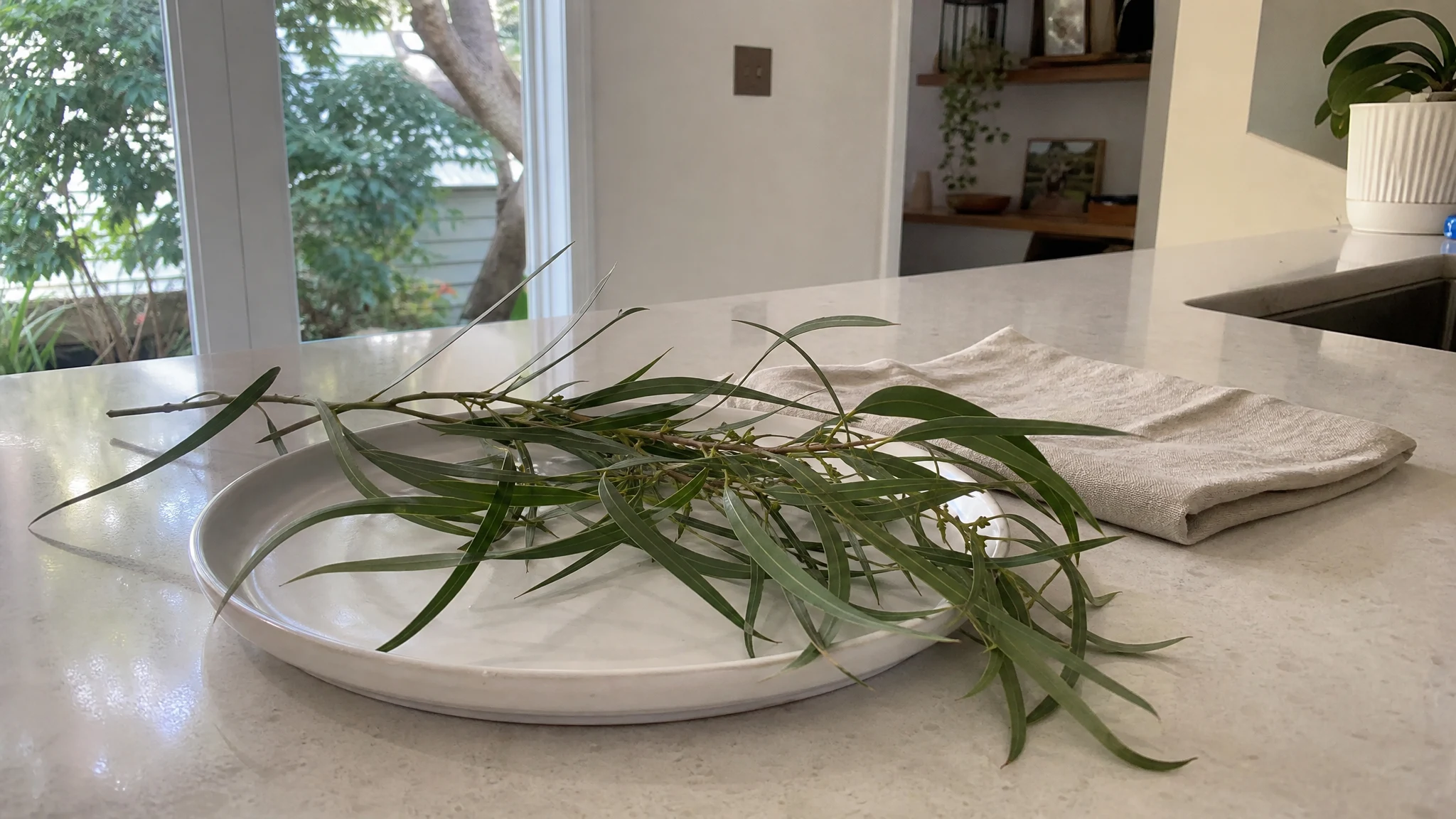
What Does Eucalyptus Oil Smell Like? Five Scents
Ask ten people what eucalyptus smells like and most will describe the same thing: a cool, sharp, clean breath that makes you think of a steam room. It is a wonderful smell, and it is also only one of several. Across our own shelf the answer changes from bottle to bottle, and that is the fun of it.
Eucalyptus Essential Oil
Our own Eucalyptus Essential Oil, in sizes from 0.5 oz to bulk.
From $9.99
Shop Now →The species decides the smell
Coppen and Hone, in their 1992 survey of the eucalyptus trade for the UK Natural Resources Institute, open with a line we like: eucalyptus oils are clear liquids with aromas characteristic of the particular species they come from. They add that species is the biggest factor in an oil's quality and use. They also sort the commercial oils into three types. The cineole-rich oils are what most of us mean by "eucalyptus." A second type is the perfumery oil from lemon eucalyptus, whose main component is citronellal rather than cineole. A third is an industrial type from one variant of Eucalyptus dives.
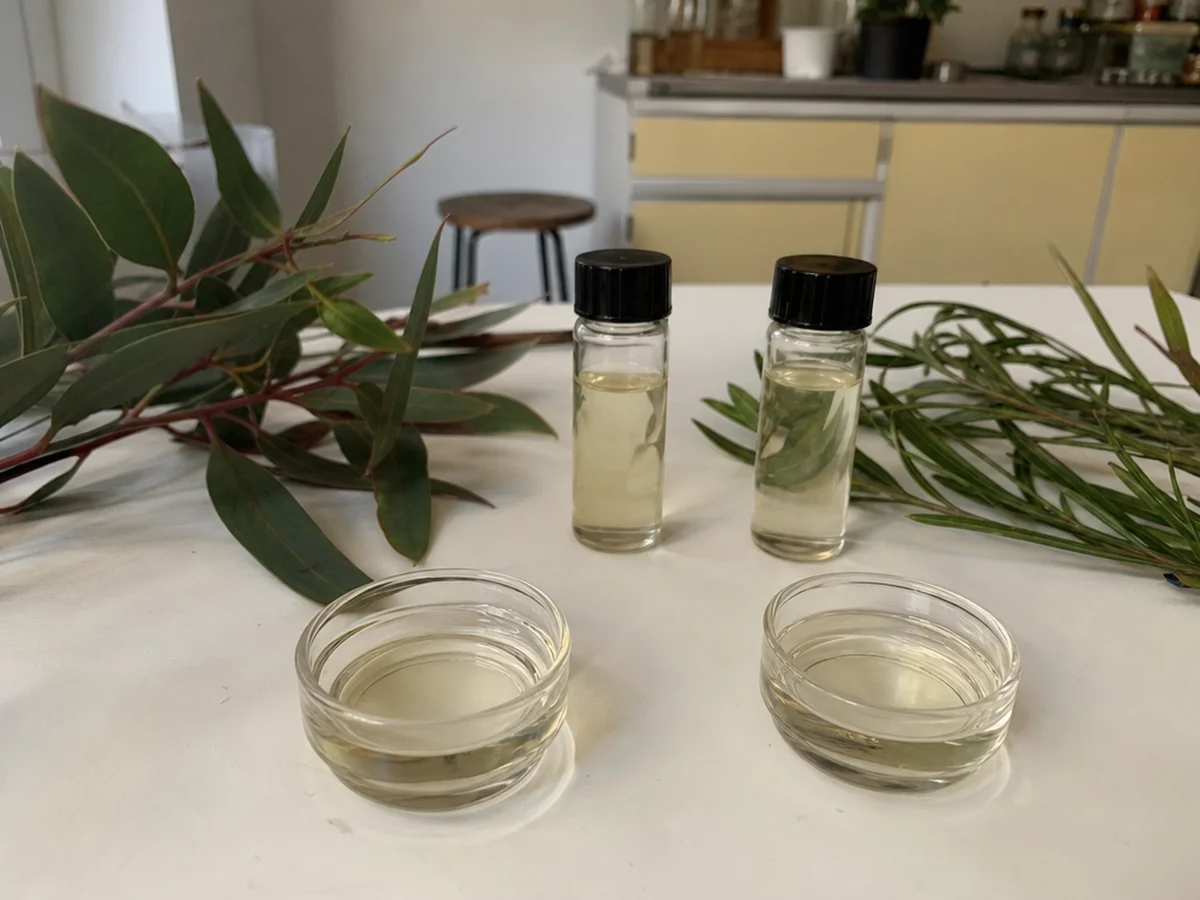
So "what does eucalyptus smell like" deserves a question back: which eucalyptus?
Our five, in our words
Here is how we describe the oils we sell, in aroma terms only:
- Globulus: cool, clean and camphor-fresh, with a bracing lift and a faintly sweet, woody finish. This is the classic steam-room smell.
- Radiata: fresh, soft and clean, with a gentle camphor note and a slightly sweet, citrus-tinged finish.
- Lemon eucalyptus: bright, lemony and citronella-like, and the one that skips the camphor edge.
- Smithii: soft, smooth and gently camphoraceous, with a rounded character.
- Dives: minty and sweet over a camphoraceous spine, nearer to peppermint than to globulus.
If you only have room for one in your diffuser, our globulus is the one most people picture. If the sharp edge is a bit much, radiata and smithii are the gentler routes in, and dives is the one for anyone who loves a minty note.
A fun way to remember them is to imagine a day. Globulus is the crisp morning air. Radiata is the soft, clean afternoon light. Smithii is the rounded, easy evening. Dives is the one with a minty, sweet flicker, a bit like a peppermint sweet melting on the tongue. And lemon eucalyptus is the strip of lemon peel you drop into a glass. It is only a mnemonic, but the picture sticks in the mind and helps when you are choosing.
Why "camphor-like" keeps coming up
For cineole, the compound at the heart of the cooler oils, PubChem quotes a classic reference book, Hawley's Condensed Chemical Dictionary, describing its odor in three words: camphor-like. That sums up the family neatly. Camphoraceous means close to camphor, with a clean, resinous sharpness. The sweetness in radiata, the mint in dives and the citrus in lemon eucalyptus presumably come from the other ingredients in each oil. Reasoning from the composition ranges in the trade survey, a cineole-rich oil and a piperitone-rich dives are different mixtures, so they should smell different, and our descriptions say they do.
Smell is also not the same thing as that icy feeling a eucalyptus oil can give. Cold sensation is a separate sense, and a cell study of the cold-and-menthol receptor TRPM8 found eucalyptol far weaker at switching it on than menthol. That is a laboratory finding about an isolated receptor, so it is a reason to compare oils by nose and not by how chilly they seem, not a ranking of finished oils.
How to compare two bottles by nose
Here is a method we would suggest, reasoned from how scent works and not a tested protocol:
- Smell one oil at a time from a strip of plain paper, not from the bottle neck, where the vapor is far stronger than a room will ever carry.
- Wait a minute between oils so the first does not blanket the second.
- Return after 10 to 20 minutes, because top notes shift as they settle.
- Compare across species. Globulus beside radiata tells you more than a list of adjectives.
- Recap the bottle between uses, since air and warmth dull an oil. We say roughly 2 to 3 years while sealed, kept cool and out of light, and an older bottle can smell different from a fresh one.
What your nose cannot tell you
A nose is a wonderful tool for choosing a scent you will enjoy, and a limited one for knowing what is inside a bottle. Two oils can smell alike and differ in composition, and a species can vary from batch to batch. If composition matters to your project, the answer is a gas chromatography report for your batch, and our GC-MS guide shows how to read one. You can ask us for a report in writing through our contact page. The background on each species is in our species explainer, and if you are curious about the minty one, the peppermint pairing piece goes into it.
A pleasant smell says nothing about suitability for a baby or a pet. Our eucalyptus oils are sold neat, so keep them away from eyes, children and pets, and do not swallow them. Our standards page says high-cineole oils are not appropriate for babies and young children and that eucalyptus should stay off an infant's face. If you are pregnant or have a breathing condition, your physician or midwife is the right person to ask.
Whichever you choose, start with a small size, let your nose make the call, and enjoy how different one family of leaves can smell.
Eucalyptus Essential Oil
Eucalyptus Essential Oil from our own shop, in sizes from 0.5 oz to bulk.
From $9.99
Shop Now →Sources & Further Reading
- Coppen JJW, Hone GA, 1992, Eucalyptus oils: a review of production and markets (NRI Bulletin 56), Natural Resources Institute
- PubChem, 1,8-Cineole
- Behrendt HJ, Germann T, Gillen C, Hatt H, Jostock R, 2004, Characterization of the mouse cold-menthol receptor TRPM8 and vanilloid receptor type-1 VR1 using a fluorometric imaging plate reader (FLIPR) assay, British Journal of Pharmacology