How to Read a Eucalyptus GC-MS Report
A GC-MS report is one of the most useful pieces of paper a buyer can ask for, and one of the easiest to misread. It is a fingerprint of an oil, a list of what is in it and roughly how much. The trick is knowing which three or four lines carry the story.
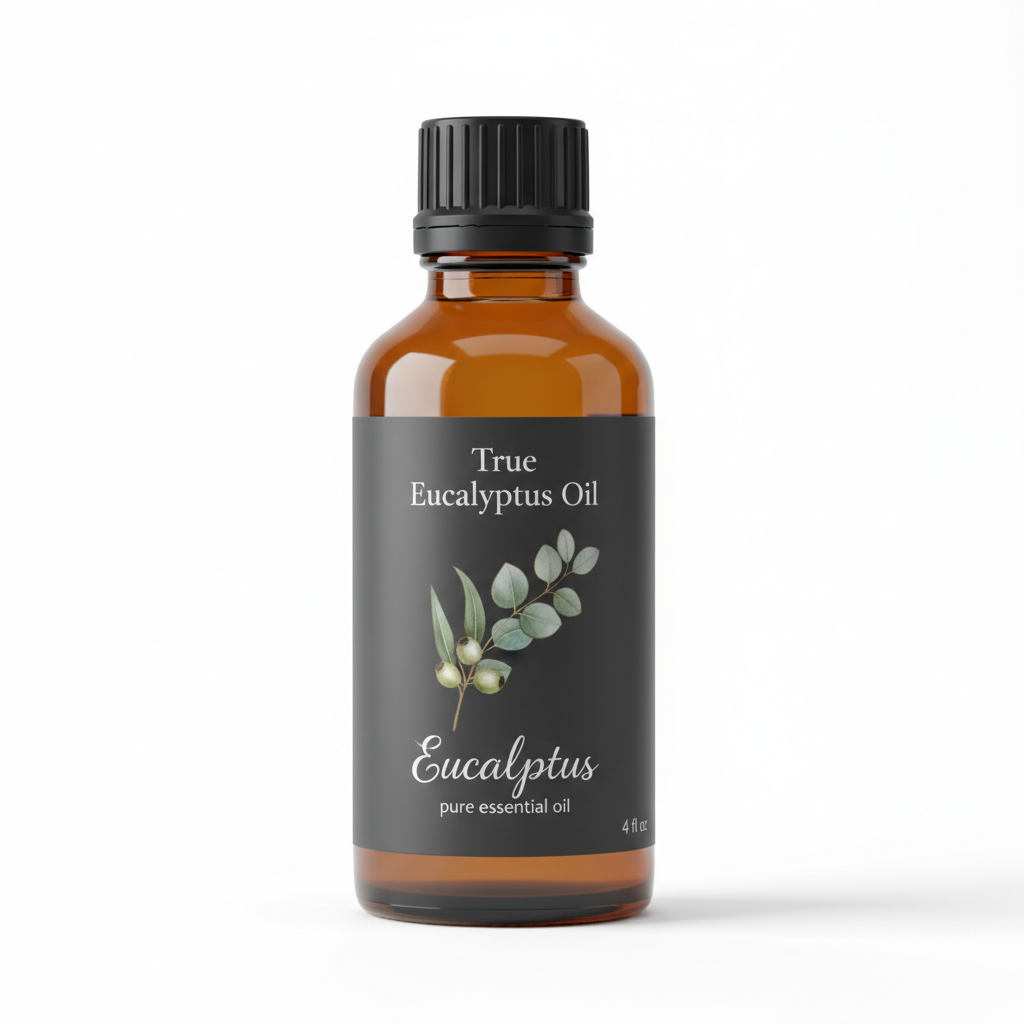
Eucalyptus Essential Oil
Our own Eucalyptus Essential Oil, in sizes from 0.5 oz to bulk.
From $9.99
Shop Now →Start at the top
Before you look at a single percentage, check the header. A report is only about your bottle if it names the species, carries a batch or lot number you can match to what you were sent, and says which laboratory ran it, by what method and on what date. A table of typical ranges is a specification, which tells you what an oil should be, and a result tells you what one lot was. Both are useful, and the header tells you which one you are holding.
Think of the report as a guided tour and not a verdict. It describes one sample on one day, and its job is to help you ask better questions, not to settle every one of them.
What "percent" means on the page
Most reports give each compound as area percent. The EFSA opinion on eucalyptus oil spells out what that means in its own table: the content of each constituent is the area of its chromatographic peak as a share of all detected peaks, taking the sum as 100%. It is a share of the signal, a close cousin of weight percent but not the same thing, which is why a good report says which one it is. Two reports are easiest to compare when they use the same method.
A real example, batch by batch
EFSA published GC-MS results for seven batches of a commercial Eucalyptus globulus leaf oil. It is a handy example of what a healthy report looks like, and of how much one oil can move.
| Constituent | Specification (% GC area) | Seven-batch mean | Range |
|---|---|---|---|
| 1,8-Cineole | 70 or more | 79.53 | 72.5 to 86.9 |
| d-Limonene | 2 to 15 | 8.03 | 4.16 to 11.12 |
| alpha-Pinene | 1 to 10 | 2.45 | 1.28 to 3.28 |
Three things stand out. First, cineole is the headline: EFSA chose it as the marker for the oil. Second, every batch sits inside the specification, yet the cineole figure still spans about 14 points. A single number from one lot is not a promise about the next. Third, the report covers the whole picture: up to 41 constituents were detected and 40 identified, adding up to about 100% of the signal. That last check is one we like. Add up the identified compounds, and if the total is far from 100, ask why.
Why the species belongs on the header
The European Pharmacopoeia describes eucalyptus oil as coming from cineole-rich species, mainly E. globulus, E. polybractea and E. smithii. A cineole line makes sense for those. Lemon eucalyptus, E. citriodora, is a different kind of oil with a lemon-like scent, and radiata and dives are described in our shop as softer and, in the case of dives, minty. Asking a cineole question of the wrong species gets you a confusing answer, so the species name on the report matters as much as any percentage on it.
A reading routine that keeps it simple
A report can look intimidating, a wall of small print and decimals. Our suggestion is to read it in the same order every time. Header first: species, lot, lab, date. Then the compound you care about. Then the total at the bottom. Then whatever looks odd. Three or four lines are usually enough to tell you whether the report is about your bottle and whether it is worth keeping on file.
What a chromatogram cannot see
A gas chromatograph reads compounds that can be vaporized. A 2019 overview of adulteration detection notes that only volatile and semi-volatile compounds register, so a non-volatile addition such as a vegetable oil stays behind in the injection port and does not show up. The same authors point out that a change in peak areas can be a clue to adulteration, but regional and seasonal variation can cause similar changes. In practice a clean report is strong evidence about the volatile profile and one input among several. We take up the home tests people try instead in our piece on quality tests.
What we can offer
The Certificate of Analysis we publish is for a single batch of our lemon eucalyptus and lists appearance, smell, a relative density of 0.863 and a refractive index of 1.453. It does not include a chromatogram. If you need a GC-MS report, a cineole share or a species confirmation for any of our five oils, ask us in writing through our contact page before you order, and get the answer in writing before relying on it. Our buying guide lists the other questions worth asking, and our eucalyptol piece explains the chemistry behind the cineole line.
Keeping the paperwork useful
When a report arrives, save it with the bottle's details: the oil, the size, the date you received it. It sounds fussy, but a year from now you will be glad of it, especially if you start making something to sell or share. A tidy folder, paper or digital, saves you from hunting through emails when someone asks what is in your product.
If a report ever leaves you stuck, an analytical chemist at a testing laboratory is the right person to read it with you.
Eucalyptus Essential Oil
Eucalyptus Essential Oil from our own shop, in sizes from 0.5 oz to bulk.
From $9.99
Shop Now →Sources & Further Reading
- Safety and efficacy of a feed additive consisting of an essential oil derived from Eucalyptus globulus Labill. (eucalyptus oil) for all animal species (FEFANA asbl), EFSA Journal, 2023.
- Detection of Essential Oils Adulteration: A Quick Overview and Current Challenges, Jentzsch, Guerrero and Ciobota, 2019.