Can You Test Eucalyptus Oil at Home? What Works
Search for ways to check an essential oil at home and you will find the same handful of tricks everywhere: a drop on paper, a drop in water, a night in the freezer. They are fun to try, and each measures something real. None of them measures quality, though, and it helps to know exactly what each one does read.
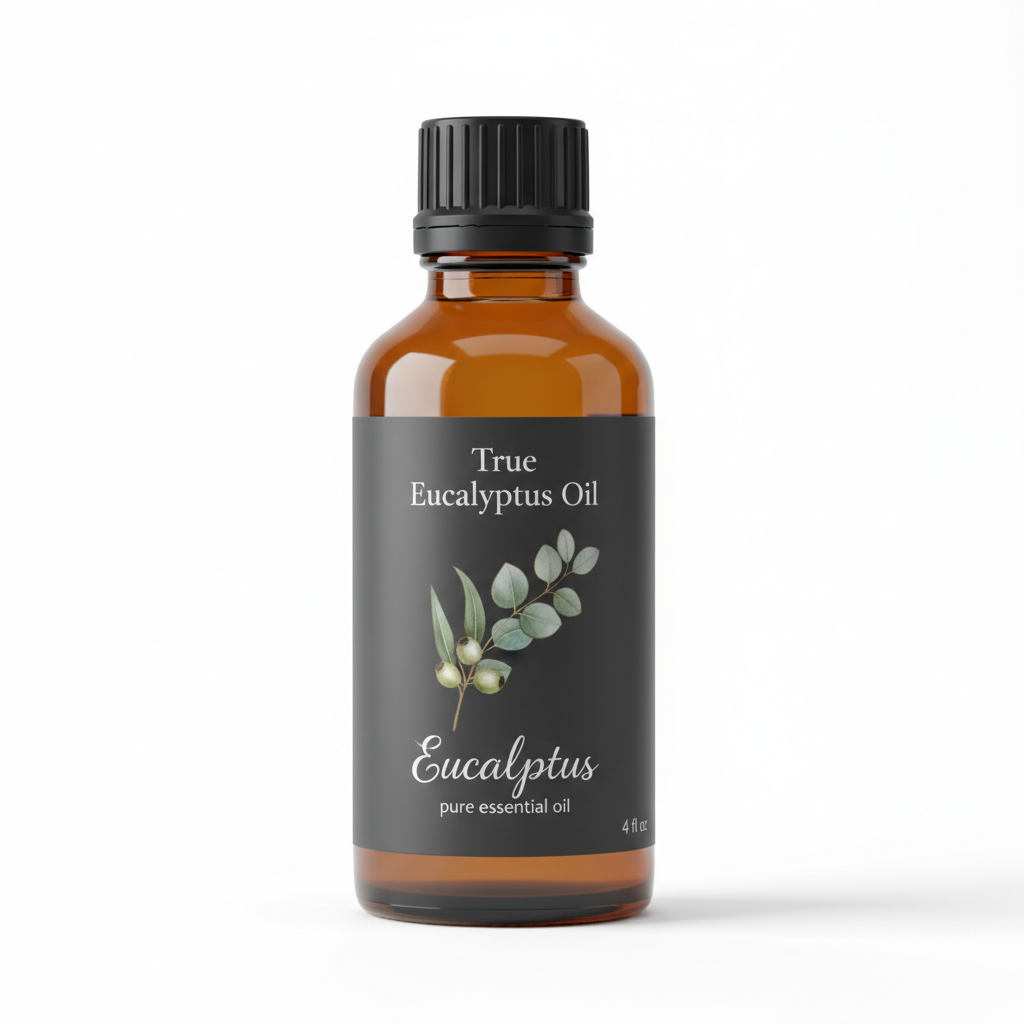
Eucalyptus Essential Oil
Our own Eucalyptus Essential Oil, in sizes from 0.5 oz to bulk.
From $9.99
Shop Now →The paper spot
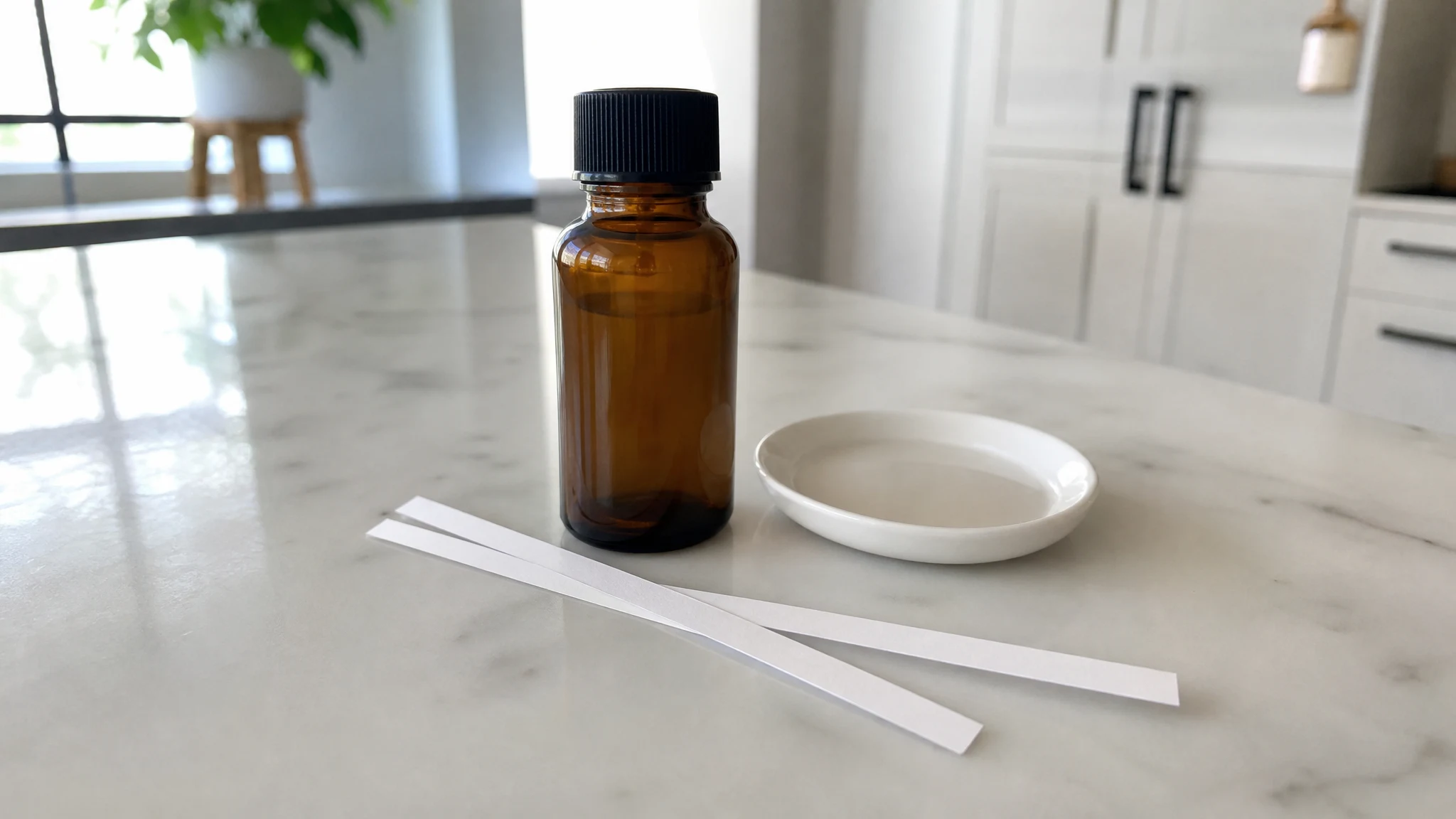
A drop of eucalyptus oil on paper should fade as the volatile compounds evaporate. If a greasy ring stays behind, something heavy, such as a fatty carrier oil, is in the mix. That is the one thing the test can honestly flag. A clean spot says "no obvious fixed oil" and nothing more, because a different eucalyptus species, or a cineole top-up, would evaporate just as cleanly.
The glass of water
Eucalyptus oil floats on water and does not mix with it. So does every other oil, from olive to sunflower. This test shows that you have an oil, which you already knew.
The kitchen scale
Density is a real property, and it is worth a little arithmetic. Pure 1,8-cineole, the main compound in the cineole-rich eucalyptus oils, has a density of about 0.92 g/mL (PubChem lists 0.921 to 0.923). The one measured density we publish is for a batch of our lemon eucalyptus, which came in at 0.863 at 20 C. Ten milliliters of the first would weigh about 9.2 g and of the second about 8.6 g. Two different eucalyptus oils, then, give two different answers, which tells you that a density figure only means something when compared with the expected figure for the same species. Most kitchen scales read to a whole gram, which blurs a 0.6 g gap further. Refractive index tells the same story. In the EFSA opinion on eucalyptus oil, five batches of a globulus oil measured 1.460 to 1.461, and the published specification runs from 1.458 to 1.470; our lemon eucalyptus batch measured 1.453.
The freezer
Pure 1,8-cineole melts at 1.5 C, so a cineole-rich oil can cloud or throw crystals when it gets cold enough. How much it does depends on how much cineole the oil holds and what else is dissolved in it. We know of no published household protocol with an accepted reading, so the freezer is best treated as a curiosity: if an oil clouds in the cold, it has told you it contains something that freezes, and that is about all.
If you do try the freezer, treat it as a bit of kitchen theater. Set a timer, take a photo, and enjoy the small drama of watching a clear liquid change. Just keep the bottle capped and labeled in there, away from food, and bring it back to room temperature before you open it again.
Why the tricks stay popular
These tests spread because they are easy and they feel like detective work. A drop on paper, a glass of water, a peek in the freezer: all of it is cheap, quick and oddly satisfying. There is nothing wrong with enjoying that. It just helps to treat each one as a small experiment about how an oil behaves, and not as a pass or fail grade.
A better habit: get to know your bottle
The most useful thing you can do at home is learn what your oil smells like and keep a note of it. Write the date you open the bottle, then write a few plain words about the first impression, something like "cool, sharp, a little sweet at the end." Smell it on a paper strip again after a few minutes and note how it changes. When you open your next bottle, those words are a handy reference. You will notice differences between species and between bottles far better with a note beside you than from memory.

What does tell you something
A laboratory report for the batch you are buying. Gas chromatography lists the compounds and their shares, and the EFSA opinion shows what a full report looks like: seven batches of one globulus oil, with cineole between 72.5% and 86.9%, and 40 of 41 detected constituents identified. Read against a specification, that is real information. There are limits, though. A 2019 overview of adulteration detection notes that gas chromatography only registers volatile and semi-volatile compounds, so a vegetable oil added to a clove oil sample went undetected, and that isotope-ratio and chiral analysis have worked well for synthetic versions of natural compounds. In other words, the more worried you are, the more methods you combine.
Whatever the report is, it earns its keep only when it names your batch, the date, the method and the laboratory. Without those, it is a document and not evidence. Our GC-MS guide shows how to read the lines.
Our documentation, and what to ask any seller
The Certificate of Analysis we publish is for one batch of our lemon eucalyptus and gives appearance, smell, relative density and refractive index. If you need GC-MS, a cineole share or species confirmation for any of our five oils, ask us in writing through our contact page before you order, and get the answer in writing.
The same questions are worth sending to any seller: which species and plant part, which batch number is on the bottle, which laboratory and which date, and which tests were run. We list the rest in our buying guide, and our myths piece looks at other claims that circulate.
The home tests are a nice way to get to know an oil. Treat them as a way to get acquainted with how it behaves, and leave the verdict to a report.
Eucalyptus Essential Oil
Eucalyptus Essential Oil from our own shop, in sizes from 0.5 oz to bulk.
From $9.99
Shop Now →Sources & Further Reading
- Safety and efficacy of a feed additive consisting of an essential oil derived from Eucalyptus globulus Labill. (eucalyptus oil) for all animal species (FEFANA asbl), EFSA Journal, 2023.
- PubChem: 1,8-Cineole (CID 2758), National Library of Medicine.
- Detection of Essential Oils Adulteration: A Quick Overview and Current Challenges, Jentzsch, Guerrero and Ciobota, 2019.