7 Eucalyptus Oil Myths and What Is Actually True
Eucalyptus oil has a reputation that runs ahead of the facts in both directions. People love it for a fresh, camphor-clean scent, and then pile on claims that nobody has actually checked. We sell it for aroma, so we would rather help you sort what is solid from what is folklore. Here are seven things we hear most often, each set against a source worth trusting.
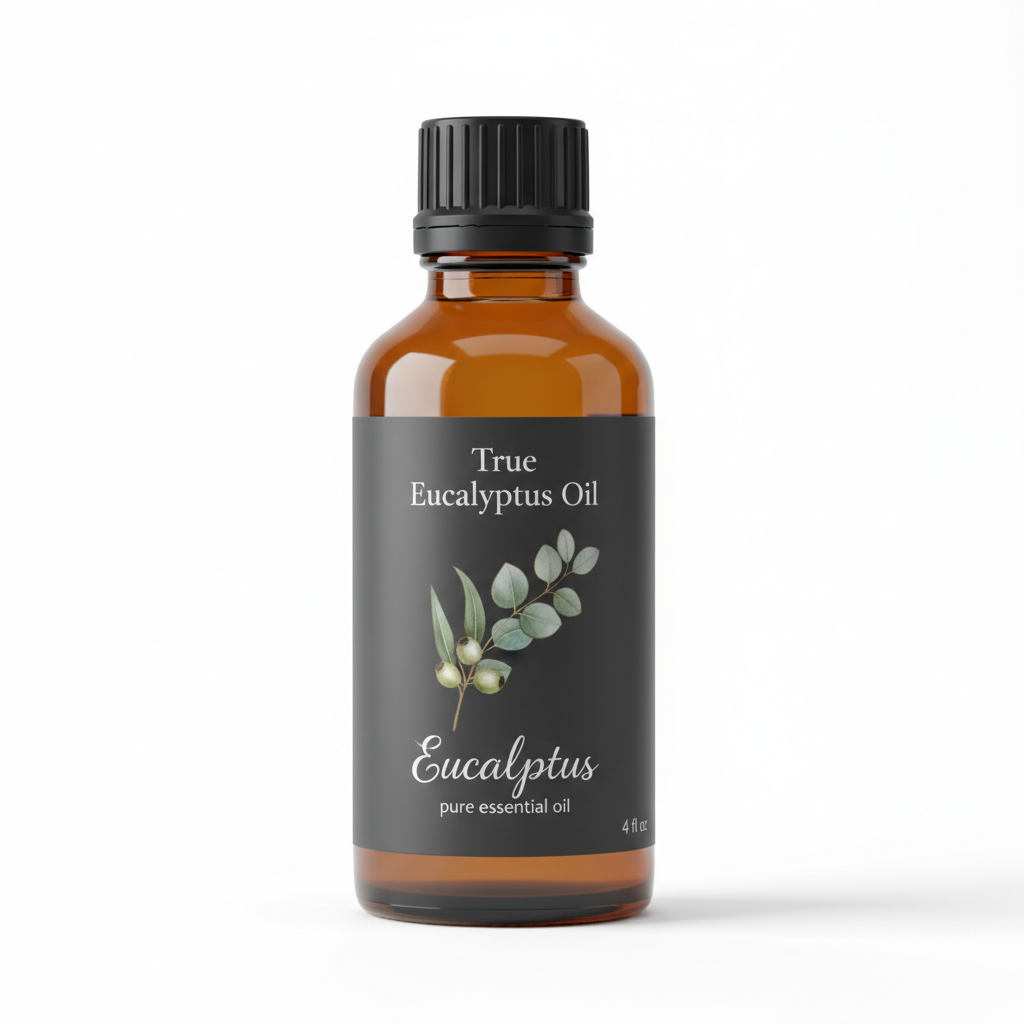
Eucalyptus Essential Oil
Our own Eucalyptus Essential Oil, in sizes from 0.5 oz to bulk.
From $9.99
Shop Now →"Natural means safe"
This one is the most common and the easiest to answer. The FDA's page on aromatherapy says directly that many plants contain materials that are toxic, irritating or likely to cause allergic reactions on skin. It gives cumin oil as an example, fine in food but able to blister skin, and notes that the agency has no regulatory definition of "natural" or "organic" for cosmetics. Plant-derived is a description of where something comes from, not a guarantee about how it behaves. That is why we ask you to dilute our oils, keep them away from your eyes and patch test first.
"A little swallowed won't hurt"
Poison Control is blunt here: eucalyptus oil should never be swallowed, and even a small dose can cause seizures, coma and death. It adds that a teaspoonful or less of undiluted oil can be fatal and describes a 6-year-old who accidentally swallowed two teaspoonfuls and had a seizure that lasted over five minutes. Nothing on the page offers a safe amount, so please do not look for one. Our oils are not for internal use, and our poisoning guide explains what to do if the worst happens.
"It's fine around pets"
The ASPCA's plant listing for eucalyptus reads simply: toxic to dogs, toxic to cats, toxic to horses, with eucalyptol named as the toxic principle and salivation, vomiting, diarrhea, depression and weakness as clinical signs. A diffuser puffing away in a room an animal cannot leave is therefore worth a second thought. If you share your home with a pet, your veterinarian is the person to ask, and the ASPCA poison line is (888) 426-4435. Our product pages say the same: keep our oils away from pets. Our cat and dog guides go deeper, starting with the cat guide.
"Koalas live on it, so it must be harmless"
It is a charming argument and it falls apart quickly. Researchers who fed captive koalas different eucalyptus trees found that the animals ate less from trees with high levels of certain defensive chemicals called formylated phloroglucinol compounds, and concluded that plant defences probably help decide where koalas can live. In other words, koalas are choosy specialists, not immune ones. The study was about leaves and those particular compounds, and it says nothing about what a concentrated oil does to a person.
"It kills mold"
The EPA's guide to mold does not mention eucalyptus at all. What it does say is that the key to mold control is moisture control, that hard surfaces should be scrubbed with detergent and water and dried completely, and that using a biocide is not recommended as a routine part of cleanup. The advice works whether or not a scented oil is involved, so we do not suggest buying eucalyptus for the job. If you are curious about what has been studied, see our look at eucalyptus oil and mold.
"Lemon eucalyptus oil is a mosquito repellent"
Two different things share this name. The EPA's repellent search lists only registered products, and it explains that a registration number means the company gave the EPA technical information on the product's safety and effectiveness. Oil of lemon eucalyptus can be an active ingredient in those registered repellents, and the EPA notes that some of them should not be used on children under three. Our lemon eucalyptus is an essential oil sold for its bright, citronella-like aroma, not a registered repellent, and we make no repellent claim for it.
"Aromatherapy products are approved for all sorts of things"
Under the law, the FDA explains, how a product is regulated depends on what it is intended to do. Cosmetics do not need FDA approval before they go on sale, and claims that a product will ease pain, relax muscles or help you sleep are drug claims. That is the reason you will find us talking about aroma, scent and how an oil smells, and not about what it does inside your body. Whenever you see a bottle promising more, it is fair to ask what that promise rests on.
How we talk about our oils
You may have noticed that we talk about how our oils smell and very little else. That is deliberate. A bottle of eucalyptus oil is a lovely thing to own for its cool, clean aroma, and that is reason enough to enjoy it. When a claim about any oil comes with big promises, a few quick questions are worth asking:
- Who is making the claim, and what are they selling?
- Is there a named source you can open and read yourself?
- Does the source talk about the same thing, such as a plant or a single compound, or about a concentrated oil on a person?
A minute of looking for the original source is a habit that serves you with every oil, ours or anyone else's.
Sorting fact from folklore is half the pleasure of knowing an oil well. If you want a longer, calmer look at the topic, our overview is eucalyptus oil safe is the place to go next.
Eucalyptus Essential Oil
Eucalyptus Essential Oil from our own shop, in sizes from 0.5 oz to bulk.
From $9.99
Shop Now →Sources & Further Reading
- US FDA. Aromatherapy. fda.gov
- Poison Control. Eucalyptus oil: Is it safe? poison.org
- ASPCA. Toxic and Non-toxic Plants: Eucalyptus. aspca.org
- Moore BD, Foley WJ, Wallis IR, Cowling A, Handasyde KA, 2005. Eucalyptus foliar chemistry explains selective feeding by koalas. Biology Letters. Europe PMC
- US EPA. A Brief Guide to Mold, Moisture and Your Home. epa.gov
- US EPA. Find the Repellent that is Right for You. epa.gov
- US EPA. Using Insect Repellents Safely and Effectively. epa.gov