Eucalyptus Oil vs Eucalyptus Mist: How to Choose
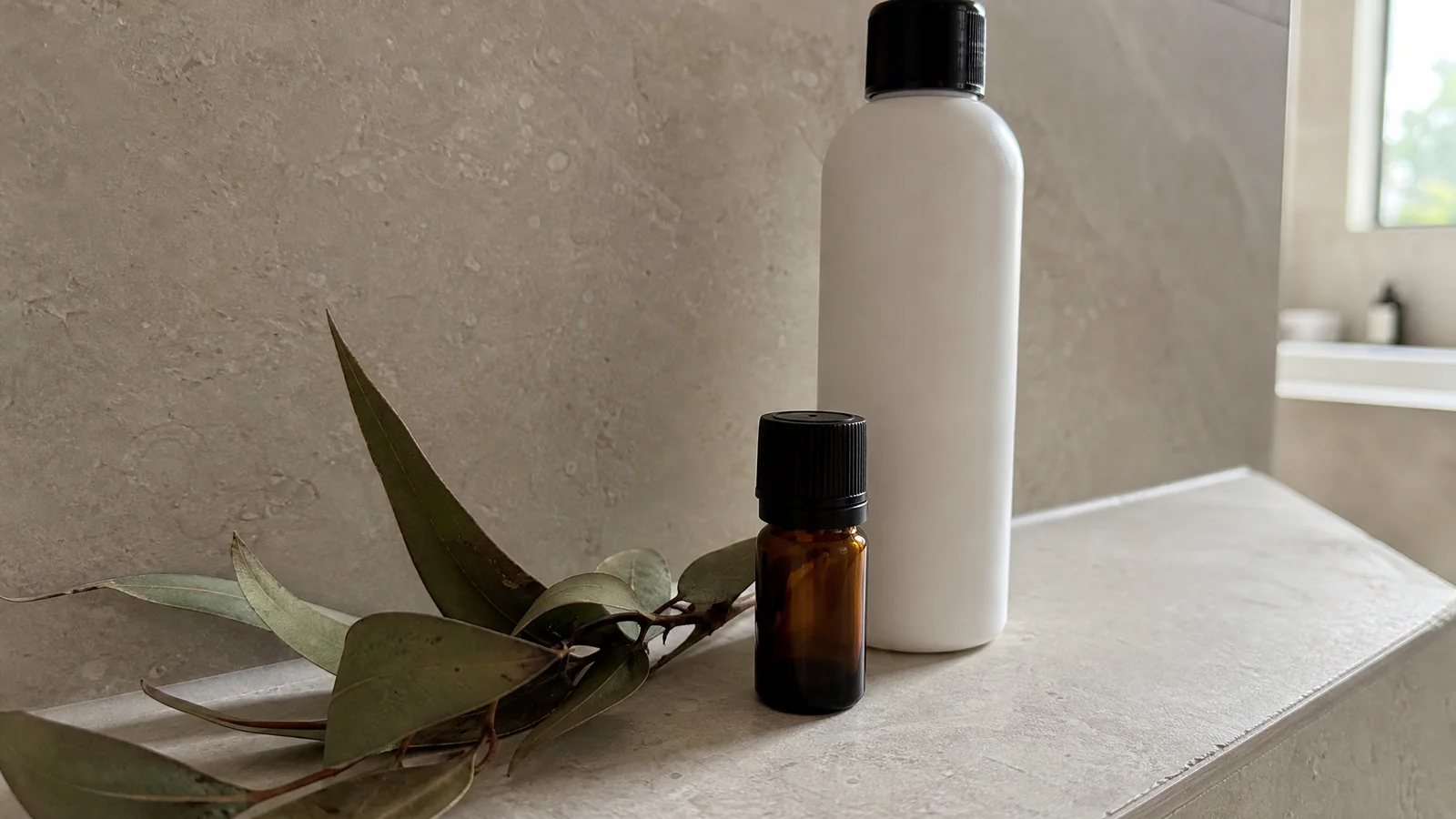
Picture two bottles on a shelf, both with a eucalyptus leaf on the front. One holds a few milliliters of concentrated oil. The other is a pretty spray bottle that is, by volume, almost entirely water. They are different products doing different jobs, and the label is where the difference hides.
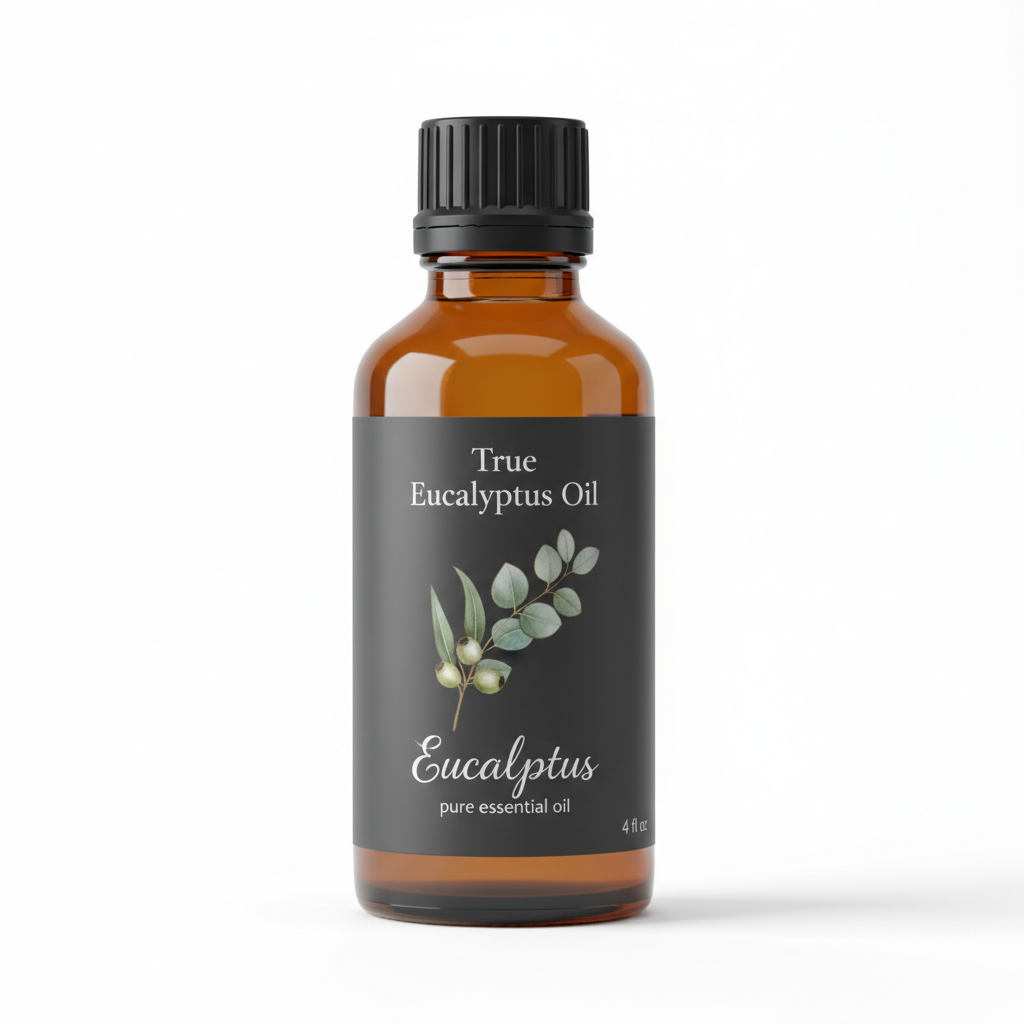
Eucalyptus Essential Oil
Our own Eucalyptus Essential Oil, in sizes from 0.5 oz to bulk.
From $9.99
Shop Now →What a cosmetic label has to tell you
In the United States, a cosmetic label lists its ingredients in descending order of predominance, with one useful exception: ingredients present at 1% or less may be listed in any order after the bigger ones. A maker may also declare scent ingredients collectively as "fragrance." The FDA explains why: fragrance formulas are treated as trade secrets, so the label will not break them down.
That gives you a simple way to read a mist. If water is first, the water is the biggest ingredient, which is exactly what you would expect from a spray. If you see "fragrance" high on the list and a eucalyptus species name tucked at the end, the scent may owe more to the first than the second. And since the label shows order rather than amount, an ingredient below the 1% line could be a little under 1% or a tiny fraction of it. The front of the bottle is a claim; the back is the evidence.
What each one feels like in a room
A mist and an oil behave quite differently once they leave the bottle. A spritz lands, smells lovely for a short while and is gone. An oil in a diffuser builds a more definite presence in the room and keeps going for as long as the unit runs, which is why a small amount goes a long way and why a break now and then is a good idea. Neither is better. They simply suit different moods: the mist is a light touch, the oil is the centrepiece.
Oil, hydrolat or something else?
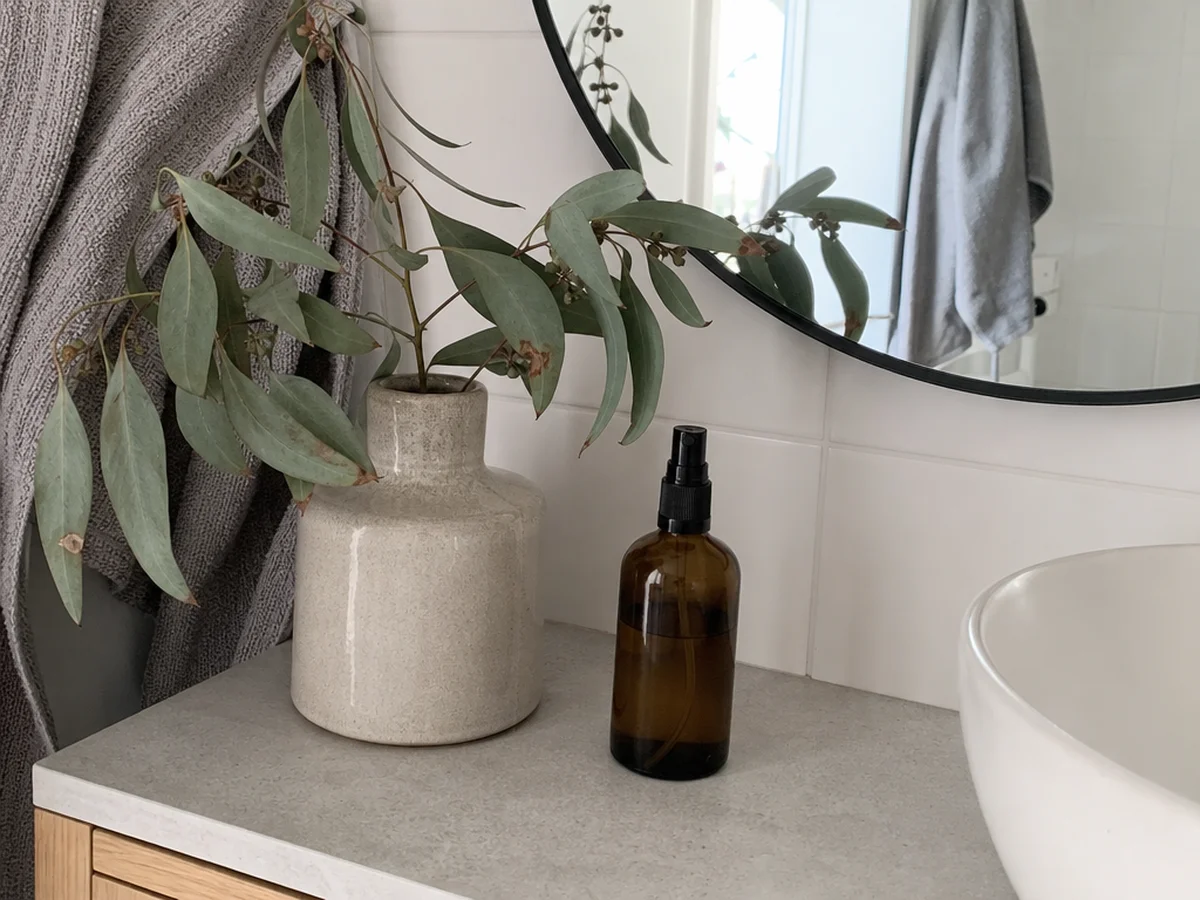
Words matter here. An essential oil is the concentrated, steam-distilled material from the leaf. A hydrolat (sometimes called a hydrosol or floral water) is the scented water that comes off the still alongside the oil. A "mist" can be either of these, or water with a little oil dispersed in it, or a built fragrance. Oil does not mix with water on its own, so a mist that carries real oil needs something to help the two combine, and that ingredient is worth looking for on the list.
A 2024 paper in Animals gives a vivid picture of how much hydrolats can vary. Researchers measured ten commercial eucalyptus hydrolat products by NMR and found eucalyptol anywhere from below their detection limit up to 5.05 millimoles per liter, a difference of more than 500-fold between products. The eucalyptus oil they used for comparison, an Eucalyptus radiata oil, measured 4.12 moles per liter. In other words, the richest hydrolat held roughly a thousandth as much eucalyptol, volume for volume, as the oil. The hydrolats also contained alcohols that were absent from the oil. The study was about how well dogs can detect scent, and it did not name the species of the commercial products, so it is a snapshot rather than a verdict on any brand. What it shows clearly is that two bottles sold under the same name can be worlds apart.
Why we think of mists as a light touch
A water-based product also needs looking after. The FDA notes that cosmetics can become harmful if they are contaminated, that some microorganisms grow faster in warm or damp conditions, and that preservatives can break down over time. So a mist that stays pleasant on the shelf usually relies on more than eucalyptus. That is one reason we would not suggest mixing your own in a spray bottle: it takes ingredients beyond oil and water to do well, and we sell none of them.
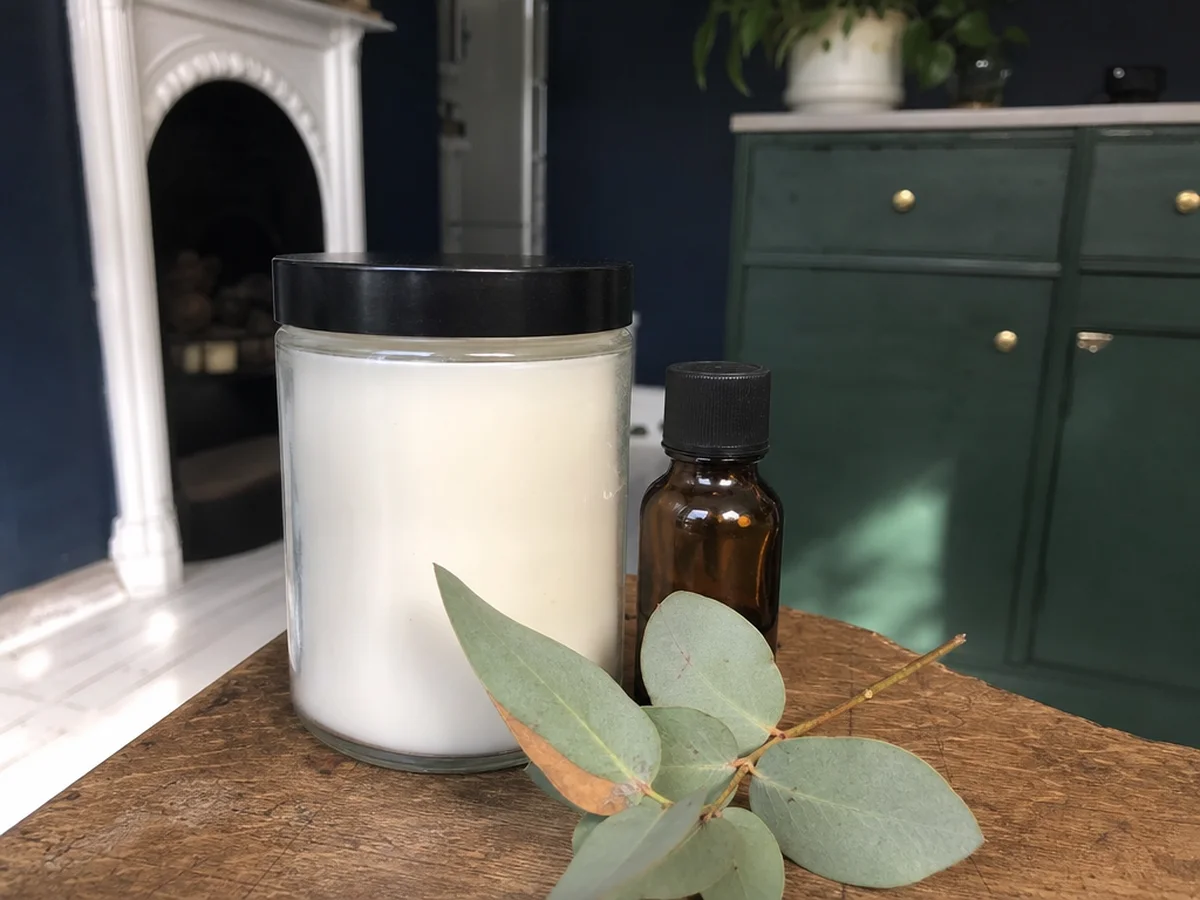
If what you want is a gentle whisper of eucalyptus on a pillow or in the bathroom, a mist from a maker who tells you its percentage can be a lovely product, and we are happy to say so. If you want a more definite eucalyptus aroma, an essential oil in a diffuser is where the character really comes through.
A little shelf-side detective work
If you are standing in a shop with a bottle in your hand, turn it over before you decide. Does the label name a species, or only say "eucalyptus scent"? Does it tell you how much of the bottle is oil? Does it say whether it is meant for the air, for fabric or for skin? A maker who is proud of the product usually answers these questions plainly. When a label stays vague on all three, treat the scent as a pleasant guess, and enjoy it as exactly that.
It also helps to decide the job before the product. If you want a fresh pillowcase mood for guests, a mist might be just right. If you want a bathroom that smells like a day at a spa, a few drops of oil on a warm shower floor does the work better.
How to choose between them
- Find the botanical name. It tells you the species, and our buying guide explains why that matters for aroma.
- Check where it sits relative to water, alcohol and "fragrance."
- Look for the word that follows it: oil, hydrolat, extract or water. They are different materials.
- Ask the maker for the percentage in writing if it matters to you. That is the same habit that makes a GC-MS report worth reading, which our guide walks through.
Where our oils fit
We sell five eucalyptus essential oils, neat and steam distilled from the leaf, and no mists, hydrolats or sprays. Because they are concentrated, we recommend diluting to 0.5% to 2% in a carrier oil for skin, with a patch test first, and keeping every bottle away from eyes, children and pets. For a bathroom setting, our shower guide goes through the options, and how to check an oil label covers the bottle side of the same question. Scented products of every kind are best kept away from animals; the ASPCA lists eucalyptus as toxic to dogs, cats and horses, so a quick word with your veterinarian is wise before scenting a room your pet shares.
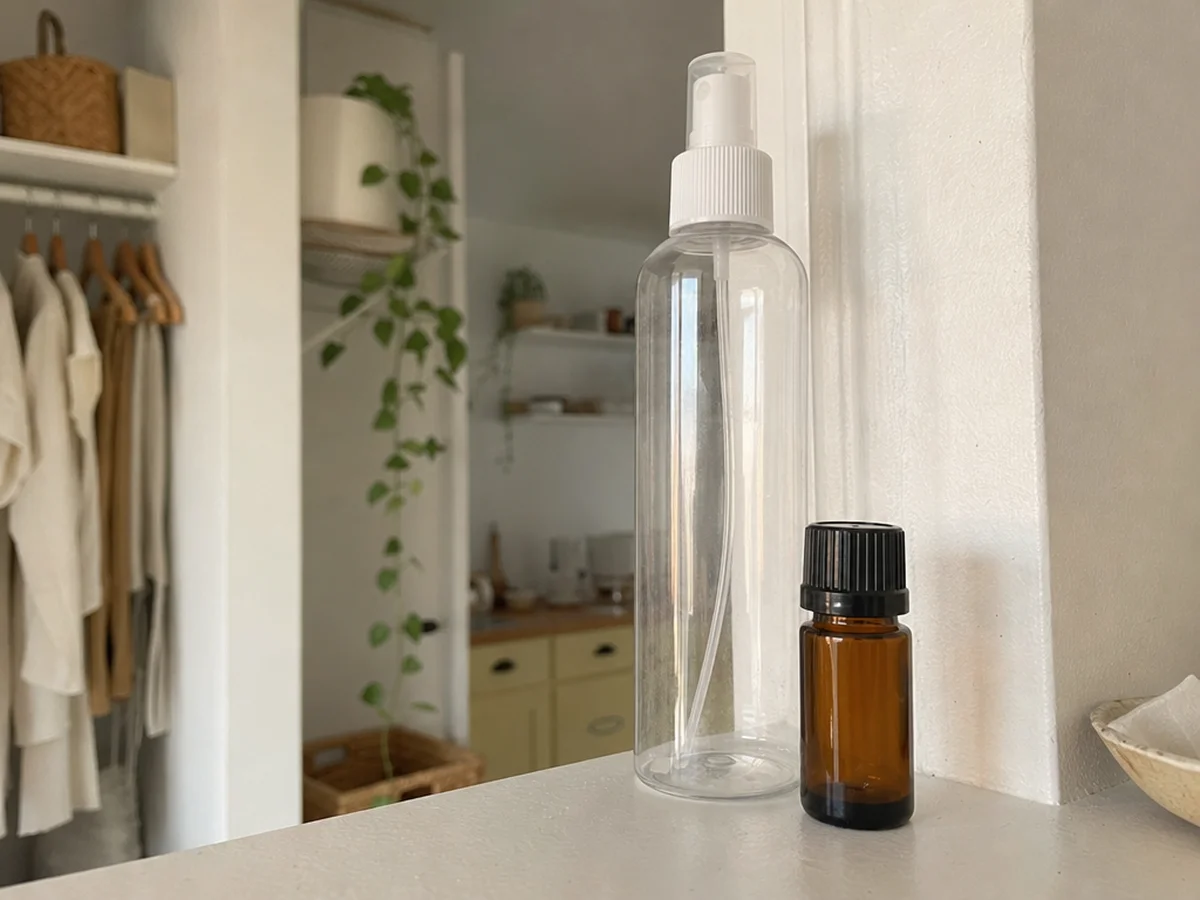
One line to carry to the shelf: the front of a bottle gives you a name, the back gives you a list, and only the maker can give you the amount.
Eucalyptus Essential Oil
Eucalyptus Essential Oil from our own shop, in sizes from 0.5 oz to bulk.
From $9.99
Shop Now →Sources & Further Reading
- 21 CFR § 701.3 - Designation of ingredients. | Electronic Code of Federal Regulations (e-CFR) | US Law | LII / Legal Information Institute
- Fragrances in Cosmetics | FDA
- Scent Detection Threshold of Trained Dogs to Eucalyptus Hydrolat. Turunen et al., Animals, 2024
- Microbiological Safety and Cosmetics | FDA
- Toxic and Non-toxic Plants: Eucalyptus | ASPCA