Buying Eucalyptus Oil: Why the Latin Name Comes First
Line up three bottles that all say "eucalyptus oil" and they can still be quite different things. One may be sharp and camphor-fresh, one soft and faintly minty, one bright and lemony. The label that tells them apart is the Latin name, and it is the first thing we look for before buying any eucalyptus oil, including our own.
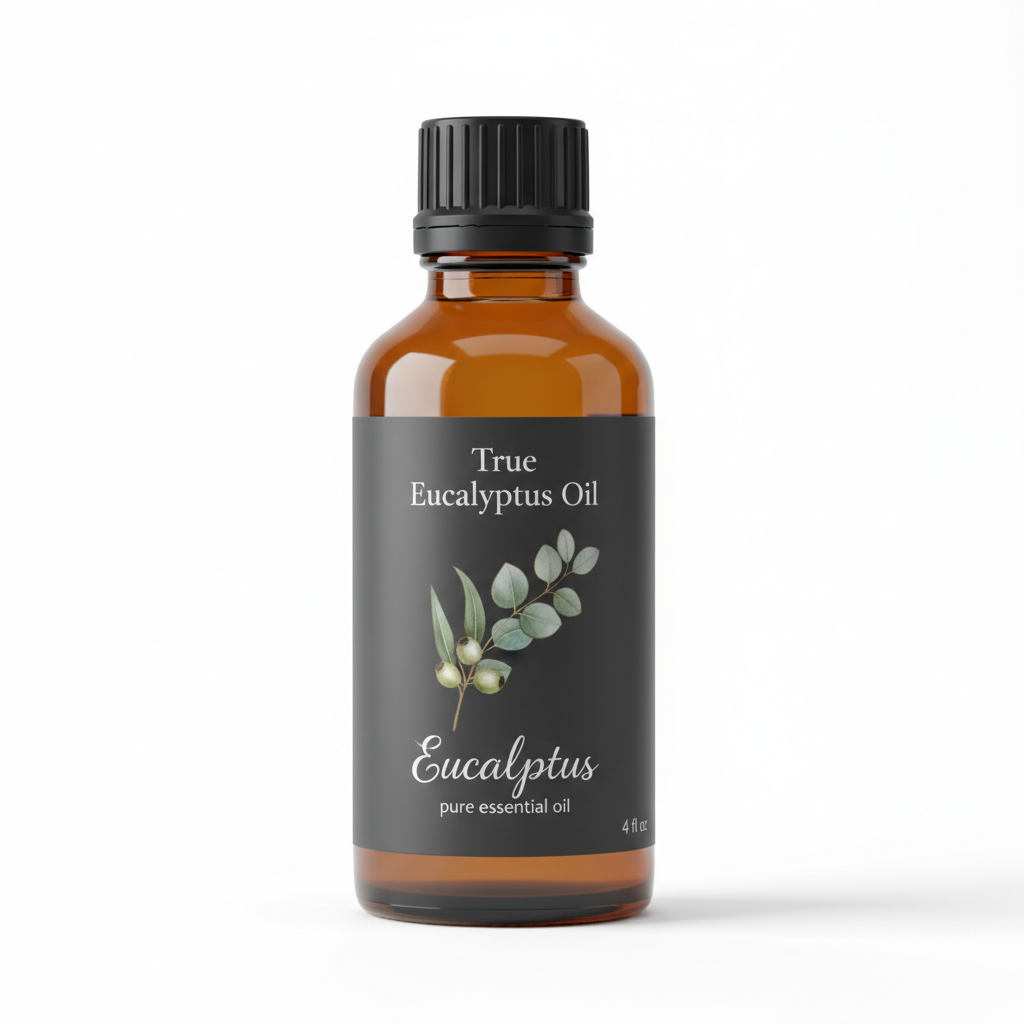
Eucalyptus Essential Oil
Our own Eucalyptus Essential Oil, in sizes from 0.5 oz to bulk.
From $9.99
Shop Now →The tree decides the oil
Eucalyptus is a big family, and the oils are not interchangeable. We sell five, each from a different species, and we describe them the way we would to someone standing at the counter. Globulus (Eucalyptus globulus, the Tasmanian blue gum) is cool, clean and camphor-fresh with a faintly sweet, woody finish. Radiata is the gentler of the common ones, soft and clean with a citrus-tinged finish. Smithii is soft, smooth and rounded. Dives leans minty and sweet over a camphoraceous spine. Lemon eucalyptus (Eucalyptus citriodora) skips the camphor edge altogether and smells bright and lemony, a little like citronella.
Because they differ so much, a recipe written for one will smell noticeably different with another. If a blend calls for a gentle eucalyptus and you reach for globulus, expect it to come across much stronger. When we compare them side by side in our species guide, this is the point we keep returning to: choose the species for the scent you want, then worry about everything else.
Where the cineole number comes in
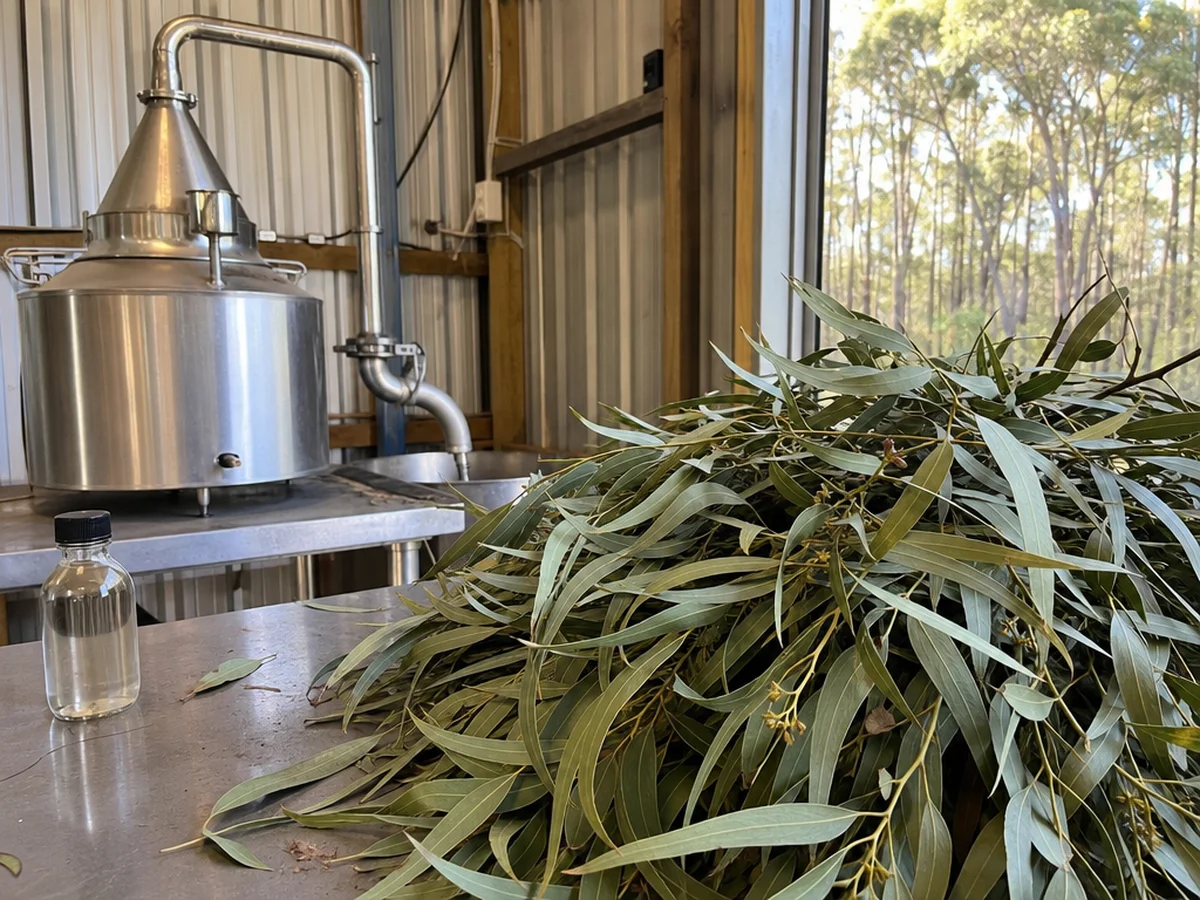
Most of the oils people mean by "medicinal-type" eucalyptus are rich in a compound called 1,8-cineole, also known as eucalyptol. The European Pharmacopoeia defines eucalyptus oil as the oil obtained by steam distillation and rectification from the leaves of cineole-rich species, mainly E. globulus, E. polybractea and E. smithii, and a 2023 EFSA opinion notes that the oil may be rectified, which means distilled a second time, to bring cineole above 70%.
The useful detail in that same opinion is how much the figure moves. Across seven batches of one E. globulus oil, cineole averaged 79.5% and ranged from 72.5% to 86.9%. So a cineole number is a fact about a batch, not about "eucalyptus". That is why a buyer who needs one should ask for the report for the lot they are buying. For our oils, if you need a GC-MS report, a cineole share or species confirmation, ask us in writing through our contact page before you order, and get the answer in writing before you rely on it. We walk through what such a report looks like in our GC-MS guide.
The Certificate of Analysis we publish is for one batch of our lemon eucalyptus. It lists appearance, a relative density of 0.863 and a refractive index of 1.453, and it does not cover our other four oils.
Open the bottle and notice
If you can smell a bottle before you commit, do it the gentle way: hold it a few inches from your nose and breathe in slowly, not with your nose in the neck. Notice the first impression, then the second one a few breaths later. Globulus tends to arrive with a cool, sharp lift. The softer oils, radiata, smithii and dives, come across rounder and more gradually. Lemon eucalyptus opens with citrus. If what you smell does not match the species named on the label, that is a good reason to ask questions. Give your nose a rest between bottles, because three or four sniffs in a row blur together.
Read the claims as claims
Words like "pure," "natural" and "therapeutic" are easy to print. The FDA says plainly that the law does not require cosmetic labeling to have FDA approval before products go on the market, that it has no list of approved or accepted claims, and that labeling must be truthful and not misleading. So a good habit is to ask any seller what a claim rests on: which method, which batch, which document. A seller who can answer in a sentence is telling you something. We cover the home shortcuts people try instead in our piece on quality tests.
Start from the scent you picture
Our suggestion for a first-time shopper is to start with the room you are imagining. If you picture a steamy bathroom, globulus is the obvious place to begin. If you picture a soft, leafy room, look at radiata or smithii. If you want something citrusy that skips the camphor, lemon eucalyptus is the one. Starting there saves you from ending up with a sharp oil when you wanted a gentle one, which is the most common mismatch there is.
Age, size and storage
We say a sealed bottle of our globulus keeps roughly two to three years, and typically two to three years for the other four, with the cap snug and the bottle kept cool and out of light. Eucalyptus is a top note, the kind of scent that fades first, so we suggest buying the size you will actually use. Our sizes guide and storage guide help with that choice.
Who will be using it
Our oils are sold neat, so dilution is yours to do. We recommend 0.5% to 2% in a carrier oil with a patch test first, and we keep the bottle away from eyes, children and pets. For babies and young children, we advise against using eucalyptus on or near the face and recommend asking a pediatric clinician first. In a home with a cat or dog, ask a veterinarian before using it at all. We go into both in our nursery article.
Five short questions, then: which tree, which batch, what does the label rest on, how old, and who is it for. Once you have those, the bottles on the shelf sort themselves out.
Eucalyptus Essential Oil
Eucalyptus Essential Oil from our own shop, in sizes from 0.5 oz to bulk.
From $9.99
Shop Now →Sources & Further Reading
- Safety and efficacy of a feed additive consisting of an essential oil derived from Eucalyptus globulus Labill. (eucalyptus oil) for all animal species (FEFANA asbl), EFSA Journal, 2023.
- Cosmetics Labeling Claims, U.S. Food and Drug Administration.