Eucalyptus Oil for Cleaning: Fresh Scent, Smart Limits
Walk into a room that has just been cleaned with a eucalyptus-scented rinse and you can smell the idea: crisp, green and a little camphor-cool. That fresh scent is what eucalyptus oil brings to a cleaning routine, and it is a lovely thing to bring. The cleaning itself is done by soap or detergent, water and a little elbow work, and the oil rides along on top as the perfume.
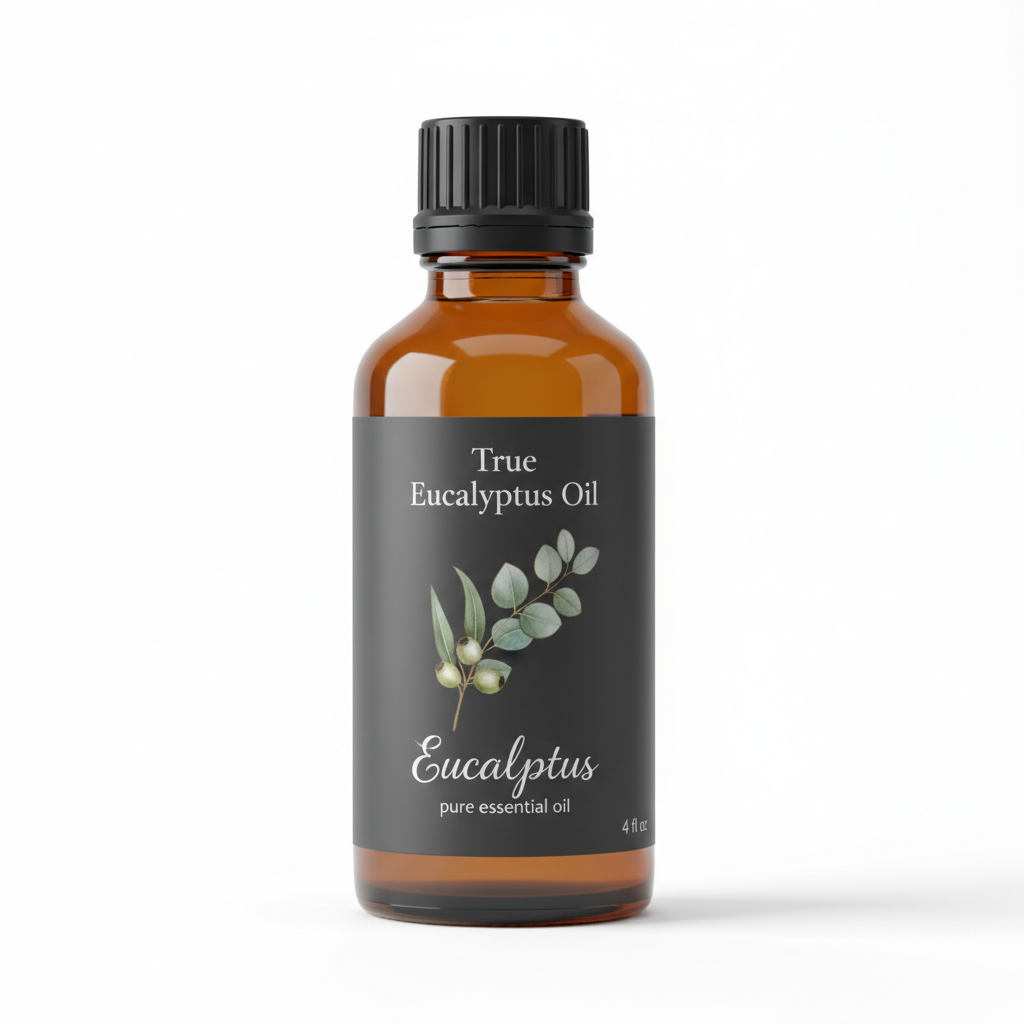
Eucalyptus Essential Oil
Our own Eucalyptus Essential Oil, in sizes from 0.5 oz to bulk.
From $9.99
Shop Now →Give each job the right tool
It helps to be clear about what is doing what. The EPA separates cleaning, which lifts dirt with soap or detergent, from sanitizing and disinfecting, which are regulated claims for products registered with the agency. Our eucalyptus oils are scent products and carry no such registration, and we make no germ claim for them. So if the job is grease, soap scum or everyday dust, use your usual detergent and add a little eucalyptus for the aroma. If the job is germs on a surface, look for an EPA-registered sanitizer or disinfectant and follow its label. Mold is a separate subject, which we cover in our mold guide.
That division of labour is also our recommendation: choose the oil for how it makes a space smell, and let a proven cleaner handle the cleaning. A fresh scent is not proof of a clean surface, and a clean surface does not need a scent, so each can be chosen on its own merits.
Why it floats, and what to do about it
Eucalyptus oils are rich in 1,8-cineole, a small molecule that does not like water. PubChem's record for it lists about 3,500 mg/L in water at 21 C from one source and "insoluble (<1 mg/mL)" from another, and describes it as miscible with ethanol and with fixed or volatile oils. Those figures are for the single compound, not a whole distilled oil, so for our oils this is reasoning, but the direction is clear: oil and water separate.
The arithmetic shows how fast. A 0.5% mix is 5 mL of oil in a litre of water, which at the one density we hold (0.863 for our lemon eucalyptus batch) is roughly 4 g. That is more than the higher solubility figure, so in practice most of the oil floats and the first few squirts from a spray bottle carry it undiluted. Shaking helps for a few seconds. A better route is to put the scent where oil is welcome, such as a rinse step, or to use a solubilizer from a cosmetic-supply shop, which we walk through in our spray formulation.
Start small if you are scenting a rinse for the first time. Mix a little, smell it, and see whether the aroma is pleasant before you commit a whole bucket. You will notice that the fresh smell is strongest right after you wipe and fades as the surface dries, so a small amount often does the job. A stronger mix is not a cleaner one, only a louder one.
Know your surfaces
Because eucalyptus oil behaves like a solvent toward oily and waxy materials, it is wise to check before you scent anything that touches finishes. Clear plastics, rubber, waxed wood, oil-based paint and some clear coats are the usual places to be careful, and unsealed wood and fabric can take up oil and show a mark. This is reasoning from how the oil behaves, not a compatibility chart, so the simplest rule is a good one: try your mix on a hidden spot at the strength you plan to use, let it dry fully, then look. A film that looks fine wet can turn dull or tacky once dry. Our surfaces guide has more, and our sticker residue guide covers a job where the oil's solvent side is actually useful.
Little rituals that make a clean feel good
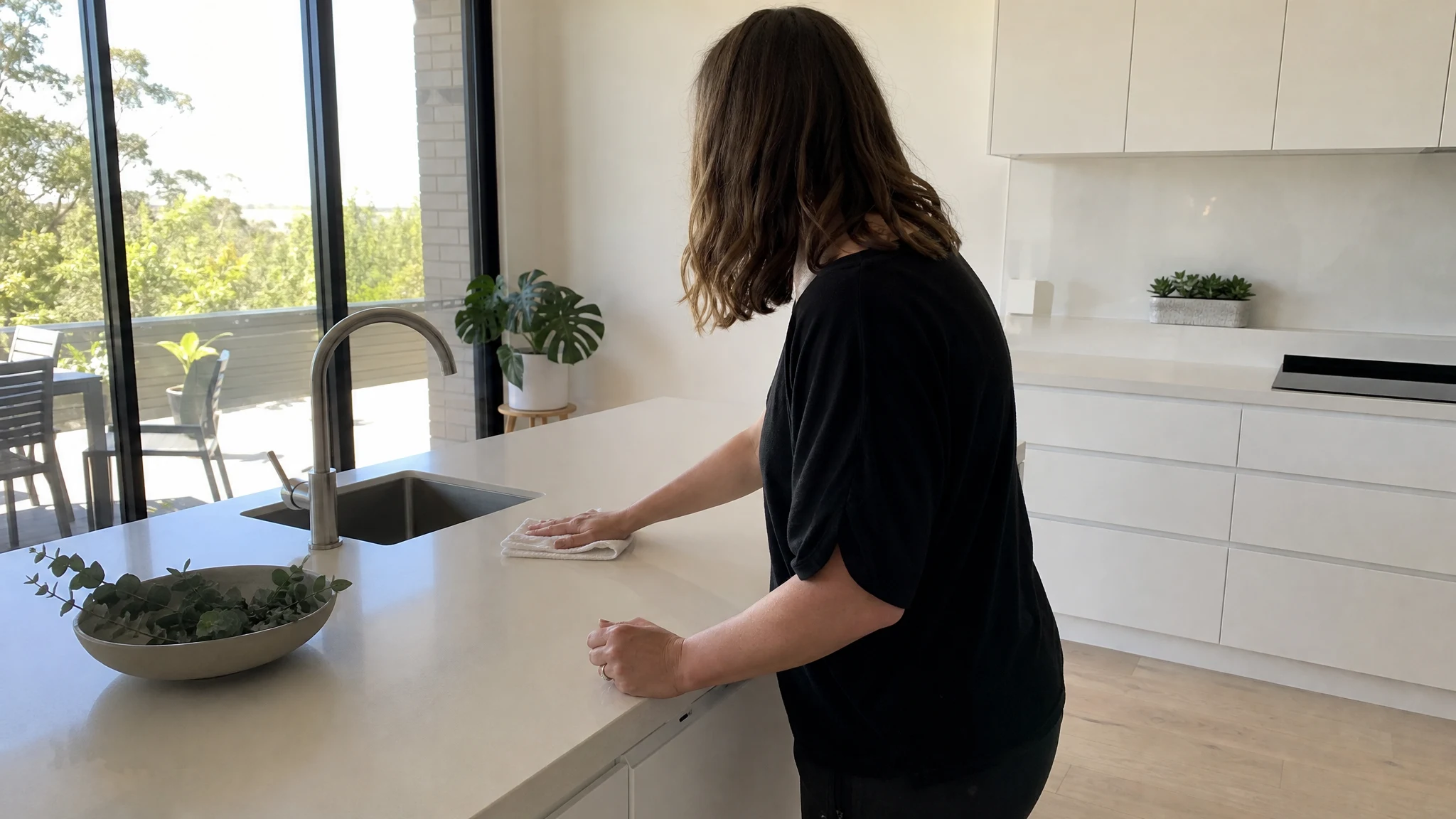
There is a real pleasure in the end of a cleaning session: windows open, floors dry, a cloth hung to air. That is the moment a eucalyptus scent can shine. Add it to the final rinse step, wring out the cloth well and wipe a hard surface that has already been cleaned. You will notice the cool, green aroma lift for a few minutes and then settle into the background, which is exactly what a good cleaning scent should do.
Keep a dedicated cloth for scented rinses so oil does not end up on surfaces you meant to leave plain, and rinse it afterwards.
Handling it neat
PubChem lists a closed-cup flash point of 49 C (120 F) for 1,8-cineole, which is a useful reminder that a bottle of eucalyptus oil is a flammable liquid. Keep it away from flames, hot stoves and heat guns while you measure, cap it afterwards, and store it cool and dark. Our oils are not for internal use, and bottles belong out of reach of children and pets.
Picking the oil for the scent you want
Our five eucalyptus oils each give a different room. Globulus is cool, clean and camphor-fresh with a faintly sweet, woody finish, which suits a classic spa-style scent. Radiata and smithii are softer and rounder. Dives is minty and sweet over a camphoraceous spine. Lemon eucalyptus is bright, lemony and citronella-like, and it is the one we point to for citrus-herbal cleaning blends. They are different species and not interchangeable, so a recipe written for globulus will smell noticeably different with another. For fabrics, our laundry and linens piece picks up where this one leaves off.
Used this way, as a fragrance for a cleaner that already works, eucalyptus oil does what it does best.
Eucalyptus Essential Oil
Eucalyptus Essential Oil from our own shop, in sizes from 0.5 oz to bulk.
From $9.99
Shop Now →