How to Remove Sticker Residue with Eucalyptus Oil
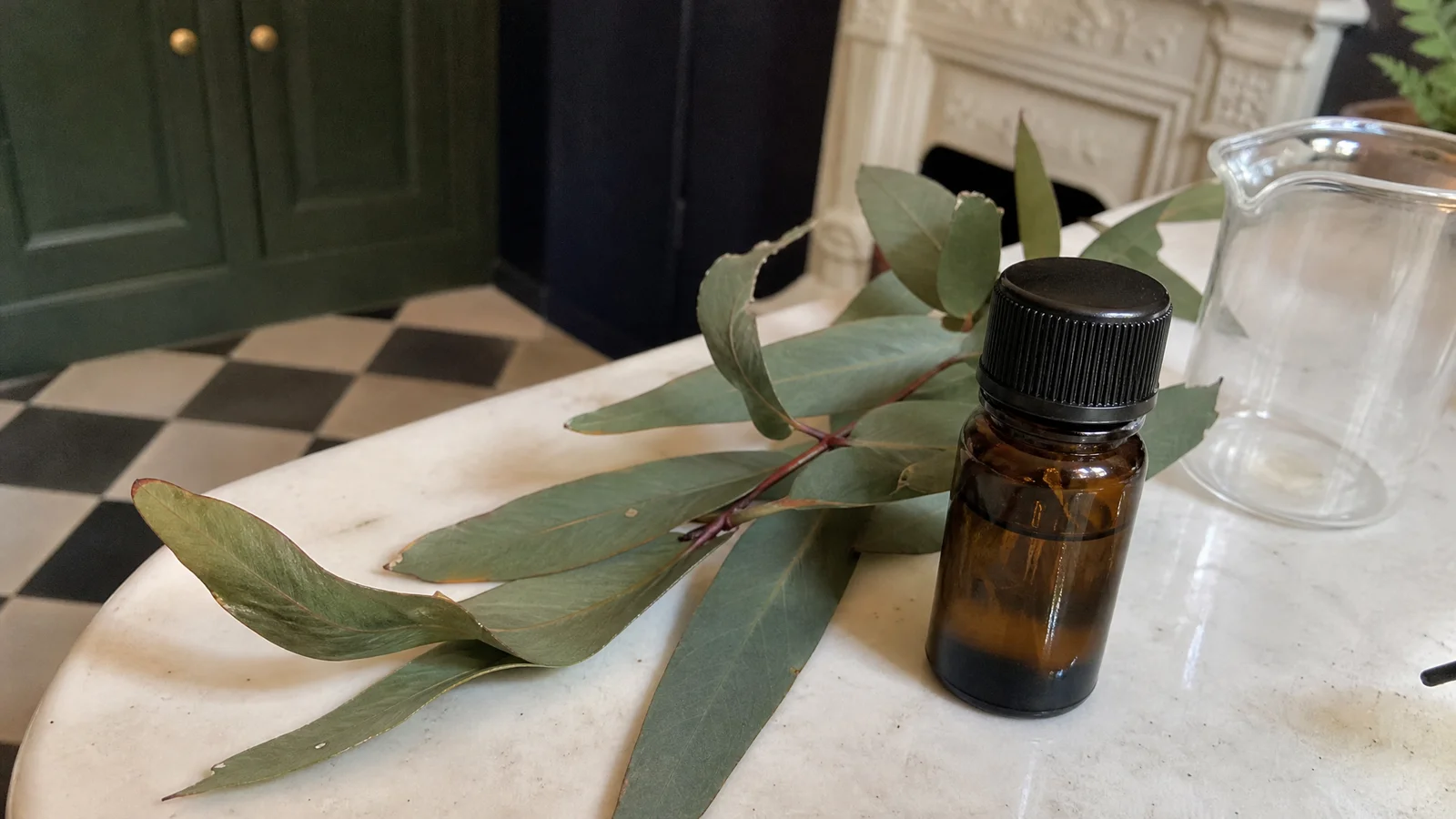
Anyone who has peeled a price tag off a glass jar knows the small tragedy that follows: the label comes away and a tacky, fluffy ghost of it stays behind. Eucalyptus oil can help with that ghost, and it leaves a fresh, camphor-clean scent as a bonus. It is not the only oil that will, so the real skill is in the order of the steps and in knowing which surfaces to leave alone.
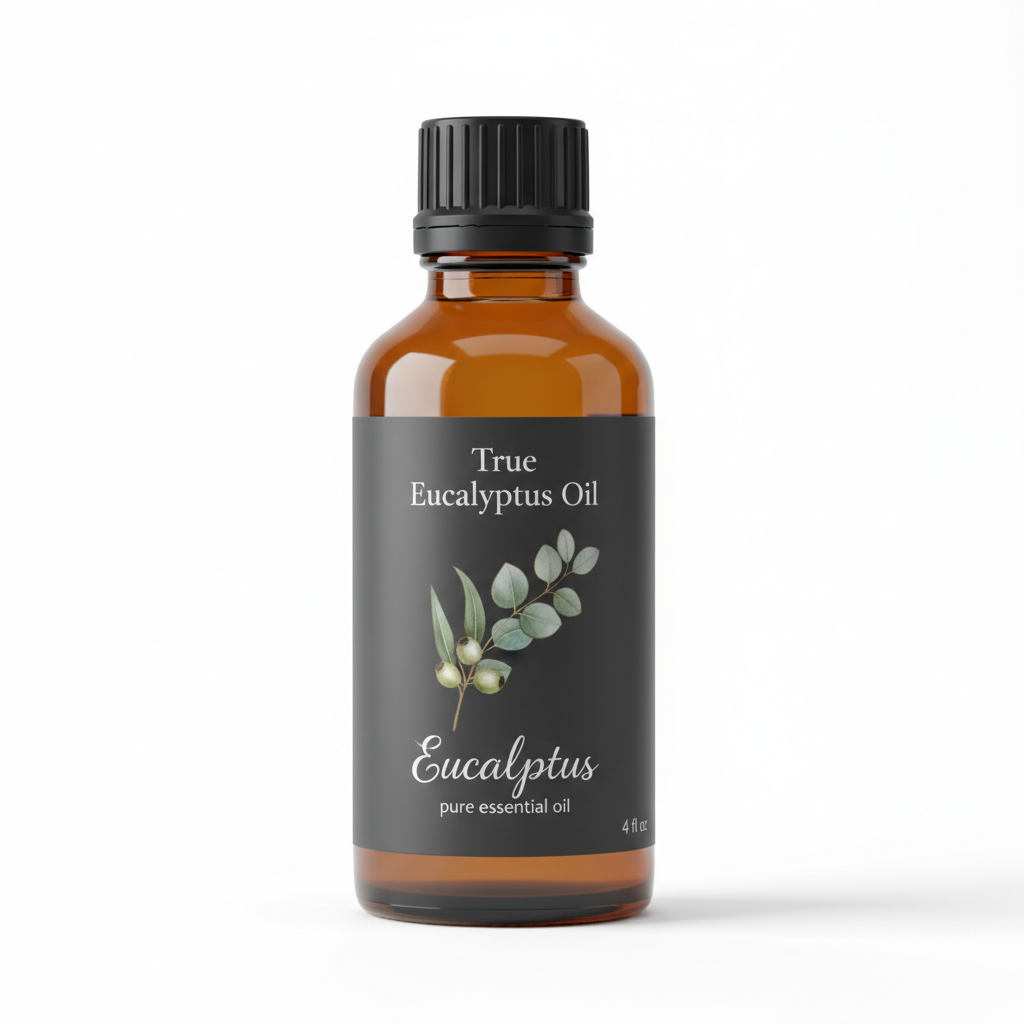
Eucalyptus Essential Oil
Our own Eucalyptus Essential Oil, in sizes from 0.5 oz to bulk.
From $9.99
Shop Now →Why an oil softens glue
Pressure-sensitive adhesives are soft, tacky polymers that usually combine a rubber or acrylic base with softeners and other additives, as paper conservators describe them in their literature on removing tape. A light oil can soak into that adhesive and loosen its grip, which is why cooking oil and citrus-based removers get recommended for labels. That is reasoning from how adhesives behave, not a measured comparison, so it is fair to say that a household oil does a similar job and that eucalyptus is a pleasant option when the bottle is already on your shelf. The same conservators note that some modern acrylic adhesives cannot be dissolved at all, only swollen and then scraped or brushed off. Patience and gentle lifting do more than extra oil.
The order that works
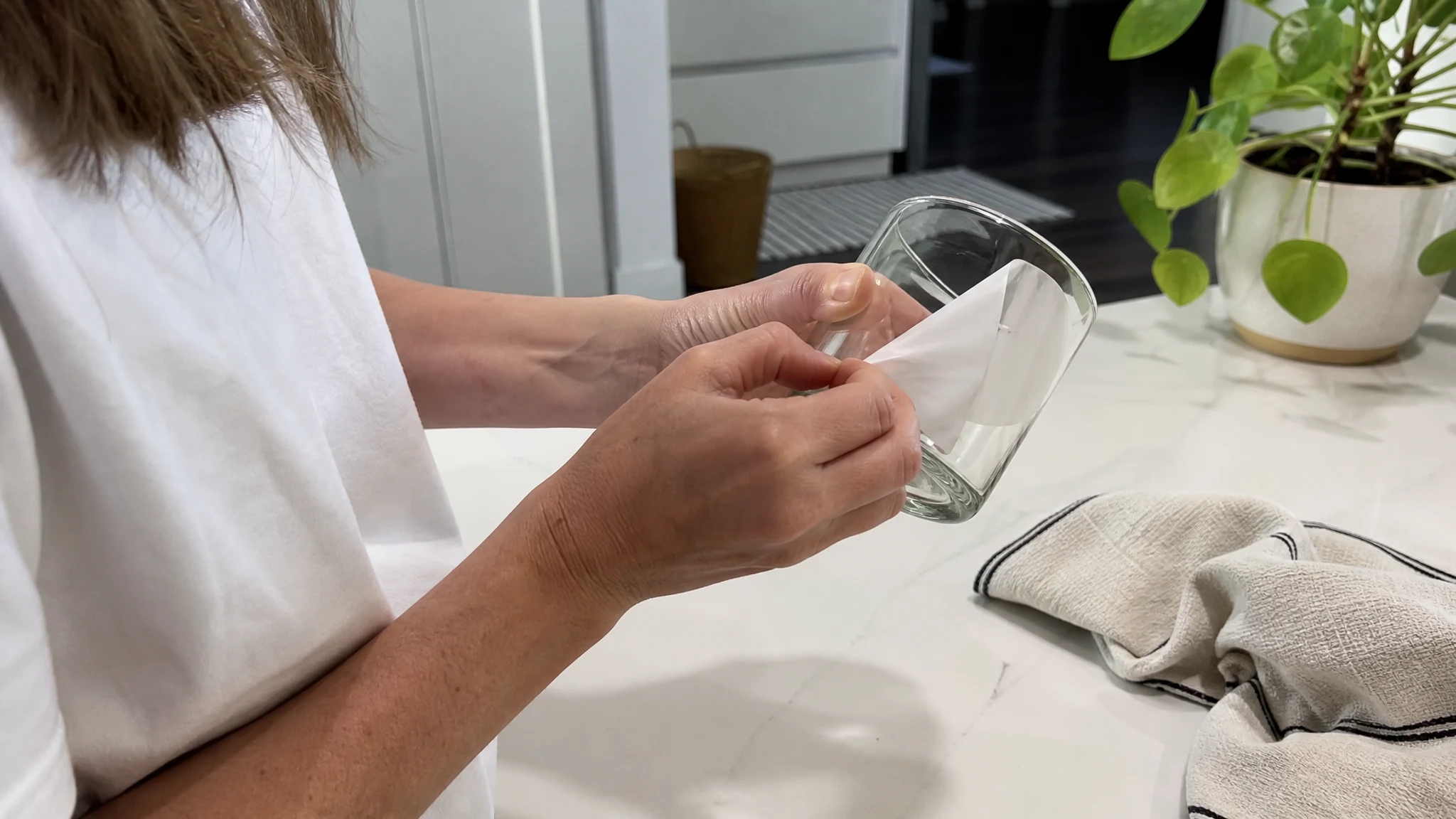
- Peel what peels. Conservators prefer to remove the carrier mechanically where possible, because it exposes the whole adhesive layer for whatever comes next. The same logic suits a price label: lift the paper first so the oil only has to deal with what stays behind.
- Test a hidden spot. Put a small amount of oil somewhere out of sight, leave it for as long as you plan to leave it on the real spot, wipe, and look again after a day. A film can look fine wet and dull or tacky when it dries. Conservators test solvents on the object in the same spirit before treating it.
- Apply small and let it sit. Press a cotton pad with a drop or two of oil onto the residue, as a suggestion, instead of dripping it on the surface. Give it a few minutes to soften the adhesive.
- Lift, do not scrub. A plastic scraper or an old card works on sealed hard surfaces. Steel wool and grit turn a sticky patch into a scratched one.
- Take the oil off. This is the step most guides skip. What remains is an oil film that collects dust, so wash it away with dish soap and warm water and dry the surface.
Where it belongs, and where it does not
Glass jars, glazed ceramic and bare metal are the happy cases once you have rinsed. Clear or rigid plastics deserve more care, because some plastics can crack under stress when a liquid or vapour touches them, sometimes days later, and our guide to surfaces goes through that. Unsealed wood, stone and painted walls are better handled with a hidden-spot test or a remover rated for the finish. Books, prints and photographs are not a job for any oil at all. Conservators warn that adhesive components can make printing and ballpoint inks bleed, and that is the territory of a professional conservator.
Fabric follows a different logic. An oil on cloth swaps one stain for another, so follow the garment's care label for grease stains, and for dry-clean-only items tell your dry cleaner exactly what is on them.
Patience, corners and the smell
For a large label, work one corner at a time. Soften a small patch, lift it, then move on to the next, instead of soaking the whole thing and hoping. It feels slower, but it usually finishes faster, because the adhesive comes up in a few clean passes. While you work, you will notice the room smells fresh and camphor-clean, which is a nice side effect. The scent fades after you wash the surface with dish soap and warm water.
If you are cleaning jars for storage or craft projects, give them a second wash and a final sniff before you fill them. A faint eucalyptus note is fine for a candle-making jar or a pencil pot, but not what you want in a jar of sugar.
Staying safe while you work
A damp cotton pad puts neat oil on your fingertips, so wear gloves. We advise diluting our oils for skin and keeping them away from eyes and broken skin. Eucalyptus is also a flammable liquid: PubChem gives its main compound, 1,8-cineole, a closed-cup flash point of 49 C (120 F). That is a figure for the pure compound and not for our oils, but it is reason enough to keep a hair dryer or heat gun well away from a soaked pad and to open a window while you work.
Poison Control says essential oil bottles at home should be locked away from children and pets if you have them, and the ASPCA lists eucalyptus as toxic to dogs and cats, so do the job in a room an animal cannot wander into and put the bottle away afterwards. The same thought applies to cleaning with eucalyptus oil more broadly, and our storage guide shows where the bottle should live.
A label stuck on a window, jar or tile is a fair first job for a drop of oil, followed by soap, water and a dry cloth. Anything you would hate to ruin deserves a hidden-spot test, the maker's care guide or a professional.
Eucalyptus Essential Oil
Eucalyptus Essential Oil from our own shop, in sizes from 0.5 oz to bulk.
From $9.99
Shop Now →Sources & Further Reading
- Smith MA, Jones NMM, Page SL, Dirda MP, 1984. Pressure-Sensitive Tape and Techniques for Its Removal from Paper. Journal of the American Institute for Conservation. cool.culturalheritage.org
- PubChem. 1,8-Cineole (CID 2758): flash point record. pubchem.ncbi.nlm.nih.gov
- Poison Control. Essential oils: Poisonous when misused. poison.org
- ASPCA. Toxic and Non-toxic Plants: Eucalyptus. aspca.org