Eucalyptus and Breathing Trials: What They Really Tested
Almost every positive human trial you will see cited for eucalyptus and breathing tested a swallowed pharmaceutical capsule of purified cineole. None of them tested a diffuser, a steamy bathroom or a bottle of essential oil on a shelf. That one detail is the most useful thing to know before you read another headline, because it decides what those results can and cannot tell you about the oil in your home.
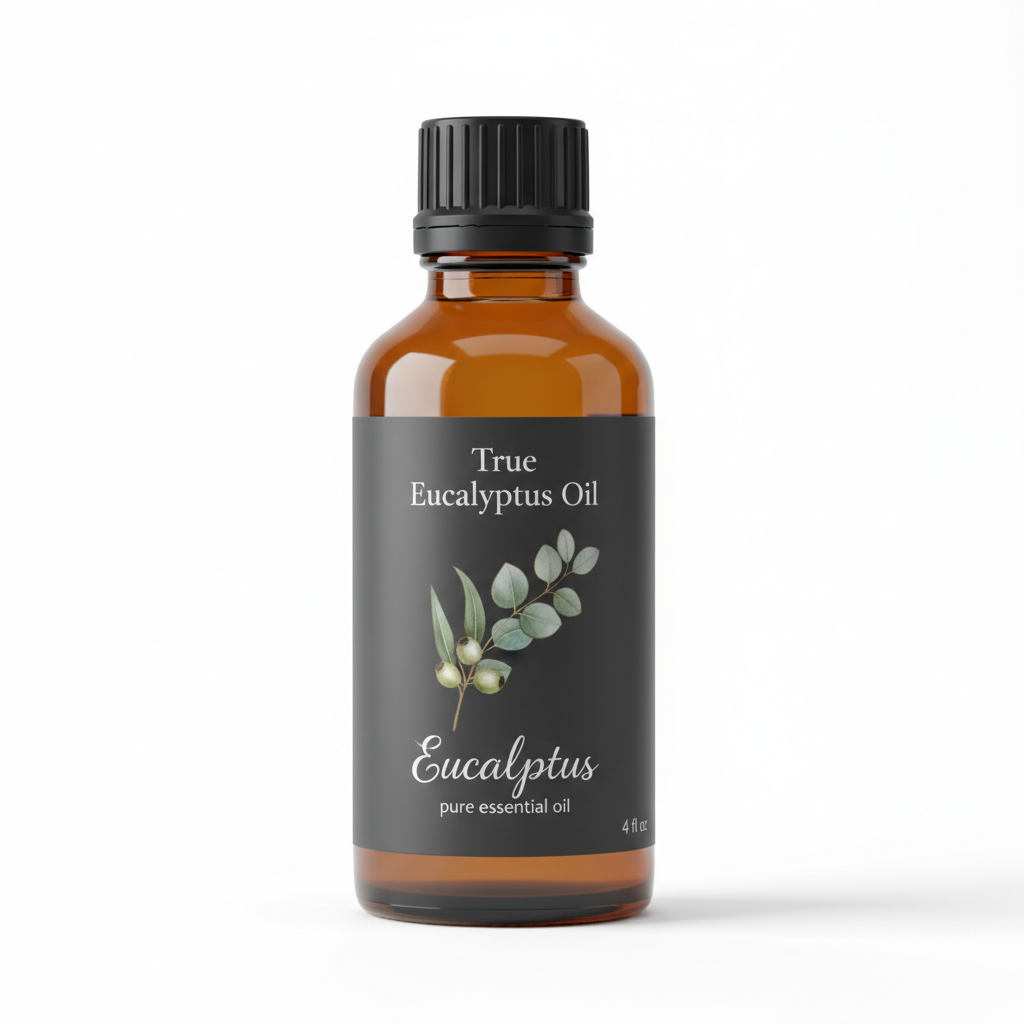
Eucalyptus Essential Oil
Our own Eucalyptus Essential Oil, in sizes from 0.5 oz to bulk.
From $9.99
Shop Now →What the well-known trials gave people
Cineole, also called eucalyptol or 1,8-cineole, is the main compound in many eucalyptus oils, and researchers have studied it as a standardized capsule. Three trials come up again and again:
- Acute rhinosinusitis, 2004. A German double-blind trial gave 152 adults either cineole capsules, two 100 mg capsules three times a day, or placebo for seven days. The authors reported a larger fall in a combined symptom score with cineole by day 4 and day 7, and mild side effects in two people.
- Steroid-dependent asthma, 2003. Thirty-two adults took 200 mg of cineole three times daily or placebo for 12 weeks while their oral steroid dose was stepped down. Daily steroid doses fell by 36 percent on cineole versus 7 percent on placebo. With 16 people per group, the authors framed it as a first signal.
- Stable COPD, 2009. In 242 adults, 200 mg three times daily for six months, added to usual medication, was associated with lower exacerbation frequency, duration and severity than placebo, with similar adverse events in both groups.
We report these as what the studies found, in the people they enrolled, and we make no health claim for our oils.
A capsule is not the air in a room
Look at what the three have in common: milligram doses, taken by mouth, in a pharmaceutical form made to a specification, by people with a defined diagnosis. None measured how much cineole reaches the airways or blood from air in a room, so nobody can say what a diffuser or a bathroom delivers compared with a capsule. Different route, different dose, different material. The results belong to those capsules.
The research that does exist on inhaled oils is thin. A 2020 rapid review of essential oils in viral respiratory infections concluded that certain oral doses may reduce symptoms, and also said it found no research describing the clinical effect of inhaling essential oils for these infections. That gap is itself a finding, and we would rather say so than quietly borrow the capsule data. Please do not read the capsule doses as an amount of essential oil to swallow either; swallowed eucalyptus oil is a poison center matter, as our poisoning guide explains.
Why eucalyptus feels the way it does
There is one well-supported reason eucalyptus feels so fresh. A 2023 systematic review of plant substances in cough and cold remedies reports that eucalyptus activates TRPM8, a receptor involved in sensing cold, inhibits another called TRPA1 and down-regulates P2X3. Those are laboratory findings summarized by a review, and they are most helpful as an explanation for the cool, clean sensation people describe, not as evidence of an outcome in a person with a cold. Our reasoning is that the sensation is real and pleasant, and that it is enough of a reason to enjoy the oil in steam or in a lightly scented room.
If you like to read research, keep a notebook habit: write down who the participants were, what they were given and for how long. After a few papers you will find the pattern jumps out, and the next headline will take you about a minute to size up.
Reading studies without over-reading them
A few habits keep you honest when you meet the next eye-catching result:
- Check the material. A capsule of one compound at a fixed dose is not the same as a whole essential oil, which is a mixture whose makeup varies by species and batch.
- Check the size. Sixteen people per group can suggest a direction for a larger trial but cannot settle a question.
- Check what was measured. Symptom scores record how people feel, while lung function tests record what the airway does, and the two do not always agree.
Enjoying the scent for what it is
None of this means eucalyptus has no place in a home. It simply means we would like you to enjoy it for the right reason. Open a bottle and breathe in slowly: you will notice a cool, sharp freshness, a little like cold air on a bright morning, and in some of our oils a softer, rounder note beneath it. That moment of pleasure is genuine, and it needs no study to justify it.
Pair it with the simple things, like opening a window or taking a warm shower, and let the oil be the finishing touch.
Choosing and using our oils with this in mind
We sell five eucalyptus oils, each from a different species, for aroma and cosmetic use. If the cineole share matters to you, ask us in writing through the contact page before ordering and get any answer in writing, and remember that even a figure would not turn capsule results into room results. What we will say is the modest thing: eucalyptus has a cool, camphor-fresh character that many people love in a steamy bathroom or a lightly scented room. Airways that react to scent need a clinician's advice first, so start with eucalyptus oil and asthma, and see steam inhalation for method and congestion for what has been looked at.
The US FDA draws a clear line: a product intended for a therapeutic use, such as treating or preventing disease, is a drug. That is why this page reports and does not promise, and why a pharmacist or physician is the right first call when a cough or cold will not shift.
Eucalyptus Essential Oil
Eucalyptus Essential Oil from our own shop, in sizes from 0.5 oz to bulk.
From $9.99
Shop Now →Sources & Further Reading
- Kehrl W, Sonnemann U, Dethlefsen U, 2004. Therapy for acute nonpurulent rhinosinusitis with cineole: results of a double-blind, randomized, placebo-controlled trial. The Laryngoscope. PubMed
- Juergens UR, Dethlefsen U, Steinkamp G, Gillissen A, Repges R, Vetter H, 2003. Anti-inflammatory activity of 1.8-cineol (eucalyptol) in bronchial asthma: a double-blind placebo-controlled trial. Respiratory Medicine. PubMed
- Worth H, Schacher C, Dethlefsen U, 2009. Concomitant therapy with Cineole (Eucalyptole) reduces exacerbations in COPD: a placebo-controlled double-blind trial. Respiratory Research. PubMed
- Prall S, Bowles EJ, Bennett K, Cooke CG, Agnew T, Steel A, Hausser T, 2020. Effects of essential oils on symptoms and course (duration and severity) of viral respiratory infections in humans: A rapid review. Advances in Integrative Medicine. PubMed
- Stinson RJ, Morice AH, Sadofsky LR, 2023. Modulation of transient receptor potential (TRP) channels by plant derived substances used in over-the-counter cough and cold remedies. Respiratory Research. PubMed
- US FDA. Aromatherapy. fda.gov