Is Eucalyptus Oil Antibacterial? Lab Dish vs Countertop
Open a few papers on eucalyptus oil and you will find that it has slowed the growth of bacteria in laboratory dishes. That is a genuinely interesting result about the plant. It is also easy to stretch into something it is not, so here is what those studies measured and how to read them.
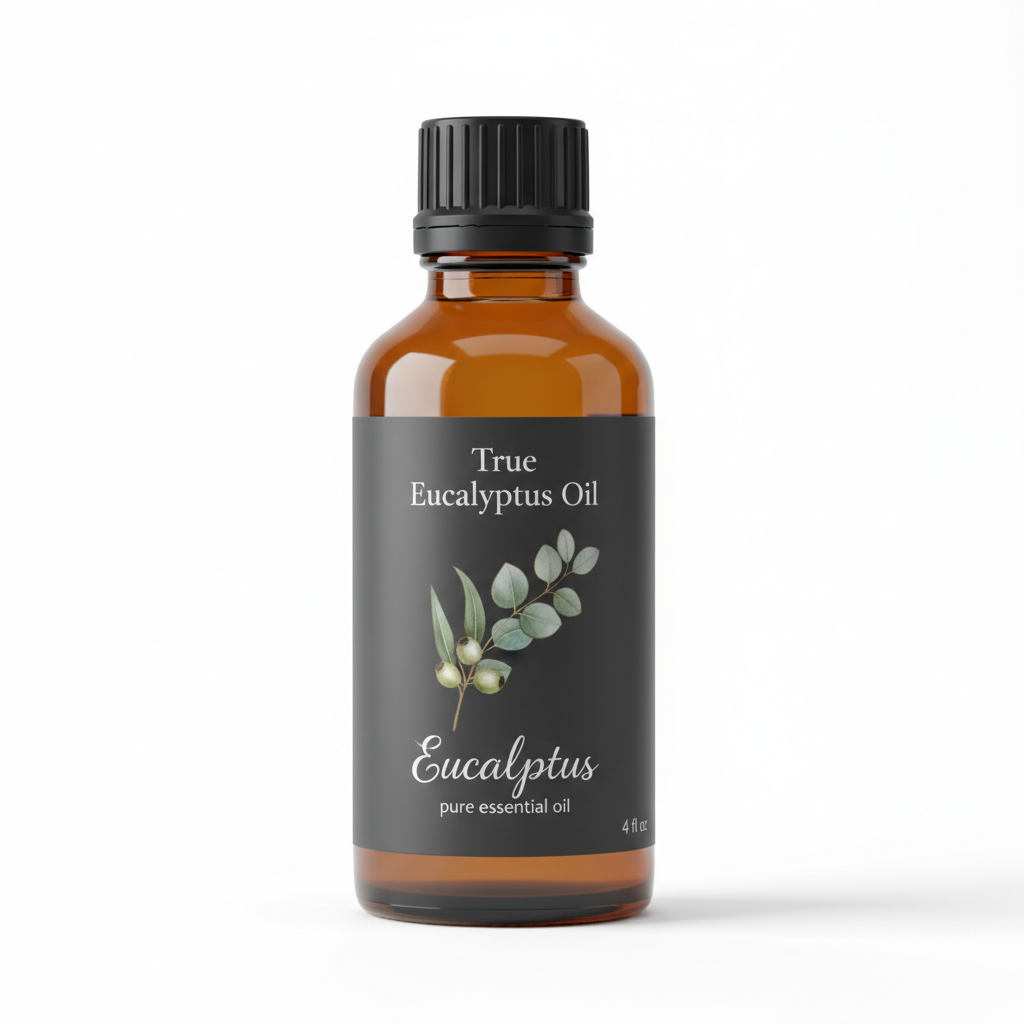
Eucalyptus Essential Oil
Our own Eucalyptus Essential Oil, in sizes from 0.5 oz to bulk.
From $9.99
Shop Now →What a growth-stopping number really is
Most of the headline figures come from a minimum inhibitory concentration, or MIC. Andrews, in a 2001 paper on how laboratories determine MICs, defines it as the lowest concentration of an antimicrobial that will inhibit the visible growth of a microorganism after overnight incubation. A related figure, the minimum bactericidal concentration, is the lowest concentration that prevents growth after the organism is moved to fresh medium. Both describe what happens in a controlled dish with a set starting population. Neither describes a kitchen counter.
What was measured for globulus oil
In a 2010 study, Tohidpour and colleagues tested thyme and Eucalyptus globulus oils against clinical isolates of MRSA and other standard bacterial strains. Both oils showed degrees of antibacterial activity, thyme was the stronger of the two, and eucalyptol was the most abundant constituent of the eucalyptus oil. The authors concluded that clinical and further analytical trials are needed.
A 2022 study from Pakistan, by Ali and colleagues, tested cinnamon, eucalyptus and clove oils on three antibiotic-resistant MRSA isolates. Zones of inhibition measured 22.67 mm for cinnamon, 18.67 mm for E. globulus and 12.67 mm for clove, and the lowest mean MIC reported for E. globulus was 0.33 mg/mL. That is 0.033% by weight per volume, a small number, which says that in this dish the bacteria stopped growing at a low concentration. It says little about a household wipe, since the test used a lab medium and an endpoint of growth over many hours, and nothing in the abstract involves a dry surface or a contact time of a minute.
Here is the arithmetic to make that concrete. To reach 0.33 mg/mL in a 500 mL spray bottle you would need 165 mg of oil, about 0.17 g. Eucalyptus oil does not mix evenly with water, so without an emulsifier that small amount would not spread uniformly through the liquid, and even a perfectly even mix would only match a dish endpoint, not a quick kill. This is our reasoning from basic chemistry and not a recommendation to try it.
Why a number from a dish feels so convincing
There is something satisfying about a measurement: a clear zone on a plate, a tiny concentration, a decimal point. Numbers feel like proof. But a good way to keep your head is to picture the setting. A dish of agar in an incubator is quiet, controlled and patient. A kitchen counter has crumbs, grease, a damp cloth and about ten seconds of attention from you. Same oil, completely different job.
How regulators draw the line
The EPA describes disinfectants as products used on nonliving surfaces and objects to destroy or irreversibly inactivate infectious fungi and bacteria, though not necessarily their spores, and sanitizers as products that reduce microorganisms to levels considered safe by public health codes. Those are claims a product has to be able to back. For products that sit under the minimum-risk exemption, which is where many essential oil sprays live, the EPA says labels may not carry sterilizing, disinfecting, sanitizing or germ-related claims, and may not link a pest to a specific disease. In plain terms, a bottle of essential oil cannot be sold as a disinfectant unless it has gone through the registration process.
If you read lab papers for fun, enjoy them for what they are: a window onto how scientists poke at a plant. Look at the units, look at what the control was, and look at whether the authors themselves say more work is needed. Most of the time they do, and that honest note is the part worth remembering.
What we say about our oils
Our five eucalyptus oils are fragrance materials. We make no germ claim for them and hold no EPA registration. That leaves them to do what they do best, which is smell wonderful: cool and camphor-fresh in globulus, bright and lemony in lemon eucalyptus, soft in radiata, smithii and dives.
- If you need to disinfect a surface after illness or raw meat, use a product with an EPA registration number on the label and follow its contact time.
- If you want a room or a cloth to smell fresh, eucalyptus is a lovely addition. Our cleaning article, our spray formulation and our surfaces guide treat it as scent and not as a germ treatment.
- If you make products for sale and want an antimicrobial or preservative claim, that is a conversation for a regulatory consultant and a testing laboratory.
If you enjoy the idea of eucalyptus in your cleaning routine, let it be the part that makes the cloth smell lovely and let a proper cleaner do the scrubbing. Wipe, rinse, let the surface dry, and then the scent is simply a bonus. That is how we would suggest you use it: as a finishing note, never as the main event.
One more point about skin: neither study above involved cuts or wounds, and our guidance is to keep the oil away from broken skin and to dilute to 0.5% to 2% in a carrier with a patch test first. Wounds and rashes belong with a clinician or pharmacist.
The lab results are good reading, and they show the plant has interesting chemistry. They just answer a different question from the one on the cleaning aisle label.
Eucalyptus Essential Oil
Eucalyptus Essential Oil from our own shop, in sizes from 0.5 oz to bulk.
From $9.99
Shop Now →Sources & Further Reading
- Determination of minimum inhibitory concentrations, Andrews JM, Journal of Antimicrobial Chemotherapy, 2001.
- Antibacterial effect of essential oils from two medicinal plants against Methicillin-resistant Staphylococcus aureus (MRSA), Tohidpour et al., Phytomedicine, 2010.
- Antibacterial activity of plant essential oils against indigenously characterized methicillin-resistant Staphylococcus aureus (MRSA), Ali et al., Tropical Biomedicine, 2022.
- What are Antimicrobial Pesticides?, U.S. Environmental Protection Agency.
- Conditions for Minimum Risk Pesticides, U.S. Environmental Protection Agency.