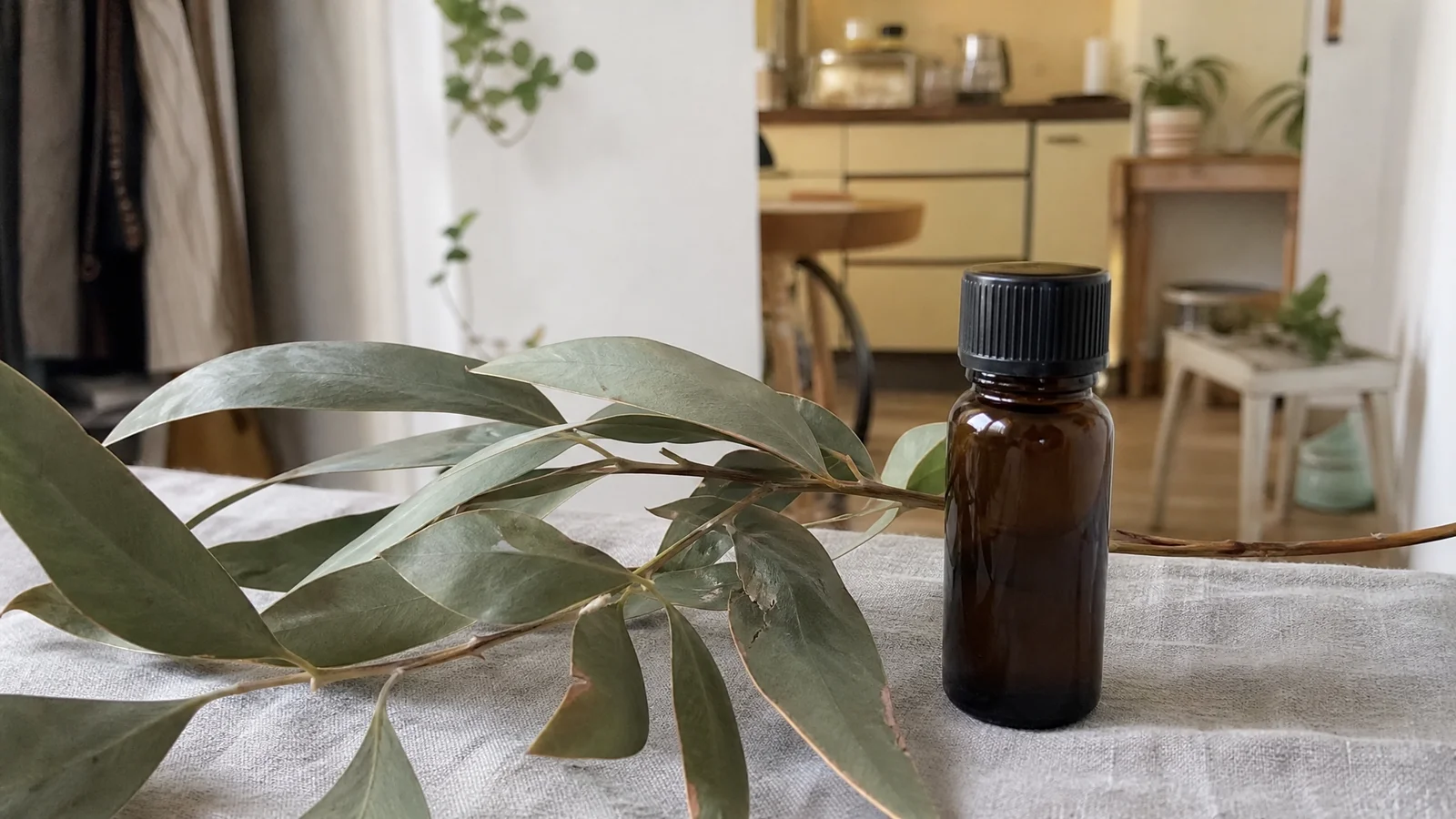
Eucalyptus vs Peppermint Oil: Two Cools, Two Scents
Eucalyptus and peppermint get lumped together as the two cool oils. Smell them side by side and they are nothing alike: one is camphor and clean air, the other is sweets and toothpaste. What they share is a feeling, and that feeling has a surprisingly specific explanation.
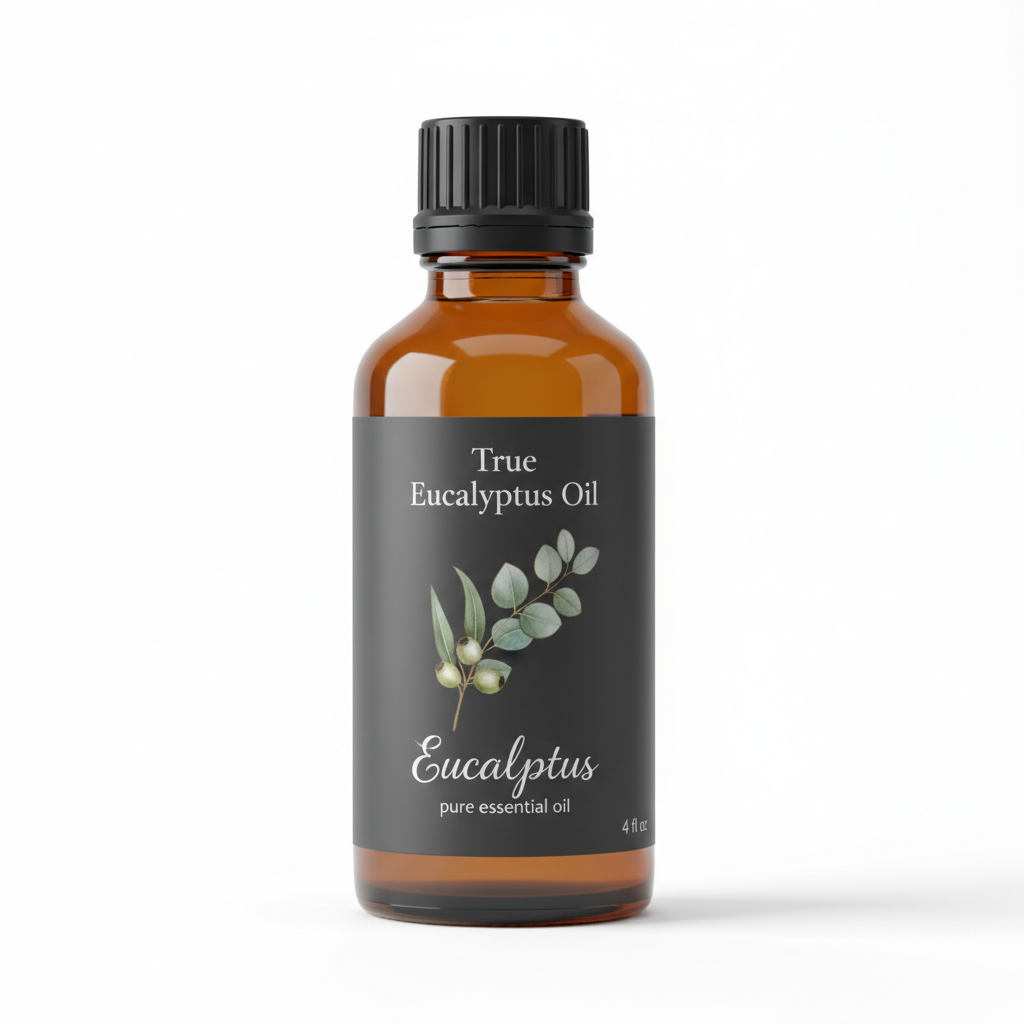
Eucalyptus Essential Oil
Our own Eucalyptus Essential Oil, in sizes from 0.5 oz to bulk.
From $9.99
Shop Now →The same cold receptor, very different strength
Your skin and the lining of your nose carry a sensor called TRPM8, nicknamed the cold-menthol receptor. In a 2004 lab study on the mouse version of that receptor, researchers measured how much of each compound it takes to switch it on. Menthol needed about 4.1 micromolar. Eucalyptol, the main molecule in eucalyptus oil, needed about 7.7 millimolar. A millimolar is a thousand micromolar, so dividing the two gives roughly 1,900 times more eucalyptol for the same response. That is our own arithmetic on the study's figures, in cells, not a measurement of how either oil feels to a person, but it fits what noses report: peppermint is a sharp, icy chill, while eucalyptus is more of a broad, airy freshness.
That suggests a good part of eucalyptus's reputation for coolness lives in its clean, camphor-like smell rather than in a strong chill. That is our reading of the numbers, not something the study tested.
How the scents differ
Peppermint is a sweet, minty aroma built around menthol, which a standard reference describes as having a peppermint odour. A GC study of Mentha x piperita oil found menthol and iso-menthone as the major components. Eucalyptus, by contrast, leans on 1,8-cineole, with a camphor-like character. We describe our globulus as cool, clean and camphor-fresh with a faintly sweet, woody finish; our radiata as soft with a gentle camphor note and a citrus-tinged finish; and our dives as minty and sweet over a camphoraceous spine, nearer to peppermint than to the sharper globulus. If you like the idea of mint but want eucalyptus, dives is the one to smell first.
There is a nice botanical coincidence behind that. Several gum trees are called peppermints, because their crushed leaves smell of peppermint. A CSIRO species profile for narrow-leaved peppermint (radiata) says the adult leaves give a strong peppermint smell when crushed. And Coppen and Hone's market review notes that one chemical form of Eucalyptus dives is so rich in piperitone that it was long used industrially as a starting material for making menthol. That is a different variant of the tree from the oil we sell, but it shows how close the two worlds are.
Choosing for the moment
- Reach for peppermint when you want something bright and sweet, a small dose of mint in a room or a blend. It is not an oil we sell; you will find it at a craft or aromatherapy supply shop.
- Reach for eucalyptus when you want a clean, airy, almost spa-like scent. Globulus is the crisp choice, radiata and smithii are softer, and lemon eucalyptus is a different thing entirely, bright and citronella-like.
- Use both in tiny amounts if you want mint on top of camphor. They are both strong. Start with a drop of each in a diffuser, or keep the total to 6 drops in 30 ml of carrier, which works out to about 1%, and see our blend guide for the proportions.
Same rules for both
Both are strong oils. We recommend 0.5% to 2% in a carrier for the skin, a patch test first, and keeping them away from eyes, children and pets. Because both are potent, we keep the amounts small, and our Standards page advises against using eucalyptus on or near the face of an infant or young child; a pediatric clinician is the right person to ask about any child. Eucalyptus is also covered in our safety overview, and our comparison with tea tree follows the same format if you are comparing more oils.
It is easy to think of the two as interchangeable cooling oils, but they are better thought of as a sharp mint and a clean breeze. Choose by the scene you want, not the sensation alone.
Eucalyptus Essential Oil
Eucalyptus Essential Oil from our own shop, in sizes from 0.5 oz to bulk.
From $9.99
Shop Now →Sources & Further Reading
- Characterization of the mouse cold-menthol receptor TRPM8 and vanilloid receptor type-1 VR1 using a fluorometric imaging plate reader (FLIPR) assay
- Menthol (PubChem compound summary)
- Australian Essential Oil Woody-plant Species Profile: Narrow-leaved Peppermint (Eucalyptus radiata Sieber ex DC subsp. radiata)
- Eucalyptus oils: a review of production and markets (NRI Bulletin 56)
- Mentha x piperita GC study: Composition and antimicrobial activities of Lippia multiflora Moldenke, Mentha x piperita L. and Ocimum basilicum L. essential oils and their major monoterpene alcohols alone and in combination