Eucalyptus Oil in Soap: Does the Scent Last?
Soapmakers love to say that eucalyptus smells enormous in the bottle and shy in the cured bar. It is a fair thing to wonder about, because a soap scented with a sharp, fresh oil is a lovely thing to make, and nobody wants to spend a batch of good oils on a scent that fades. Here is what the chemistry suggests, how to choose between our five eucalyptus oils for soap, and a simple way to find out for yourself.
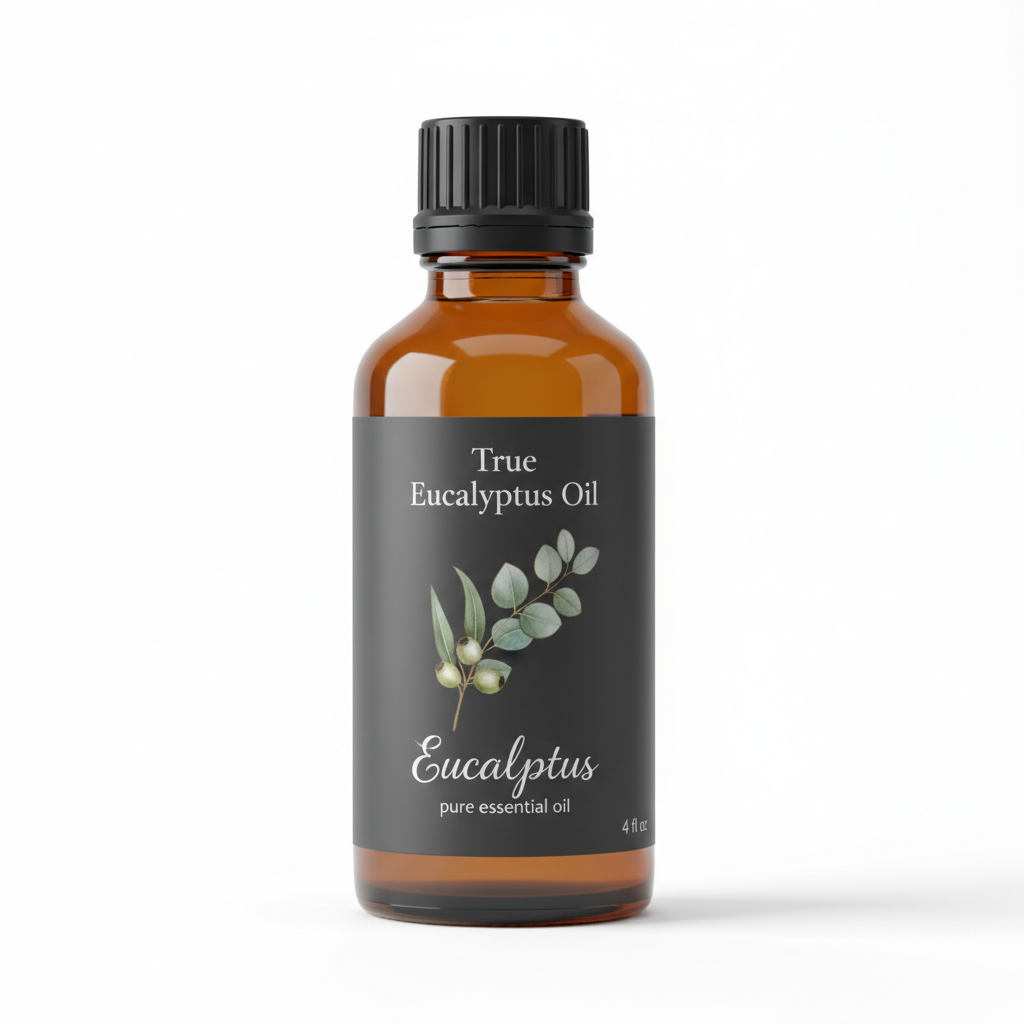
Eucalyptus Essential Oil
Our own Eucalyptus Essential Oil, in sizes from 0.5 oz to bulk.
From $9.99
Shop Now →Why a bright top note takes some care
Cineole, the compound the camphor-fresh eucalyptus oils are built around, is a small, light molecule. PubChem records its boiling point at 176 to 177 C and a vapor pressure of 1.9 mmHg at 25 C, which in plain terms means it evaporates readily at room temperature. We list all five of our eucalyptus oils as top notes, the fast-moving, first-impression layer of a scent.
Cold process soap generates its own warmth as it saponifies, a process that takes roughly 18 to 24 hours, followed by a cure of about 3 to 4 weeks. Reasoning from the chemistry, a volatile oil has some chances to drift away along the way. That is a prediction and not a measurement, and we know of no study that follows eucalyptus oil through saponification and cure. The one soap study we found, from Prieto Vidal and colleagues, made herbal soaps with other oils and looked at fatty acids and consumer ratings, so it tells us how little published data exists on scent in a finished bar and nothing about eucalyptus.
Which of our oils suits soap
Our lemon eucalyptus is the one we position for soap. It is bright, lemony and citronella-like, and the trade has long used this style of oil in whole form in soaps and perfumes. It is a different animal from the cineole-rich oils, so a lemony bar is the goal rather than a steam-room one. For a classic cool and camphor-fresh bar, our globulus is the one to reach for. Our radiata and smithii are softer and rounder, and our dives is minty and sweet. They are not interchangeable in a recipe, and our species explainer shows how they differ. If you want to go further into the main compound, our eucalyptol article is the place.
Weighing, not counting drops
Soap recipes work by weight, and a bar-sized dose is far too large for a dropper. As an illustration of the arithmetic (a made-up batch, not a recipe), suppose 1,000 g of finished batter. Two percent of that is 20 g of oil, and at about 20 drops to the milliliter and a density near 0.9 g per mL, that is on the order of 400 drops. Put it on a scale instead.
We sell our oils neat and leave the rate to you. Our own guidance of 0.5% to 2% in a carrier oil is written for leave-on skin use, so check the current IFRA standards for rinse-off products when you choose your percentage for a bar, and let a person with sensitive skin start low.
How to find your own answer
This is a suggested design for your own bench, and it takes only a small amount of oil:
- Make one base recipe and divide the batter into equal weights.
- Add the oil at a different rate to each portion, weighing every addition.
- Note the batter temperature when you add the oil and whether the bars gel.
- Smell the bars fresh, after a week and at the end of your cure, pausing between sniffs.
- Change one thing at a time and write the date, rate and recipe on each bar.
Your own recipe is the one that counts, so use the oils and curing time you plan to use every time.
When you do your smelling, try to do it the same way every time: the same room, the same distance from your nose, and no coffee or perfume nearby to confuse things. Take a breath of fresh air between bars. Keep a small notebook beside the curing rack and write down what you notice in plain words, such as "cool at first, softer now." Those little notes are worth more than any general rule, because they describe your recipe, your oils and your kitchen.
Soapmaking is a patient hobby, and curing is the patient part. Resist the urge to judge a bar on day two. The scent you meet in week one and the scent you meet in week four can feel like two different conversations, and it is lovely to follow them both.
Labelling and safety on the bench
The FDA explains that a product is soap, as defined in 21 CFR 701.20, only if its cleansing comes from alkali salts of fatty acids and it is labeled, sold and represented solely as soap. A bar that promises to clear sinuses or ease breathing steps outside that definition. We describe our oils by aroma only, and that is a good rule for soap labels too.
Handle lye following your supplier's safety instructions, with gloves and eye protection. Keep every eucalyptus oil capped and out of reach of children and pets, because it is hazardous to swallow; the IPCS poisons monograph on eucalyptus oil reports that significant symptoms in children have followed swallowing less than a teaspoonful. We would not use scented soap on an infant, and our standards page says eucalyptus should not go on or near the face of a baby or young child. We do not sell lye, fats, molds or soap bases, so a soap-supply shop is the place for those. Our peppermint pairing piece is a good read if you want to blend in a second top note.
A good soap scent is a bit of a craft, and eucalyptus rewards a patient maker. Start with a small test bar and trust your own nose.
Eucalyptus Essential Oil
Eucalyptus Essential Oil from our own shop, in sizes from 0.5 oz to bulk.
From $9.99
Shop Now →Sources & Further Reading
- PubChem, 1,8-Cineole
- Prieto Vidal N, Adeseun Adigun O, Pham TH, Mumtaz A, Manful C, Callahan G, Stewart P, Keough D, Thomas RH, 2018, The Effects of Cold Saponification on the Unsaponified Fatty Acid Composition and Sensory Perception of Commercial Natural Herbal Soaps, Molecules
- Coppen JJW, Hone GA, 1992, Eucalyptus oils: a review of production and markets (NRI Bulletin 56), Natural Resources Institute
- US Food and Drug Administration, Is It a Cosmetic, a Drug, or Both? (Or Is It Soap?)
- IPCS INCHEM, Eucalyptus oil (PIM 031)