Eucalyptus Oil for Cough: The Vapor Rub Study Explained
Almost every page that links eucalyptus oil with coughing leads back to one bedtime study, and that study was about a jar of vapor rub. It is worth knowing what was actually in the jar, because eucalyptus turns out to be the quietest ingredient in it.
Eucalyptus Essential Oil
Our own Eucalyptus Essential Oil, in sizes from 0.5 oz to bulk.
From $9.99
Shop Now →One bedtime, three groups of children
In a 2010 trial published in Pediatrics, parents of 138 children aged 2 to 11 with cold symptoms filled in a survey on two consecutive evenings. In between, each child was randomly given a vapor rub on the chest and neck, plain petroleum jelly, or nothing. Every group looked better on the second night, which is what colds do. But the parents rated the rub best for cough, congestion and sleep, and petroleum jelly did no better than no treatment at all.
That is a real result, and it is the reason the study gets quoted so often. The detail that gets lost is the ingredient list. According to the full text, the rub contained camphor at 4.8%, menthol at 2.6% and eucalyptus oil at 1.2%.
Eucalyptus was the smallest of three
Here is some arithmetic to put that 1.2% in perspective. The children received 5 mL of rub (ages 2 to 5) or 10 mL (ages 6 to 11). Treating the percentage as a simple share of the volume, that is roughly 0.06 to 0.12 mL of eucalyptus oil, which at about 20 drops to the millilitre is one drop, or two to three at most. Those are our estimates, since droppers vary.
So whatever parents were rating, it was a drop or two of eucalyptus inside a strongly scented camphor and menthol ointment. Camphor and menthol are both cooling, tingling ingredients in their own right, and the study was never designed to tell the three apart. It is a study of a finished product, and it would be a stretch to hand the credit to any single ingredient.
It is a lovely illustration of how much of a smell is expectation. Open a jar and your mind is already on a tucked-up evening at home, and that comforting picture is a big part of why such products feel good. Eucalyptus has its own character that you can enjoy separately, and you do not need a medicated ointment to appreciate it.
The tingle came with the rub
The authors also counted what the children felt. Twenty of the 44 children given the rub (46%) had at least one adverse event, nearly all of them mild irritation: 28% reported burning on the skin, 16% in the eyes and 14% in the nose. Nobody in the other two groups reported any of that. The study was paid for by an unrestricted grant from the rub’s manufacturer, which the authors disclose.
None of this makes the trial a bad one. It is a useful reminder that a strong cooling aroma and a little irritation tend to arrive together, and that the strength of the smell is not the same thing as a result.
What the jar probably smelled like
Picture opening a jar of vapor rub: a big, sharp, minty-camphor blast, with something cool and green underneath. If eucalyptus is in there, it is a background note, not the loud voice. That is a useful thing to know when you open a bottle of eucalyptus on its own. You will notice it is quieter and more leafy than the rub you may remember, with its own gentle freshness.
Where we come down
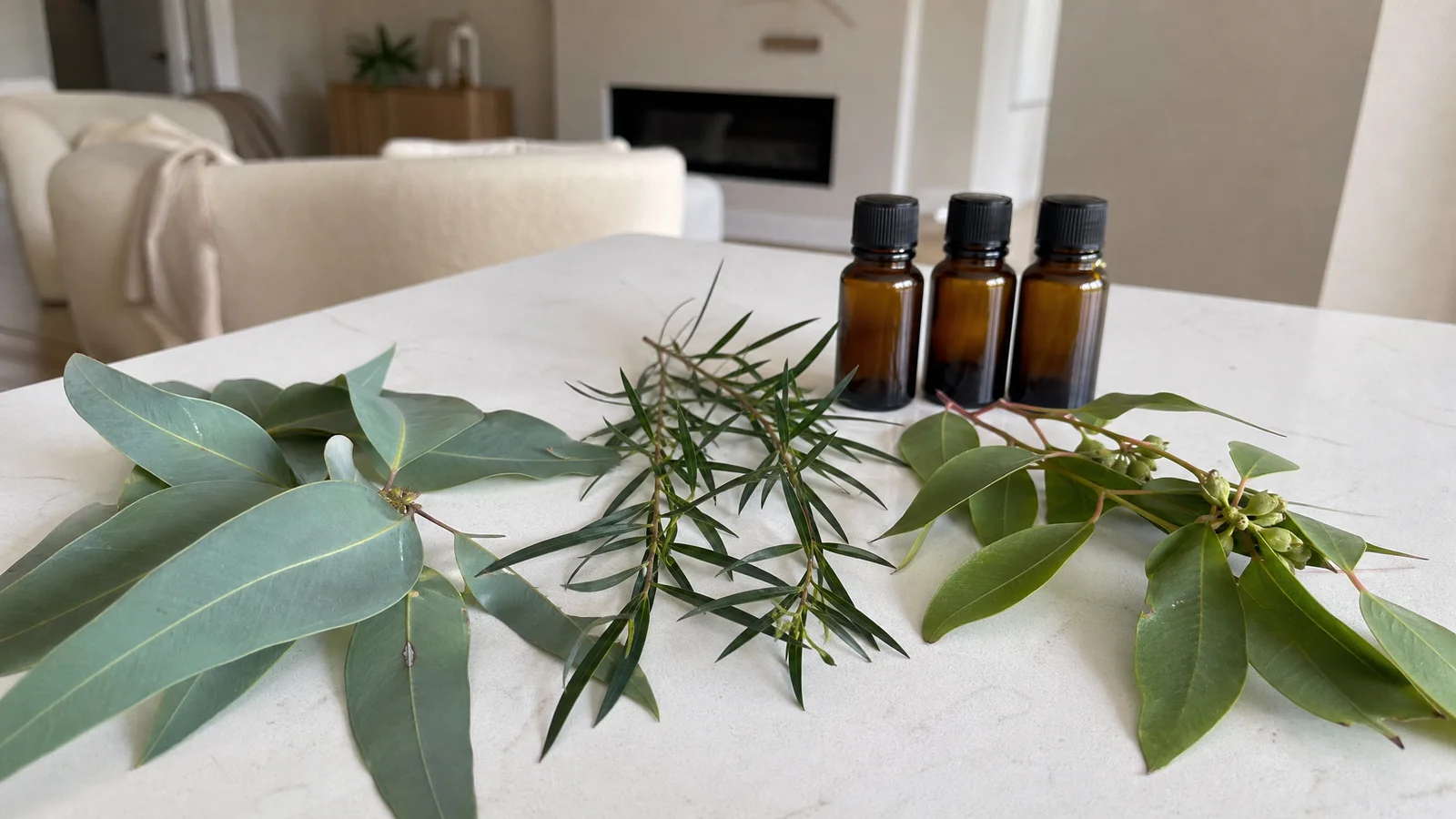
We sell eucalyptus oils as neat essential oils for fragrance and craft use, to be diluted before they go anywhere near skin. We make no cough claim for any of them, and a bottle of oil is a different thing from the finished rub in that trial.
If you love the smell, the pleasures are simple ones: a few drops in a steamy bathroom, or a diluted massage oil. Our guidance for skin is 0.5% to 2% in a carrier oil with a patch test first, and our dilution walkthrough shows the arithmetic. Check IFRA guidance for your own formulation, because limits differ by oil and by product type. Eucalyptus oil should never be swallowed; Poison Control notes that even a small dose can cause seizures.
For small children we are more cautious. We advise against using eucalyptus on or near the face of an infant or young child, and our post on babies and the nursery explains why. A paediatrician or pharmacist is the right person to ask about a child’s cough, and our comparison of eucalyptus oil and vapor rub goes through how a bottle of oil differs from a jar of ointment.
For adults, the NHS says most coughs clear up on their own within three to four weeks, and to see a GP if one lasts more than three weeks or comes with unexplained weight loss. It asks for urgent help if a cough is very bad or quickly getting worse, or comes with chest pain, difficulty breathing or coughing up blood. A pharmacist can talk through the options, and our overview of eucalyptus oil safety covers the rest of the cautions.
If you are feeling under the weather, the kindest things are the plain ones: a warm drink, rest and a window you can open for a moment. Eucalyptus can sit in the background of that, as a scent in a steamy bathroom, and nothing more.
The short version is that the famous cough study is a good story about a jar of ointment. The scent of eucalyptus can be enjoyed for its own sake, and anything beyond that is a conversation for a pharmacist.
Eucalyptus Essential Oil
Eucalyptus Essential Oil from our own shop, in sizes from 0.5 oz to bulk.
From $9.99
Shop Now →Sources & Further Reading
- Vapor rub, petrolatum, and no treatment for children with nocturnal cough and cold symptoms (Paul et al., Pediatrics, 2010; full text via PubMed Central)
- Cough - NHS
- Eucalyptus oil: Is it safe? | Poison Control