
Eucalyptus Oil for Skin: Cooling Botanical Notes, Used Wisely
Eucalyptus oil has a reputation built mostly on steam rooms and chest rubs, but its story does not end there. When diluted correctly and chosen from a quality source, eucalyptus essential oil can become a genuinely interesting addition to a skin-focused aromatic routine. The scent alone, that cool, green, slightly camphorous wave, changes the texture of a moment. Used on skin, it brings that same sensory clarity into something more personal.
This guide walks through the practical side of incorporating eucalyptus oil into a skin routine: what you need, how to dilute it safely, which formulations work best for different purposes, and what results people commonly report. It is written for anyone who wants to move beyond vague enthusiasm and actually understand what they are working with.
Understanding Eucalyptus Oil Before It Touches Your Skin
Not all eucalyptus oils are the same. The species matters, the distillation method matters, and the 1,8-cineole content matters. Eucalyptus globulus is the most widely available and carries the sharpest, most medicinal-adjacent aroma. Eucalyptus radiata is softer and rounder, often preferred for skin applications because it tends to sit more gently. Eucalyptus citriodora leans citrusy and is sometimes used in body-care blending for its lighter character.
For skin use, E. radiata is worth seeking out specifically. Its 1,8-cineole content is high enough to deliver that characteristic cool sensation, but the overall chemical profile is less harsh on sensitive skin than E. globulus. If your supplier only stocks one variety and does not label the species, ask. A reputable supplier will always know what they are selling.
One more thing worth saying plainly: eucalyptus essential oil is a concentrated plant extract. It is not a cosmetic product on its own. It requires dilution into a carrier before it contacts skin, every single time. There are no exceptions to this, and skipping it is the most common mistake people make.
Materials You Will Need
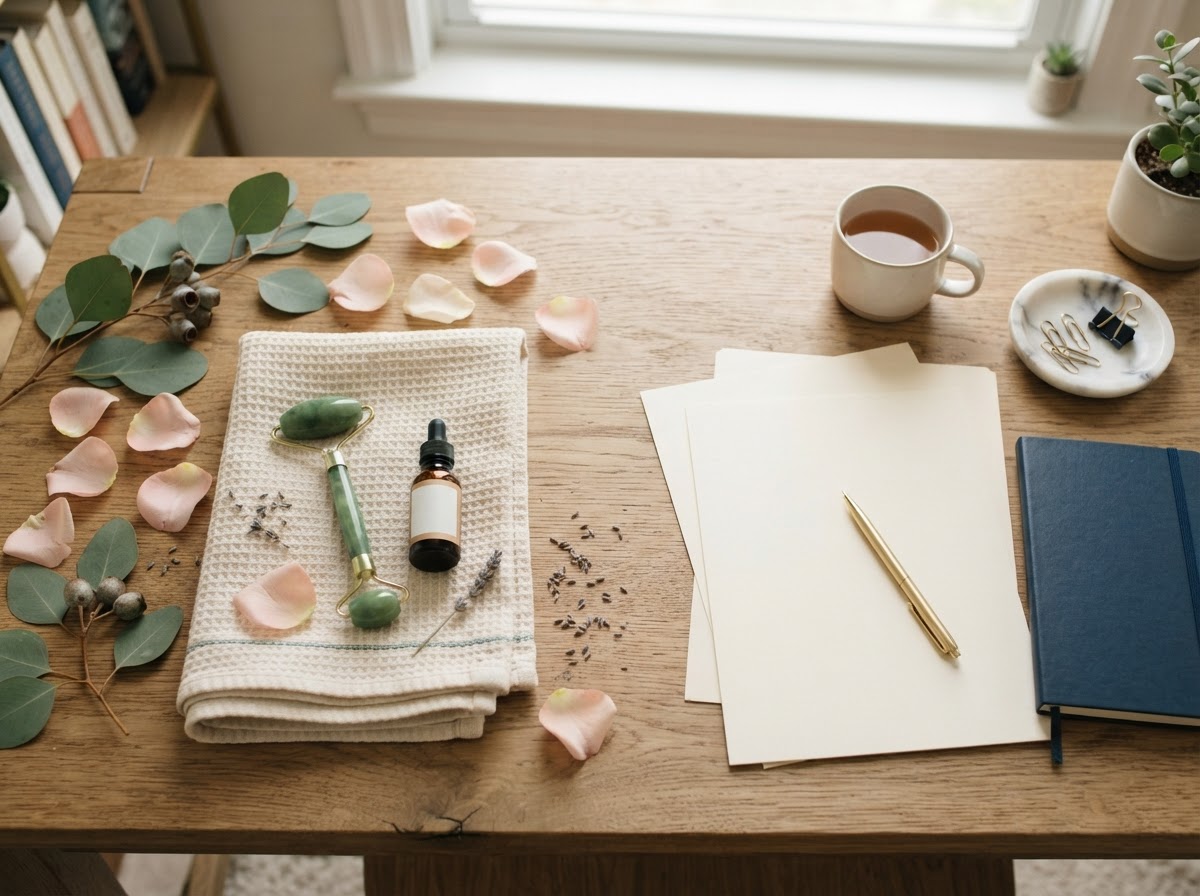
Before mixing anything, gather your materials completely. Working with essential oils goes better when you are not hunting for a measuring spoon mid-pour.
- Eucalyptus essential oil (ideally E. radiata, from a supplier who provides GC/MS testing data)
- A carrier oil suited to your skin type (see notes below)
- Small glass or stainless-steel mixing bowl
- A 1 oz (30 ml) dark glass bottle for storing blends (amber or cobalt; light degrades essential oils)
- A measuring pipette or graduated dropper
- Labels and a marker (always label what you make and when)
- Unscented base product if you are adding to a lotion, body wash, or face cream
- A patch-test area (inner forearm, 24 hours before full application)
Choosing Your Carrier Oil
The carrier oil you select shapes how the blend feels and performs. Here are a few common choices and what they tend to suit:
| Carrier Oil | Texture | Best For |
|---|---|---|
| Jojoba | Lightweight, non-greasy | Most skin types, face and body |
| Sweet Almond | Medium weight, slightly emollient | Body massage, dry legs and arms |
| Fractionated Coconut | Very light, clear | Hot-weather routines, quick absorption |
| Rosehip Seed | Dry-finish, rich in fatty acids | Evening routines, mature or dull-looking skin |
| Grapeseed | Thin, fast-absorbing | Oily or combination skin types |
Dilution: The Foundation of Safe Eucalyptus Skin Use

Dilution is not optional. It is the central skill of safe essential oil use on skin, and it is worth understanding properly rather than approximating.
The standard reference for dilution comes from aromatherapy education bodies and is expressed as a percentage of essential oil to total blend volume:
- 1% dilution: 6 drops of essential oil per 1 oz (30 ml) of carrier. This is the recommended starting point for facial skin, sensitive skin, older adults, and children over 10.
- 2% dilution: 12 drops per 1 oz. Suitable for most adult body applications in a daily-use product.
- 3% dilution: 18 drops per 1 oz. Generally reserved for short-term, targeted applications on the body, not daily use.
For eucalyptus specifically, start at 1% regardless of your skin experience with other oils. The 1,8-cineole content can be a sensitizer, particularly on skin that has not been exposed to it before. You can always increase gradually after your patch test and a week of use shows no reaction.
Eucalyptus oil is not recommended for use on or near the faces of children under 10, and should be avoided entirely around infants and toddlers. If you are pregnant or nursing, consult a qualified healthcare provider before using it on skin.
Step-by-Step: Building Your Eucalyptus Skin Routine
Step 1: Run a Patch Test (Do Not Skip This)
Mix one drop of eucalyptus oil into one teaspoon of your chosen carrier oil. Apply a small amount to your inner forearm. Leave it uncovered and unwashed for 24 hours. If you notice redness, itching, warmth, or irritation at any point, wash the area with plain soap and water and discontinue use. If there is no reaction after 24 hours, proceed.
Step 2: Decide on Your Application Format
Eucalyptus oil integrates into several different skin-use formats. Pick the one that fits your routine best before you start measuring:
- Body oil blend: mixed directly into a carrier, applied to damp skin after a shower
- Body lotion addition: drops stirred into an unscented store-bought lotion
- Face serum addition: very low dilution (1%) into a lightweight carrier like jojoba, for the body-skin area of the décolletage or shoulders, not the face for most people
- Foot soak companion oil: a few drops into a carrier, massaged into feet after soaking
- Body scrub blend: eucalyptus drops mixed into a sugar or salt scrub base with carrier oil
Step 3: Measure and Mix Your Blend
Using your pipette, measure out your carrier oil into the glass bowl or directly into your storage bottle. Count your drops of eucalyptus oil carefully using your dropper. Gently swirl or roll the bottle to mix. Do not shake vigorously; essential oils can sometimes foam or become temporarily cloudy in certain carriers when agitated hard.
Label your bottle immediately with the oil name, dilution percentage, carrier used, and the date you made it. Most carrier oil blends are best used within three to six months, and some carriers (rosehip seed, for example) have shorter shelf lives.
Step 4: Apply Thoughtfully
For a body oil: apply to skin that is still slightly damp from the shower. This helps the oil absorb rather than just sitting on the surface. Use long, sweeping strokes on limbs, and lighter pressure on the chest and stomach.
For a lotion blend: stir your drops into a single portion of lotion in the palm of your hand rather than the whole jar. This keeps the remaining lotion from degrading and lets you control how much eucalyptus you are using each time.
For feet: apply the blend after a warm soak, when skin is soft. Massage in small circles across the sole and around the heel. Put on cotton socks after to let the oils absorb overnight. The cooling sensation that eucalyptus provides makes this a particularly pleasant wind-down ritual for warm evenings.
Step 5: Observe and Adjust Over Time
Give any new addition to your routine at least one to two weeks before drawing conclusions. People who use eucalyptus oil in their skin routines commonly report a noticeable cooling effect that some find refreshing after warm-weather activity, a bright and clarifying scent that may support a sense of alertness during morning routines, and skin that feels clean without feeling stripped. These are sensory and aromatic observations, not medical outcomes.
If you notice your skin looking irritated or feeling tight after use, reduce your dilution or switch to a richer carrier. If irritation persists, stop use and speak with a dermatologist.
Blending Eucalyptus with Other Botanicals
Eucalyptus pairs well with several other essential oils in skin-focused blends. The key is keeping your total essential oil dilution within the safe ranges above, counting all oils together, not each one separately.
Some combinations people commonly enjoy for skin and aromatic purposes:
- Eucalyptus and lavender: the sharpness of eucalyptus softens considerably next to lavender's floral warmth. A 1:1 ratio at 2% total in sweet almond oil makes a calming evening body oil.
- Eucalyptus and tea tree: both carry that clean, green sharpness. This blend is popular in foot care routines for its crisp, no-fuss scent profile.
- Eucalyptus and peppermint: a classic pairing with an intensified cooling effect. If this combination interests you, the article on peppermint and eucalyptus as a cooling duo for home blending explores how the two oils interact and how to proportion them responsibly.
- Eucalyptus and lemon: bright, clean, and uplifting as a morning body oil. Use citrus oils at low dilutions on skin and avoid sun exposure on treated areas for at least 12 hours, as some citrus oils can cause photosensitivity.
Common Mistakes to Avoid
Using Oil Undiluted
This is the single most frequently repeated mistake. Neat application of eucalyptus oil on skin can cause redness, a burning sensation, and in some cases sensitization that makes the oil unusable for you going forward. Dilute every time.
Using the Wrong Species Without Checking
Generic "eucalyptus oil" on a label without a species name is a red flag. Ask for the botanical name and ideally a GC/MS report. If a supplier cannot provide these, shop elsewhere.
Applying Near the Eyes or Mucous Membranes
Eucalyptus oil is not appropriate near the eye area, inside the nose, or on broken skin. Keep all blends well away from these areas.
Storing Blends in Plastic
Essential oils can degrade certain plastics over time, and plastic containers do not protect oils from light or heat. Use dark glass with a tight-fitting lid, stored in a cool, dark location.
Ignoring the Expiration Window
Oxidized essential oils are more likely to irritate skin than fresh ones. If your eucalyptus oil has been open for more than one to two years, or if your carrier oil smells rancid, start fresh rather than using it on skin.
Expanding Your Eucalyptus Practice
Skin is one part of the picture. Eucalyptus oil has a wide role in the home environment that connects naturally to a skin care ritual. Knowing how it behaves in diffusers, linen sprays, and cleaning routines gives you a fuller sense of this botanical. The complete guide to eucalyptus oil uses for a fresher home is a useful companion read if you want to see the full range.
And if you have ever noticed how fresh your skin feels after a shower using eucalyptus-scented products on your linens and towels, that sensory layering is intentional. For practical guidance on incorporating eucalyptus into your laundry and linen care, the fresh home playbook for eucalyptus in laundry and linens covers the specifics well.
Used with care and sourced from a supplier who takes quality seriously, eucalyptus oil earns its place in a skin routine. The cooling, clarifying sensory quality it brings is genuinely distinctive. The key is giving it the respect that any concentrated botanical extract deserves: proper dilution, informed blending, and patience while you observe how your skin responds. That combination is where good results come from.