Peppermint and Eucalyptus: A Cooling Duo for Home Blending
Some pairings just make sense. Peppermint and eucalyptus oil share a crisp, airy quality that makes any room feel fresher the moment you catch the scent. Both are camphoraceous in character, both carry that signature cooling sensation in the nose, and yet each brings something distinct to a blend. Peppermint arrives sharp and a little sweet. Eucalyptus reads greener, more expansive. Together, they produce a peppermint eucalyptus blend that is genuinely greater than the sum of its parts.
This guide walks you through a signature blend built around those two stars, plus a third botanical that gives the composition its backbone. We will cover the full recipe, step-by-step instructions, dilution guidance, safety notes, storage tips, and several variations so you can tailor the blend to your own home and preferences.
Why Add a Third Note? The Case for Frankincense Serrata
A two-oil blend is perfectly valid, but it can sit a little flat without a base note to anchor it. Peppermint and eucalyptus are both top notes. They diffuse fast, impress immediately, and then fade. Adding a resinous base note extends the arc of the scent and gives it somewhere to land.
Frankincense serrata is the variety chosen for this signature blend, and the reasoning is specific. Sourced primarily from the dry forests of India, Boswellia serrata produces a resin that yields an oil with a warm, slightly woody, faintly lemony character. It is earthier than the more celebrated Boswellia carterii or sacra, less intensely sweet, and that earthiness is precisely what this cooling duo needs. Where sacra can feel almost floral at high concentrations, serrata stays grounded. It does not compete with the brightness of the mint or the green freshness of eucalyptus. It simply holds everything together.
The aroma profile of serrata reads like a forest floor on a cool morning: clean soil, dry wood, a distant citrus note. When you layer it beneath peppermint and eucalyptus, the result is a cooling essential oil blend that feels both open-air and settled. Serene rather than sharp. You can explore the oil on its own at the serrata product page to understand its character before you blend.
For a broader look at how eucalyptus oil fits into your home routine beyond blending, the complete guide to eucalyptus oil uses is worth bookmarking.
The Signature Blend: Cool Forest Air
What You Will Need
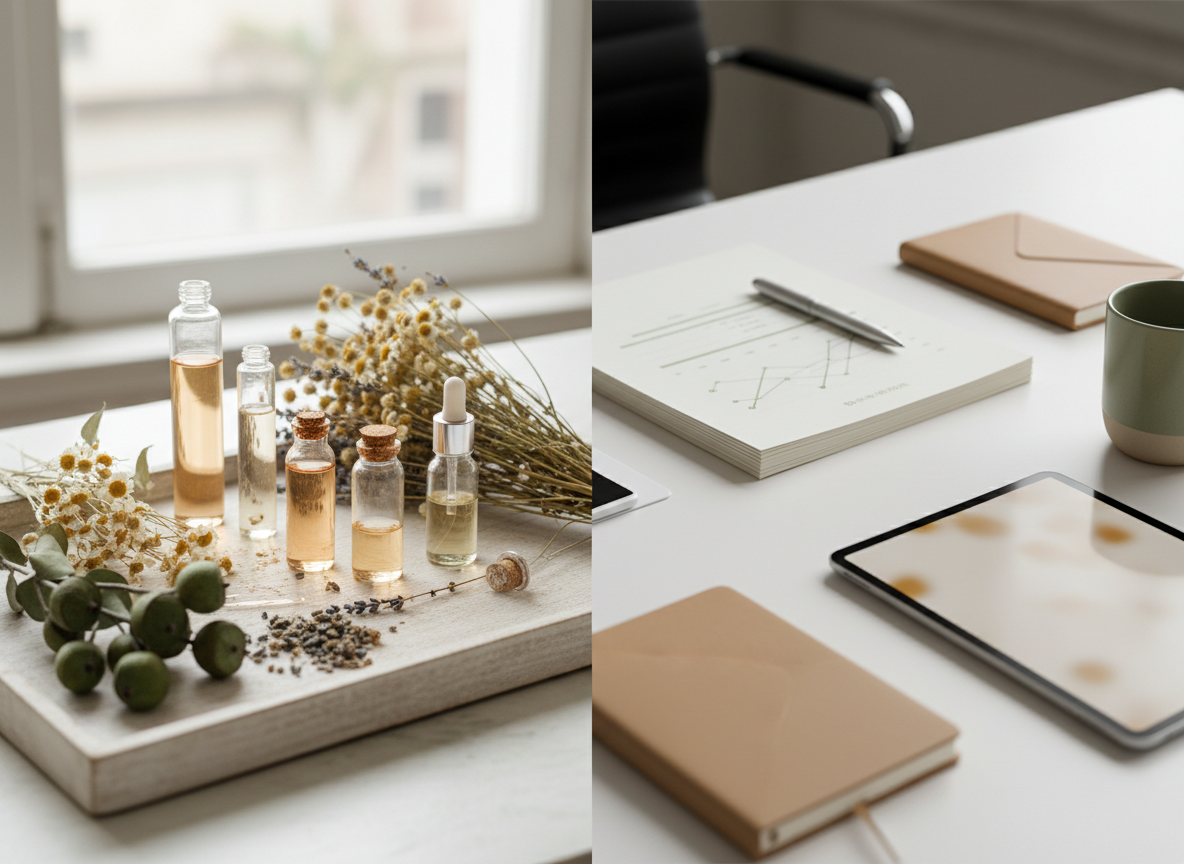
- A dark amber or cobalt glass bottle, 10 ml capacity
- A dropper or pipette for precise measuring
- A small notebook or label for recording your formula
- A carrier oil if you plan a topical dilution (fractionated coconut oil or sweet almond oil work well)
Ingredients and Measurements
| Oil | Drops (in 10 ml) | Approximate ml | Notes |
|---|---|---|---|
| Eucalyptus globulus or radiata | 12 drops | 0.6 ml | Globulus is sharper; radiata is gentler |
| Peppermint (Mentha piperita) | 8 drops | 0.4 ml | High menthol content; use a calibrated dropper |
| Frankincense serrata | 6 drops | 0.3 ml | Earthy, grounding base note |
| Carrier oil (for topical use only) | To fill remaining volume | Approx. 8.7 ml | Omit if making a diffuser concentrate |
This ratio produces a blend that is roughly 60% eucalyptus, 30% peppermint, and 22% serrata by drop count, with the eucalyptus leading. If you prefer peppermint to take the foreground, swap the eucalyptus and peppermint counts.
Step-by-Step Blending Instructions
- Clear your workspace. Wipe down your surface and gather all bottles. Essential oils can interact with synthetic surfaces over time, so a glass or stainless-steel tray is ideal.
- Label your bottle first. Write the date, formula, and intended use before you add anything. Unlabeled bottles become a guessing game within a week.
- Add the base note first. Drop the frankincense serrata into the empty 10 ml bottle. Starting with the heaviest, slowest-evaporating oil helps you gauge the blend as the lighter notes are introduced.
- Add the middle and top notes. Drop in the eucalyptus next, then the peppermint. The sequence matters less chemically than it does perceptually. Adding peppermint last lets you assess its impact as the final layer.
- Cap and gently roll. Do not shake vigorously. Roll the bottle slowly between your palms for about 30 seconds to encourage the oils to mingle without introducing air bubbles.
- Rest the blend. Set the bottle in a cool, dark spot for at least 24 hours before using it. Many experienced blenders describe a noticeable rounding of the scent after the oils have had time to marry.
- Assess and adjust. After resting, uncap and smell from about 15 cm (six inches) away rather than directly at the opening. If the peppermint reads as overwhelming, you can add one or two additional drops of serrata and re-rest for a few hours.
How to Use the Blend
In a Diffuser
Use 4 to 6 drops of the undiluted concentrate in a standard ultrasonic diffuser with water filled to the manufacturer's line. Run for 30 to 60 minutes, then allow the room to air before diffusing again. Avoid continuous diffusion in enclosed spaces.
On Linens and Textiles
Add 3 drops to an unglazed ceramic diffuser disc or a small piece of cotton fabric and place inside a linen drawer or wardrobe. The cooling duo gives folded towels and bedding a crisp, fresh scent. For more ideas on using eucalyptus in your laundry and linen routine, see the fresh home playbook for linens.
As a Room Mist
Combine 15 drops of the concentrate with 30 ml of high-proof alcohol (such as perfumer's alcohol or plain vodka) and 60 ml of distilled water in a small spray bottle. Shake before each use and mist into the air, not directly onto fabrics.
Dilution, Patch Testing, and Safety
Peppermint and eucalyptus are both potent oils. The menthol in peppermint can cause a strong cooling sensation on skin, and both oils may cause irritation if used undiluted.
For topical use: A 2% dilution is a standard starting point for adults. This works out to approximately 12 drops of the blend per 30 ml (one ounce) of carrier oil. Do not exceed 1% dilution for a blend that includes peppermint if you are new to essential oils or have sensitive skin.
- Patch test every new batch. Apply a small amount of the diluted blend to the inside of your forearm. Wait 24 hours and check for redness, itching, or any irritation before wider use.
- Keep away from children under 10. Both peppermint (due to menthol) and eucalyptus globulus are generally considered unsuitable for young children. Eucalyptus radiata is often cited as a gentler option, but always consult a qualified practitioner for guidance on use around children.
- Avoid contact with eyes and mucous membranes.
- Diffusion in shared spaces: Be mindful of others in the room, including pets. Cats and some birds can be sensitive to diffused essential oils. Diffuse in ventilated spaces and provide an easy exit for animals.
- Consult a qualified healthcare provider before using essential oils if you are pregnant, nursing, or managing any health concern.
Curious about how eucalyptus interacts with your home environment more broadly? The article on what eucalyptus pest claims actually get wrong offers a grounded look at what the oil can and cannot do around the house.
Storage and Shelf Life
Store your blend in a dark amber or cobalt glass bottle, away from heat and direct light. A kitchen cabinet or bathroom drawer works well as long as it is not near a stove, radiator, or sunny window. Essential oils degrade with exposure to UV light and heat.
- Undiluted concentrate: Approximately 1 to 2 years for the peppermint and eucalyptus notes; frankincense serrata can hold its character for longer, but the blend should be used within 18 months for the best aromatic experience.
- Diluted in carrier oil: The shelf life shortens to the life of the carrier. Fractionated coconut oil lasts up to 2 years; sweet almond oil closer to 12 to 18 months. Always check for any rancid or off odor before use.
- Room mist sprays: Use within 4 to 6 weeks and store in a cool, dark place.
Variations on the Cool Forest Air Blend
Variation 1: Citrus Lift
Reduce the serrata to 4 drops and add 4 drops of cold-pressed lemon essential oil. The citrus top note bridges peppermint and eucalyptus in a bright, orchard-meets-forest direction. Note that cold-pressed citrus oils are phototoxic. If diluting for topical use, avoid sun exposure on treated skin for at least 12 hours, or substitute steam-distilled lemon to sidestep the phototoxicity concern.
Variation 2: Deep Forest
Keep the base formula and add 3 drops of cedarwood atlas. Cedarwood is another grounding base note with a dry, pencil-shaving character that deepens the forest quality of serrata. The overall blend becomes more resinous and woody, with the cooling mint and eucalyptus still present but framed in a darker, more complex context. This variation works particularly well in a diffuser during cooler months when the air leans toward hearth rather than open window.
Variation 3: Soft Green
Swap eucalyptus globulus for eucalyptus radiata and reduce peppermint to 5 drops. Add 3 drops of spearmint in place of the remaining peppermint drops. Spearmint is softer and slightly sweeter than peppermint, with less menthol intensity. The result is a peppermint eucalyptus blend that reads lighter and more approachable, well suited to shared spaces or as a morning diffuser blend before the day begins.
A Few Blending Notes Worth Keeping in Mind
Record every batch. Even a small change in drop count can shift the entire character of a cooling essential oil blend. A notebook or phone photo of each label takes seconds and saves considerable confusion later.
Quality of raw material matters at the starting point. Peppermint oil sourced from high-altitude farms in India or the Pacific Northwest of North America tends to carry a crisper, more complex menthol note than commodity-grade oil. Eucalyptus sourced transparently, with clear botanical naming and country of origin, will behave more consistently batch to batch.
Blending is iterative. The Cool Forest Air formula above is a starting point, not a fixed prescription. Let your nose guide you, rest each iteration, and adjust gradually. Two drops can change everything. That is part of what makes home blending with peppermint and eucalyptus oil genuinely absorbing as a craft.