Eucalyptus in the Diffuser: Crisp Blends for a Spa-Fresh Room
There is something almost architectural about the scent of eucalyptus. It arrives sharp and green, then opens into something cooler and more expansive, like a room that suddenly has better windows. That quality is exactly why eucalyptus oil diffuser blends have become a cornerstone of home fragrance rituals. A few drops in a cold-mist or ultrasonic diffuser, and the atmosphere shifts.
This guide walks you through eight tested eucalyptus diffuser blends, each built around the clean, camphorous character of true eucalyptus essential oil. You will find the drop counts, the mood each blend is designed to support, and the practical details that make the difference between a pleasant smell and a genuinely transporting experience. If you are new to the oil itself, the complete guide to eucalyptus oil uses is a good place to start before diving into blending.
A Quick Note on Oil Quality Before You Blend
The blends below are only as good as the eucalyptus essential oil diffuser you are filling and the oil going into it. Look for oils that list the botanical species on the label. Eucalyptus globulus is the classic choice: high in 1,8-cineole, bold, and unmistakably crisp. Eucalyptus radiata is softer and slightly more rounded, a good pick if you find globulus a little sharp for enclosed spaces. Either works beautifully in these recipes; just know that radiata will produce a gentler result throughout.
For your diffuser: always follow the manufacturer's water-to-oil ratio. Most ultrasonic models recommend 3 to 10 drops per 100 ml of water. Start at the lower end, especially with eucalyptus, which carries well even at modest concentrations.
The 8 Blends
1. The Classic Spa Reset
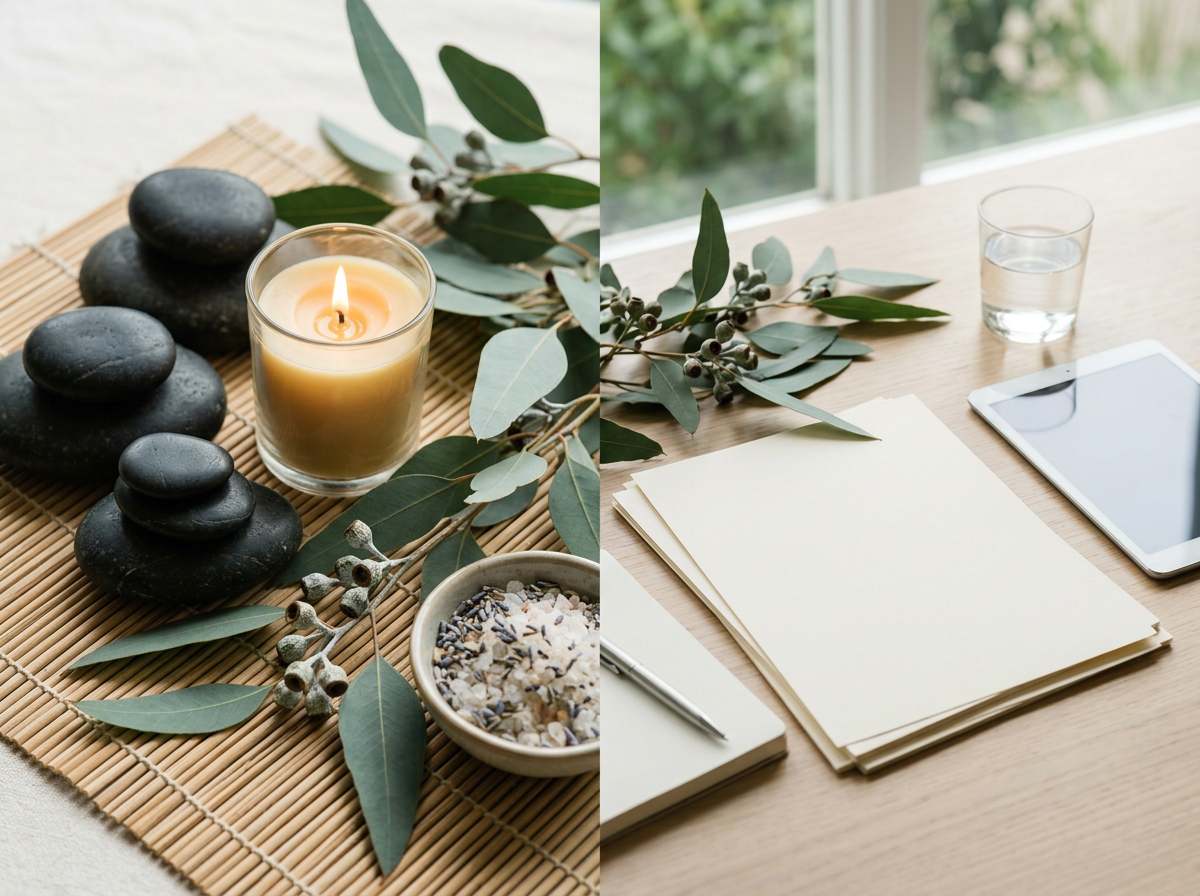
Sometimes the simplest blend is the one you return to most often. This one asks for 4 drops of Eucalyptus globulus and 2 drops of peppermint in 100 ml of water. The peppermint amplifies the cool, airy quality of the eucalyptus without competing with it. The result is bright and clean, the olfactory equivalent of fresh linens and an open window.
This is the blend most people associate with spa reception areas and upscale fitness studios. It works particularly well in bathrooms during a morning shower routine or in a home office when the air feels stale. Because both eucalyptus and peppermint are strong top notes, the diffusion time is relatively short. Plan for a 30-to-45-minute session rather than running the diffuser all day.
Practical takeaway: Run this blend for 30 minutes in the morning, then give the room a 15-minute air-out before settling in for focused work. The contrast between the crisp scent and the clearing air can make the space feel noticeably fresher.
2. The Nordic Steam
This blend draws on the sauna tradition, where eucalyptus has been used for generations to scent steam and create an enveloping, woodsy atmosphere. Use 3 drops of eucalyptus, 2 drops of cedarwood (Atlas or Virginian), and 2 drops of pine or silver fir. The cedarwood and pine add resinous depth, pushing the blend into forest territory without losing the characteristic sharpness of the eucalyptus.
The pairing works because eucalyptus, cedarwood, and conifer oils share overlapping aromatic compounds. They reinforce rather than clash. If you are curious about how this blend relates to actual sauna use, the eucalyptus oil and sauna traditions article goes into the history and practice in satisfying detail.
Practical takeaway: This blend suits a living room on a cold evening or a home sauna diffuser. Cedarwood is a heavier note, so give the room time to warm up before the full character of the blend reveals itself. Usually 10 to 15 minutes of diffusion is enough for the room to feel properly wrapped in it.
3. The Citrus Lift
Eucalyptus and citrus have a natural kinship. Both are bright and volatile; both tend toward freshness rather than sweetness. For this blend, combine 3 drops of eucalyptus with 3 drops of lemon and 1 drop of bergamot. The lemon adds a familiar, sunny sharpness. The bergamot rounds the whole thing into something a little more polished, less like a cleaning product and more like a well-considered fragrance.
This eucalyptus diffuser blend is particularly well suited to kitchens and dining areas, where food smells can linger and the space benefits from a clean, welcoming scent. Citrus top notes fade faster than most, so this blend is best diffused in shorter, more frequent sessions: 20 minutes on, 20 minutes off, rather than a continuous run.
Practical takeaway: Use citrus oils that are stored away from light and heat, as they oxidize faster than other essential oils. A fresh, recently opened lemon oil makes a meaningful difference in this blend. If your lemon smells flat or vaguely soapy, it is time for a new bottle.
4. The Bedtime Wind-Down
Eucalyptus is not always thought of as an evening oil, but paired with the right notes it settles into something genuinely soothing. This blend uses 2 drops of Eucalyptus radiata (the softer species), 3 drops of lavender, and 1 drop of Roman chamomile. The radiata keeps the blend from feeling heavy or overly floral, while the lavender and chamomile bring a quieter, more contemplative quality to the room.
The key here is the species choice. Globulus in this context would overpower the lavender and push the blend back toward the invigorating rather than the calming end of the spectrum. Radiata is measurably gentler. Some people describe it as eucalyptus with the volume turned down, which is exactly what you want for a pre-sleep room fragrance ritual.
Practical takeaway: Start the diffuser about 30 minutes before you plan to wind down for the evening. Turn it off before you actually fall asleep. Running a diffuser through the night in a closed bedroom is not generally recommended, as continuous concentrated aromatic exposure can become irritating over time.
5. The Herbal Garden
This blend leans botanical rather than spa. Combine 3 drops of eucalyptus, 2 drops of rosemary, and 2 drops of clary sage. The rosemary adds a sharp, green, almost medicinal herbal note that sits naturally beside eucalyptus. The clary sage introduces a hint of something slightly earthy and warm, keeping the blend from feeling clinical.
The herbal garden blend works particularly well in spaces where you want the air to feel alive and garden-fresh without veering into florals. A sunroom, a studio, or a home library are all good candidates. Rosemary is a strong middle note that can sometimes dominate, so feel free to reduce it to 1 drop if you prefer the eucalyptus to remain the lead character in the blend.
Practical takeaway: Clary sage has a distinctive, slightly nutty undertone that not everyone finds immediately appealing on first sniff. If it is new to you, smell it out of the bottle before committing to the full blend. You can substitute a drop of geranium if the clary sage is not to your taste.
6. The Coastal Fog
This eucalyptus essential oil diffuser blend is designed to evoke sea air: cool, slightly mineral, with a softness that comes from the combination of eucalyptus and blue tansy. Use 4 drops of eucalyptus, 2 drops of blue tansy, and 1 drop of frankincense. Blue tansy is an unusual oil with a sweet, slightly herbaceous quality and a deep blue-green color; it pairs with eucalyptus in a way that genuinely suggests a coastal morning rather than simply a clean room.
Frankincense anchors the blend with a quiet, resinous base. Without it, eucalyptus and blue tansy together can feel a little one-dimensional. A single drop of frankincense adds enough depth to make the blend diffuse and shift over time rather than presenting as a flat, single-note fragrance.
Practical takeaway: Blue tansy can be expensive and is sometimes adulterated. Look for suppliers who provide GC/MS (gas chromatography/mass spectrometry) test results, as with eucalyptus oil, quality verification matters. A reputable bottle will list the Latin name Tanacetum annuum clearly on the label.
7. The Spiced Winter Cabin
This is the seasonal outlier in the list, a blend that sits further from the classic spa profile and closer to something warming and festive. Use 3 drops of eucalyptus, 2 drops of cinnamon leaf (not bark, which is more irritating in diffuser use), and 2 drops of orange. The eucalyptus keeps the blend from becoming cloying. Without it, a cinnamon-orange blend can feel more like a scented candle than an essential oil diffuser experience.
Cinnamon leaf is worth discussing briefly. The bark version is higher in cinnamaldehyde and can cause irritation in diffused concentrations over time, particularly in children and people with sensitive airways. Cinnamon leaf is milder and better suited to this application. Always check which part of the plant your oil is derived from before adding it to a diffuser blend used in shared spaces.
Practical takeaway: Limit diffusion sessions with cinnamon to 20 to 30 minutes, especially in smaller rooms. This is a blend best suited to a living room during the winter months when the windows are closed and the air could use some character rather than just freshness.
8. The Green Ritual
The final blend in this list is the most minimal, and often the most striking. It uses just two oils: 5 drops of eucalyptus and 2 drops of vetiver. The contrast is the point. Eucalyptus is all top note, all forward movement and brightness. Vetiver is dense, earthy, and slow, one of the most tenacious base notes in the aromatic world. Together they create something surprisingly complex from very few ingredients.
This is the eucalyptus diffuser blend for people who find pure eucalyptus a little one-dimensional but do not want to layer in multiple supporting oils. The vetiver holds the blend down and gives it staying power. Where a straight eucalyptus diffusion might fade noticeably within 20 minutes, the vetiver extends the perceptible life of the blend considerably.
If you enjoy experimenting with minimalist blends and want to explore other creative applications of eucalyptus beyond the diffuser, the DIY eucalyptus shower fizzies recipe is a satisfying next step. The same principle of letting eucalyptus lead a simple formula applies beautifully in that format.
Practical takeaway: Vetiver is thick and can be slow to drop from the bottle. Gently warm the bottle in your hands for a minute before use, or use a dropper if the opening is too narrow. Because vetiver is so persistent, it is also worth cleaning your diffuser basin more thoroughly after using this blend so the earthy undertone does not carry into your next session.
A Few General Diffusing Principles Worth Keeping
- Clean your diffuser regularly. Essential oil residue builds up and can distort the scent of new blends. A quick wipe with a cotton pad dampened with a small amount of high-proof alcohol between sessions keeps things accurate.
- Diffuse intermittently, not continuously. Aromatic saturation happens faster than most people expect. A 30-minutes-on, 30-minutes-off rhythm is a reasonable default for most rooms and most oils.
- Ventilate spaces with pets or young children. Eucalyptus oil in diffuser concentrations may be too intense in enclosed spaces where cats, birds, or infants are present. Always err toward more ventilation in these situations, and consult a veterinarian or pediatrician if you have questions.
- Start with fewer drops than you think you need. It is much easier to add a drop than to clear a room that has been overdosed with a strong essential oil.
The eight blends above cover a wide range of moods and rooms, but they are genuinely just a starting point. Once you have a feel for how eucalyptus behaves as a lead note in a diffuser blend, adjusting ratios and swapping supporting oils becomes intuitive. The crisp, clean backbone of a good eucalyptus oil is remarkably forgiving as a blending partner. It tends to make other oils smell more awake, more defined, more present. That quality is why it has earned its place at the center of so many memorable spa environments, and why it translates so naturally into the home diffuser.